
Q:
A:
Another shelter for women and children opened
Belgrade,
27 December 2007
Serbian Deputy Prime Minister Bozidar Djelic and Serbian Minister of Labour and Social Policy Rasim Ljajic opened today the third new shelter for women and children in Belgrade which will be managed by the Counseling Centre for fight against domestic violence.
Djelic, who donated half of the royalties from the sale of his latest book “When Will it Get Better for Us” for the construction of the shelter, said that offering a new chance to women and children victims of domestic violence should be an inspiration to all donators to help build more such shelters.
The Deputy Prime Minister appealed to companies to join the campaign launched by the media house B92, setting an example of social responsibility.
He said that one part of the Serbian government’s activities will be dedicated to ensuring conditions for the employment of women protected in such shelters, and added that the government has formed a working group for drafting a law on funds.
Ljajic said that the need for women’s shelters is far bigger than the present facilities can meet, and added that a total of 130 women were placed in shelters in Belgrade this year, while last year this number was 87.
According to Ljajic, the bad news is that violence is more frequent, but the good news is that it is reported more often.
He said that his ministry is working on establishing clear standards next year for issuing licenses to all women’s shelters in Serbia.
The Minister said it is not realistic that there is such a shelter in every place in Serbia but they should be opened on a regional level.
Coordinator of the Counseling Centre for fight against domestic violence Vesna Stanojevic said that there are more and more young women who decide to report their abusing husbands, not wanting to put up with violence for 10-15 years, as it has been the case in Serbia so often.
Stanojevic said that in the past three years the shelter has been organising courses for additional education and retraining in order to help women find jobs. The campaign of building shelters for women in Belgrade was launched by Radio Television B92. The previous facility was opened on November 15 this year, and three more women's shelters are to be built in Zrenjanin, Sombor and Vranje.
The Deputy Prime Minister appealed to companies to join the campaign launched by the media house B92, setting an example of social responsibility.
He said that one part of the Serbian government’s activities will be dedicated to ensuring conditions for the employment of women protected in such shelters, and added that the government has formed a working group for drafting a law on funds.
Ljajic said that the need for women’s shelters is far bigger than the present facilities can meet, and added that a total of 130 women were placed in shelters in Belgrade this year, while last year this number was 87.
According to Ljajic, the bad news is that violence is more frequent, but the good news is that it is reported more often.
He said that his ministry is working on establishing clear standards next year for issuing licenses to all women’s shelters in Serbia.
The Minister said it is not realistic that there is such a shelter in every place in Serbia but they should be opened on a regional level.
Coordinator of the Counseling Centre for fight against domestic violence Vesna Stanojevic said that there are more and more young women who decide to report their abusing husbands, not wanting to put up with violence for 10-15 years, as it has been the case in Serbia so often.
Stanojevic said that in the past three years the shelter has been organising courses for additional education and retraining in order to help women find jobs. The campaign of building shelters for women in Belgrade was launched by Radio Television B92. The previous facility was opened on November 15 this year, and three more women's shelters are to be built in Zrenjanin, Sombor and Vranje.
-
 Belgrade, 5 June 2026
Cooperation with North Macedonia in field of innovation
-
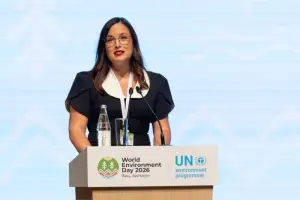 Belgrade/Baku, 5 June 2026
Serbia takes over hosting of World Environment Day 2027
-
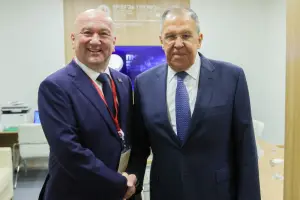 Belgrade/Saint Petersburg, 4 June 2026
Readiness to improve cooperation with Russia in areas of mutual interest
-
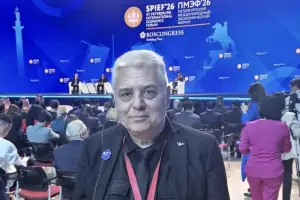 Belgrade/Saint Petersburg, 4 June 2026
Strengthening Serbia’s position in contemporary digital environment
-
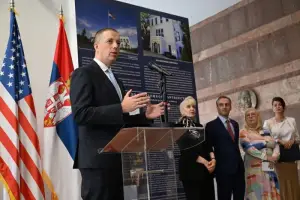 Belgrade, 4 June 2026
Serbia, US building partnership aimed at future, shared prosperity
-
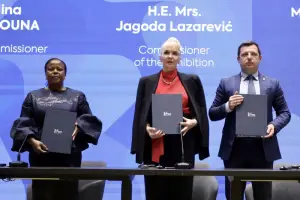 Belgrade, 3 June 2026
Contract on Gabon’s participation in Expo 2027 signed
-
 Belgrade/Helsinki, 3 June 2026
Serbia stands for peace, cooperation, respect for international law
-
 Belgrade/Helsinki, 2 June 2026
Great potential for strengthening economic ties with Finland
-
 Belgrade/Helsinki, 2 June 2026
Finland confirms strong support for Serbia’s European future
-
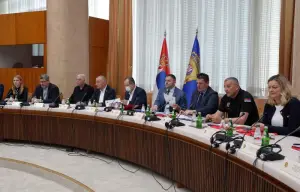 Belgrade, 1 June 2026
Coordination of services to reduce risks from extreme weather events