
Q:
A:
RSD 9 billion for local economic growth in 2008
Belgrade,
12 December 2007
State Secretary at the Serbian Ministry of Economy and Regional Development Verica Kalanovic said today that RSD 9 billion will be set aside from the 2008 state budget for enhancing local economic growth in Serbia.
Kalanovic pointed out at a public debate on economic growth of local communities that out of that sum, around RSD 4.4 billion will be invested in business and public utilities infrastructure and in various processes of providing help to municipalities through personnel training.
She specified that RSD 2 billion will be released through credit lines of the Fund for development of small and medium-sized enterprises in underdeveloped municipalities, RSD 2 billion for start-up loans and RSD 500 million for innovative programmes.
Serbia is the country with the biggest regional differences in Europe, Kalanovic said and added that difference between the most and the least developed municipalities is in the ratio one to 15, while for local communities the ratio is one to 45.
According to her, more investments will be apportioned to underdeveloped municipalities, with further provision of incentives for developed municipalities.
Activities which the Ministry of Economy and Regional Development plans to undertake in order to increase economic growth during the next year are development of industrial zones and encouragement to investors in specific branches of economy, through the Serbian Investment and Export Promotion Agency and programmes for regional development, said Kalanovic.
She pointed to the fact that there are also projects for development of local utility infrastructure, an active employment policy through cooperation with bodies affiliated to the National Employment Service and promotion of municipalities through presentations at fairs, exhibitions and public events.
Head of the commercial section at the British embassy in Belgrade Nicholas Paul Groves said that economic development at the municipal level is very important for the development of the entire country, and added that there should be special focus on small and medium-sized enterprises.
According to Groves, the UK wishes to see Serbia grow into a strong economy, ready to enter the EU.
Activities which the Ministry of Economy and Regional Development plans to undertake in order to increase economic growth during the next year are development of industrial zones and encouragement to investors in specific branches of economy, through the Serbian Investment and Export Promotion Agency and programmes for regional development, said Kalanovic.
She pointed to the fact that there are also projects for development of local utility infrastructure, an active employment policy through cooperation with bodies affiliated to the National Employment Service and promotion of municipalities through presentations at fairs, exhibitions and public events.
Head of the commercial section at the British embassy in Belgrade Nicholas Paul Groves said that economic development at the municipal level is very important for the development of the entire country, and added that there should be special focus on small and medium-sized enterprises.
According to Groves, the UK wishes to see Serbia grow into a strong economy, ready to enter the EU.
-
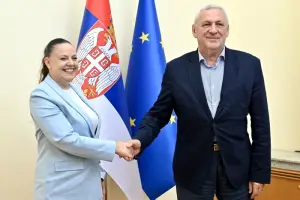 Belgrade, 5 June 2026
Cooperation with North Macedonia in field of innovation
-
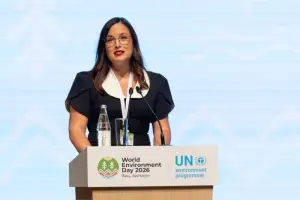 Belgrade/Baku, 5 June 2026
Serbia takes over hosting of World Environment Day 2027
-
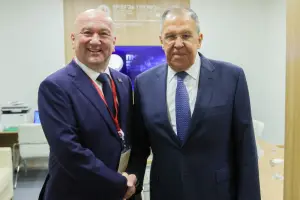 Belgrade/Saint Petersburg, 4 June 2026
Readiness to improve cooperation with Russia in areas of mutual interest
-
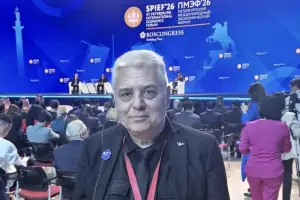 Belgrade/Saint Petersburg, 4 June 2026
Strengthening Serbia’s position in contemporary digital environment
-
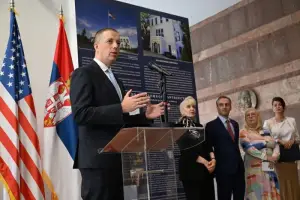 Belgrade, 4 June 2026
Serbia, US building partnership aimed at future, shared prosperity
-
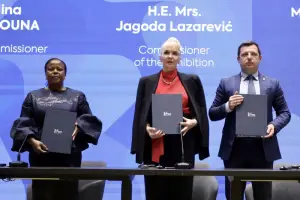 Belgrade, 3 June 2026
Contract on Gabon’s participation in Expo 2027 signed
-
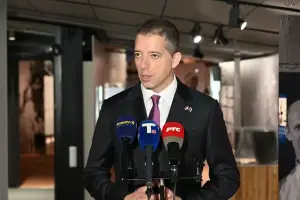 Belgrade/Helsinki, 3 June 2026
Serbia stands for peace, cooperation, respect for international law
-
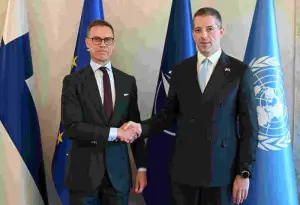 Belgrade/Helsinki, 2 June 2026
Great potential for strengthening economic ties with Finland
-
 Belgrade/Helsinki, 2 June 2026
Finland confirms strong support for Serbia’s European future
-
 Belgrade, 1 June 2026
Coordination of services to reduce risks from extreme weather events