
Q:
A:
Earliest possible date for signing SAA January 28
Belgrade,
11 December 2007
Director of the Serbian EU Integration Office Tanja Miscevic said today that January 28, 2008 is the first possible date for Serbia to sign the Stabilisation and Association Agreement (SAA) with the EU as the EU foreign affairs ministers are then scheduled to meet.
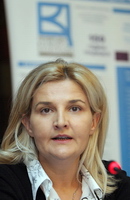
Tanja Miscevic
Author:
Fonet
Speaking to the press at the Belgrade Chamber of Commerce, Miscevic said that an interim agreement will be valid after the signing of the SAA until it comes into force and will cover trade issues.
According to Miscevic, in order for the SAA to come into force it must be ratified by Serbian parliament and parliaments of all EU member states, which could take from two to three years.
She said that it is planned that the interim agreement comes into force within two to three months from the signing of SAA, so that from April 2008 Serbia could begin to liberalise trade with the EU.
She recalled that Serbia plans to get candidacy status by the end of 2008, so as to be ready by 2012 to fulfill all obligations ensuing from EU membership.
Serbia’s EU integration and negotiations on the future status of Kosovo-Metohija are unfolding as separate processes so that Serbia’s future in Europe is not at stake, stressed Miscevic, and added that the SAA envisages complete liberalisation and the creation of a free trade zone between Serbia and the EU.
According to Miscevic, a transition period of six years has been provided, so that in the sixth year all industrial products will be free of customs and there will be no quantitative limits on import from the EU, apart from the 25% in agricultural products.
She also said that the agreement envisages obligatory harmonisation with EU legislation, which means protection of competition and strengthening of bodies dealing with this issue, as well as founding of bodies to monitor issuance of subsidies, one year onwards from the time when the SAA comes into force.
Miscevic added that within three years of SAA coming into force implementation of competition rules for public enterprises will begin as well.
Serbia’s aim is to prepare everything necessary for opening talks on a liberal visa regime and inclusion in the White Schengen List at the latest until March, she said.
Miscevic pointed to the fact that by then Serbia should draft legislative framework for beginning talks, and added that laws on travel documents and on asylum were adopted in Serbian parliament, while laws on borders and foreigners have been adopted by the government and their adoption in parliament is awaited.
She said that it is expected that new personal identity cards will be issued in Serbia during the next year, and on the basis of these cards biometric passports will also be issued in March. Other conditions for inclusion in the White Schengen List are constant fight against corruption and organised crime, and regional police cooperation.
According to Miscevic, Serbia’s basic aim is to be included in the list by the end of 2008, at the same time when it could acquire candidate status.
She stressed that this does not depend only upon the European Commission, but also upon interior ministers of EU countries and Serbia’s ability to convince them that as a country it does not pose a threat and is not a source of organised crime.
She said that the agreements on visa relaxations and readmission will come into force on January 1, 2008. She added that a brochure will be made available to citizens, to inform them which documents are required when applying for visa under relaxed conditions.
According to Miscevic, in order for the SAA to come into force it must be ratified by Serbian parliament and parliaments of all EU member states, which could take from two to three years.
She said that it is planned that the interim agreement comes into force within two to three months from the signing of SAA, so that from April 2008 Serbia could begin to liberalise trade with the EU.
She recalled that Serbia plans to get candidacy status by the end of 2008, so as to be ready by 2012 to fulfill all obligations ensuing from EU membership.
Serbia’s EU integration and negotiations on the future status of Kosovo-Metohija are unfolding as separate processes so that Serbia’s future in Europe is not at stake, stressed Miscevic, and added that the SAA envisages complete liberalisation and the creation of a free trade zone between Serbia and the EU.
According to Miscevic, a transition period of six years has been provided, so that in the sixth year all industrial products will be free of customs and there will be no quantitative limits on import from the EU, apart from the 25% in agricultural products.
She also said that the agreement envisages obligatory harmonisation with EU legislation, which means protection of competition and strengthening of bodies dealing with this issue, as well as founding of bodies to monitor issuance of subsidies, one year onwards from the time when the SAA comes into force.
Miscevic added that within three years of SAA coming into force implementation of competition rules for public enterprises will begin as well.
Serbia’s aim is to prepare everything necessary for opening talks on a liberal visa regime and inclusion in the White Schengen List at the latest until March, she said.
Miscevic pointed to the fact that by then Serbia should draft legislative framework for beginning talks, and added that laws on travel documents and on asylum were adopted in Serbian parliament, while laws on borders and foreigners have been adopted by the government and their adoption in parliament is awaited.
She said that it is expected that new personal identity cards will be issued in Serbia during the next year, and on the basis of these cards biometric passports will also be issued in March. Other conditions for inclusion in the White Schengen List are constant fight against corruption and organised crime, and regional police cooperation.
According to Miscevic, Serbia’s basic aim is to be included in the list by the end of 2008, at the same time when it could acquire candidate status.
She stressed that this does not depend only upon the European Commission, but also upon interior ministers of EU countries and Serbia’s ability to convince them that as a country it does not pose a threat and is not a source of organised crime.
She said that the agreements on visa relaxations and readmission will come into force on January 1, 2008. She added that a brochure will be made available to citizens, to inform them which documents are required when applying for visa under relaxed conditions.
-
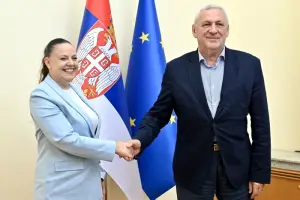 Belgrade, 5 June 2026
Cooperation with North Macedonia in field of innovation
-
 Belgrade/Baku, 5 June 2026
Serbia takes over hosting of World Environment Day 2027
-
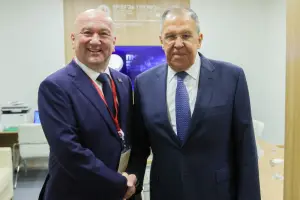 Belgrade/Saint Petersburg, 4 June 2026
Readiness to improve cooperation with Russia in areas of mutual interest
-
 Belgrade/Saint Petersburg, 4 June 2026
Strengthening Serbia’s position in contemporary digital environment
-
 Belgrade, 4 June 2026
Serbia, US building partnership aimed at future, shared prosperity
-
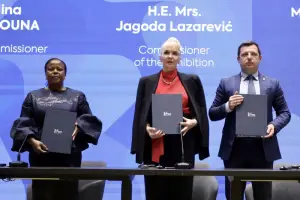 Belgrade, 3 June 2026
Contract on Gabon’s participation in Expo 2027 signed
-
 Belgrade/Helsinki, 3 June 2026
Serbia stands for peace, cooperation, respect for international law
-
 Belgrade/Helsinki, 2 June 2026
Great potential for strengthening economic ties with Finland
-
 Belgrade/Helsinki, 2 June 2026
Finland confirms strong support for Serbia’s European future
-
 Belgrade, 1 June 2026
Coordination of services to reduce risks from extreme weather events