Q:
A:
Negotiations on Kosovo issue should be continued until solution is found to ensure peace and stability
Baden,
26 November 2007
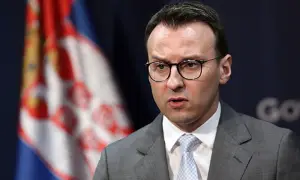
Serbian Minister of Foreign Affairs Vuk Jeremic said this evening in Baden that negotiations on the issue of the future status of Kosovo-Metohija should be continued until an agreement is reached, since anything else cannot bring peace and stability.
Following a meeting of the Belgrade delegation with the international troika in Baden near Vienna, Jeremic expressed the conviction that it is important to continue the dialogue until a solution is found which could ensure peace and stability.
He said that a compromise solution is needed not just to maintain international legal order and to avoid altering borders in the Balkans, but also for the prosperity of people in the West Balkans.
The Minister said that it is very important what the international atmosphere will be like if an agreement is not reached on December 10, which seems very unlikely at the moment.
I think that it is very important the UN holds a serious debate and the international community shows responsibility, said Jeremic.
Serbian Minister for Kosovo-Metohija Slobodan Samardzic said that the Serbian Prime Minister and President presented additional arguments for the proposal of substantial autonomy for Kosovo-Metohija.
According to Samardzic, they presented the history of this problem which began with the story that first standards must be fulfilled and then status will be discussed. Then it was suggested that standard and status are discussed at the same time, and later that talks should be only about status, regardless of whether standards are being fulfilled or not.
We are determined to discuss status and give our proposals. We rejected talks on a post-status situation, said Samardzic and added that the Serbian delegation will try to persuade the Albanian side to discuss this question.
During today’s talks, the Kosovo Albanians, as before, were not ready to talk about our arguments and just repeated their demand for independence and partnership between Serbia and Kosovo as if these were two independent states.
He said that at the meeting between the Serbian delegation and the troika it was attempted that signing of partial agreements on relations between Serbia and the province is discussed.
According to Samardzic, the Serbian delegation presented its stand that the proposal to resolve the status issue through a compromise is much better and that should remain the subject of talks.
Our position is that these talks could finish with a report by the troika, which will be directed to the UN. Our basic stand is that we need to have long negotiations on these matters and reach a joint conclusion, said Samardzic.
He said that the problem is that the Albanian side considers independence to be something which was promised to them and therefore they are not motivated to talk.
He said that it cannot be said that there was progress in talks, and added that the Serbian team did its best to make some progress, presenting the Serbian proposal of substantial autonomy flexibly and with new arguments.
If we had had real negotiations on the future status and if the Albanians had not avoided them, we could have moved from general status related questions to very concrete institutional issues in order to resolve specific problems, said Samardzic.
The Minister said that the basic issue here is whether the Albanian side will engage in real negotiations and will the troika make efforts to involve them in talks, or things will go on as they have until now.
He said that there will be no progress if things go an as before, and expressed expectation that the troika will present a completely objective report on negotiations regarding which side was more in favour of a compromise.
He said that a compromise solution is needed not just to maintain international legal order and to avoid altering borders in the Balkans, but also for the prosperity of people in the West Balkans.
The Minister said that it is very important what the international atmosphere will be like if an agreement is not reached on December 10, which seems very unlikely at the moment.
I think that it is very important the UN holds a serious debate and the international community shows responsibility, said Jeremic.
Serbian Minister for Kosovo-Metohija Slobodan Samardzic said that the Serbian Prime Minister and President presented additional arguments for the proposal of substantial autonomy for Kosovo-Metohija.
According to Samardzic, they presented the history of this problem which began with the story that first standards must be fulfilled and then status will be discussed. Then it was suggested that standard and status are discussed at the same time, and later that talks should be only about status, regardless of whether standards are being fulfilled or not.
We are determined to discuss status and give our proposals. We rejected talks on a post-status situation, said Samardzic and added that the Serbian delegation will try to persuade the Albanian side to discuss this question.
During today’s talks, the Kosovo Albanians, as before, were not ready to talk about our arguments and just repeated their demand for independence and partnership between Serbia and Kosovo as if these were two independent states.
He said that at the meeting between the Serbian delegation and the troika it was attempted that signing of partial agreements on relations between Serbia and the province is discussed.
According to Samardzic, the Serbian delegation presented its stand that the proposal to resolve the status issue through a compromise is much better and that should remain the subject of talks.
Our position is that these talks could finish with a report by the troika, which will be directed to the UN. Our basic stand is that we need to have long negotiations on these matters and reach a joint conclusion, said Samardzic.
He said that the problem is that the Albanian side considers independence to be something which was promised to them and therefore they are not motivated to talk.
He said that it cannot be said that there was progress in talks, and added that the Serbian team did its best to make some progress, presenting the Serbian proposal of substantial autonomy flexibly and with new arguments.
If we had had real negotiations on the future status and if the Albanians had not avoided them, we could have moved from general status related questions to very concrete institutional issues in order to resolve specific problems, said Samardzic.
The Minister said that the basic issue here is whether the Albanian side will engage in real negotiations and will the troika make efforts to involve them in talks, or things will go on as they have until now.
He said that there will be no progress if things go an as before, and expressed expectation that the troika will present a completely objective report on negotiations regarding which side was more in favour of a compromise.
-
 Belgrade, 28 August 2026
Church broken into, ransacked in Bušince village in Kosovska Kamenica
-
 Belgrade, 27 August 2026
Remembrance of suffering of Serb civilians in village of Klečka
-
 Belgrade, 30 July 2026
Continued illegal demolition of Serb-owned buildings near Lake Gazivode
-
 Belgrade, 29 July 2026
Works in Special Protective Zone of Visoki Dečani Monastery must be halted
-
 Belgrade, 23 July 2026
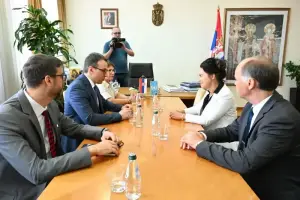
Priština continues with unilateral, illegal moves
-
 Belgrade/Zurich, 4 June 2026
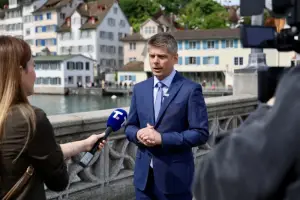
Exhibition in Zurich on position of Serbs in Kosovo and Metohija
-
 Belgrade/Brussels, 12 May 2026
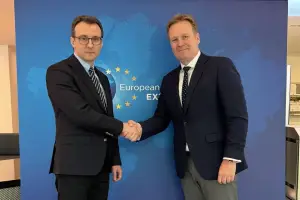
Belgrade seeking concrete steps towards establishment of Community of Serb Municipalities
-
 Belgrade/Brussels, 11 May 2026
Belgrade-Priština dialogue not dialogue on mutual recognition
-
 Belgrade, 10 April 2026
Serbian health centres closed in villages of Suvo Grlo, Banje