
Q:
A:
Long term effects of education on poverty reduction in Serbia
Belgrade,
15 November 2007
Serbian Minister of Science Ana Pesikan said today that data is not available on the exact number of students in Serbia who do not finish school, but analyses show that nearly 15% do not manage to complete elementary education.
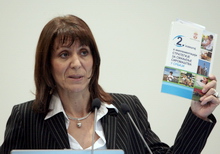
Ana Pesikan
Author:
Tanjug
Speaking at the opening of an international conference on the role of education in reducing consequences of poverty on children in countries in transition, Pesikan said that it is a worrying fact that a large number of students do not even finish secondary school, which means there is an entire group of young people who are not equipped for the life that awaits them.
She stressed that education does not have an instant rather a long term effect on poverty reduction, and pointed to the fact that if children get a proper education they will be able to secure a dignified existence for themselves and their future families.
She said that the role of education in poverty reduction should be studied by both experts and economists, and added that Serbia needs detailed research into this subject.
Dean of the Faculty for Special Education and Rehabilitation Dobrivoje Radovanovic said in his address to participants of the conference that education in Serbia should be made available to as large a number of people as possible so that the quality of their lives may be improved.
The aim of holding this international expert conference is to provide academics and the public in general information which will make the cause and effect relation between education and poverty clearer, and proper measures for resolving problems could be implemented.
The conference is being organised by the Belgrade Institute for Pedagogic Research in cooperation with the Faculty for Special Education and Rehabilitation of the University of Belgrade. The conference is being attended by 60 local and 30 foreign experts.
She stressed that education does not have an instant rather a long term effect on poverty reduction, and pointed to the fact that if children get a proper education they will be able to secure a dignified existence for themselves and their future families.
She said that the role of education in poverty reduction should be studied by both experts and economists, and added that Serbia needs detailed research into this subject.
Dean of the Faculty for Special Education and Rehabilitation Dobrivoje Radovanovic said in his address to participants of the conference that education in Serbia should be made available to as large a number of people as possible so that the quality of their lives may be improved.
The aim of holding this international expert conference is to provide academics and the public in general information which will make the cause and effect relation between education and poverty clearer, and proper measures for resolving problems could be implemented.
The conference is being organised by the Belgrade Institute for Pedagogic Research in cooperation with the Faculty for Special Education and Rehabilitation of the University of Belgrade. The conference is being attended by 60 local and 30 foreign experts.
-
 Belgrade, 5 June 2026
Cooperation with North Macedonia in field of innovation
-
 Belgrade/Baku, 5 June 2026
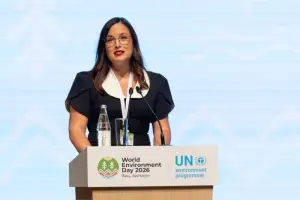
Serbia takes over hosting of World Environment Day 2027
-
 Belgrade/Saint Petersburg, 4 June 2026
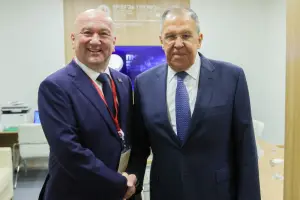
Readiness to improve cooperation with Russia in areas of mutual interest
-
 Belgrade/Saint Petersburg, 4 June 2026
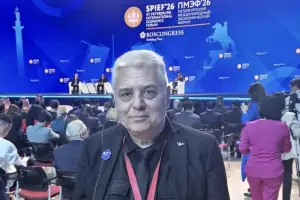
Strengthening Serbia’s position in contemporary digital environment
-
 Belgrade, 4 June 2026
Serbia, US building partnership aimed at future, shared prosperity
-
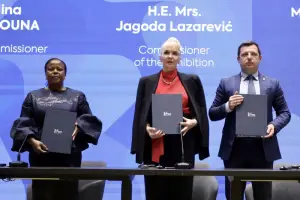 Belgrade, 3 June 2026
Contract on Gabon’s participation in Expo 2027 signed
-
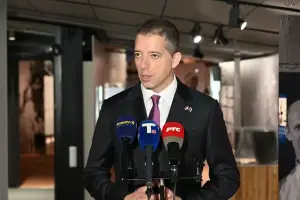 Belgrade/Helsinki, 3 June 2026
Serbia stands for peace, cooperation, respect for international law
-
 Belgrade/Helsinki, 2 June 2026
Great potential for strengthening economic ties with Finland
-
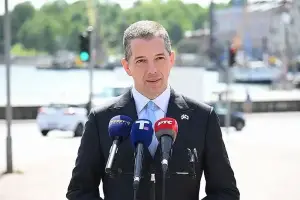 Belgrade/Helsinki, 2 June 2026
Finland confirms strong support for Serbia’s European future
-
 Belgrade, 1 June 2026
Coordination of services to reduce risks from extreme weather events