
Q:
A:
Djelic announces measures to stimulate export
Belgrade,
8 November 2007
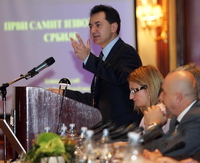
Serbian Deputy Prime Minister Bozidar Djelic announced today that the government will soon take measures to stimulate export because Serbia’s second greatest problem after unemployment is unsatisfactory export.
Author:
Fonet
Speaking at the First Summit of Exporters of Serbia, held at the Hyatt Regency Hotel, Djelic said there will be no future for Serbia unless it becomes a country of strong exporters. He called upon all exporters to unite and help the government to speed up economic development and reduce the foreign trade deficit.
He warned that as for the foreign trade, Serbia is entering a dangerous zone because the current payment deficit, which is afterwards covered by loans, donations or investments, has now reached 15% of GDP and thus put Serbia among the lowest ranked countries in Europe.
Serbia has the lowest export per capita in Europe, said Djelic and added that Croatia exports four times more per capita than Serbia, Hungary 18 and the Netherlands 73 times more.
According to Djelic, this year’s export is expected to reach $8.7 billion, whereas the foreign trade deficit will stand at 15% of GDP, which is by 30% more than last year.
Djelic said that in order to increase export, the government will encourage an economic system in which exporters will be in the top position, because salaries and pensions are financed from the services which Serbia sells abroad. He also added that salaries and pensions will go up if Serbia becomes more competitive and increases export.
Therefore, the government will propose a merge of two guarantee funds for stimulating export – the Fund for Development and the Fund for Insurance and Financing of Foreign Trade Affairs – and recapitalisation of $50 million.
Speaking before more than 200 businessmen, Djelic said that the “economic diplomacy” will also be used to the benefit of the economy, particularly exporters. This means that the Ministry of Economy and Regional Development will appoint officers at Serbian embassies worldwide and task them with promoting and helping the economy.
He also said he expects the Stabilisation and Association Agreement (SAA) with the EU to be signed by end-January 2008.
According to Djelic, Hague Tribunal’s Chief Prosecutor Carla Del Ponte should pay another visit to Serbia and based on her report, the European Commission will decide whether it will sign the SAA with Serbia.
The Serbian Deputy Prime Minister expressed conviction that Serbia will fulfill all its obligations towards the Hague Tribunal.
Serbian Minister of Trade and Services Predrag Bubalo said at the summit that besides unemployment, export is the largest problem in Serbia, even though exports have been steadily rising during the past six years.
Bubalo said that Serbian companies need to make structural adjustments to meet the demands of foreign markets. This has not been accomplished yet and without such changes it is not possible to increase exports. He added that preparations to sign the free trade agreements with Belarus, Ukraine and Turkey are underway.
Serbian Minister of Agriculture, Forestry and Water Management Slobodan Milosavljevic said that the exchange rate was not favourable for exporters, especially in agriculture and the food industry.
Milosavljevic suggested that obligatory reserve for crediting agriculture production should be abolished and certain projects in agriculture, such as the construction of irrigation systems, should have priority in the National Investment Plan.
State Secretary at the Serbian Ministry of Finance Janko Guzijan said that reduction in taxes on production is planned while taxable expenditures will be increased.
Governor of the National Bank of Serbia (NBS) Radovan Jelasic said that the monetary policy is keeping the inflation rate low, which is favourable for everyone, as well as for exporters.
He explained that the role of the NBS and the state is not to regulate external risks to the economy, such as oil price hikes in the international market, but rather to secure conditions in which the economy can protect itself from such risks.
Businesspeople participating in this gathering were mainly of the opinion that they need funding for production and demanded the same treatment regarding customs in import which foreign firms working in Serbia have.
He warned that as for the foreign trade, Serbia is entering a dangerous zone because the current payment deficit, which is afterwards covered by loans, donations or investments, has now reached 15% of GDP and thus put Serbia among the lowest ranked countries in Europe.
Serbia has the lowest export per capita in Europe, said Djelic and added that Croatia exports four times more per capita than Serbia, Hungary 18 and the Netherlands 73 times more.
According to Djelic, this year’s export is expected to reach $8.7 billion, whereas the foreign trade deficit will stand at 15% of GDP, which is by 30% more than last year.
Djelic said that in order to increase export, the government will encourage an economic system in which exporters will be in the top position, because salaries and pensions are financed from the services which Serbia sells abroad. He also added that salaries and pensions will go up if Serbia becomes more competitive and increases export.
Therefore, the government will propose a merge of two guarantee funds for stimulating export – the Fund for Development and the Fund for Insurance and Financing of Foreign Trade Affairs – and recapitalisation of $50 million.
Speaking before more than 200 businessmen, Djelic said that the “economic diplomacy” will also be used to the benefit of the economy, particularly exporters. This means that the Ministry of Economy and Regional Development will appoint officers at Serbian embassies worldwide and task them with promoting and helping the economy.
He also said he expects the Stabilisation and Association Agreement (SAA) with the EU to be signed by end-January 2008.
According to Djelic, Hague Tribunal’s Chief Prosecutor Carla Del Ponte should pay another visit to Serbia and based on her report, the European Commission will decide whether it will sign the SAA with Serbia.
The Serbian Deputy Prime Minister expressed conviction that Serbia will fulfill all its obligations towards the Hague Tribunal.
Serbian Minister of Trade and Services Predrag Bubalo said at the summit that besides unemployment, export is the largest problem in Serbia, even though exports have been steadily rising during the past six years.
Bubalo said that Serbian companies need to make structural adjustments to meet the demands of foreign markets. This has not been accomplished yet and without such changes it is not possible to increase exports. He added that preparations to sign the free trade agreements with Belarus, Ukraine and Turkey are underway.
Serbian Minister of Agriculture, Forestry and Water Management Slobodan Milosavljevic said that the exchange rate was not favourable for exporters, especially in agriculture and the food industry.
Milosavljevic suggested that obligatory reserve for crediting agriculture production should be abolished and certain projects in agriculture, such as the construction of irrigation systems, should have priority in the National Investment Plan.
State Secretary at the Serbian Ministry of Finance Janko Guzijan said that reduction in taxes on production is planned while taxable expenditures will be increased.
Governor of the National Bank of Serbia (NBS) Radovan Jelasic said that the monetary policy is keeping the inflation rate low, which is favourable for everyone, as well as for exporters.
He explained that the role of the NBS and the state is not to regulate external risks to the economy, such as oil price hikes in the international market, but rather to secure conditions in which the economy can protect itself from such risks.
Businesspeople participating in this gathering were mainly of the opinion that they need funding for production and demanded the same treatment regarding customs in import which foreign firms working in Serbia have.
-
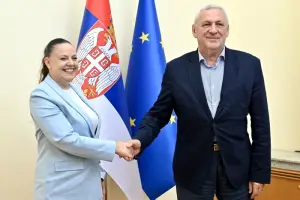 Belgrade, 5 June 2026
Cooperation with North Macedonia in field of innovation
-
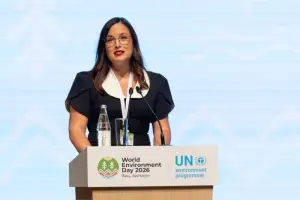 Belgrade/Baku, 5 June 2026
Serbia takes over hosting of World Environment Day 2027
-
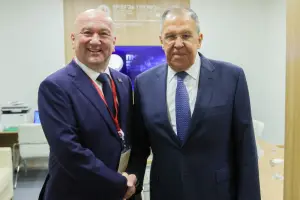 Belgrade/Saint Petersburg, 4 June 2026
Readiness to improve cooperation with Russia in areas of mutual interest
-
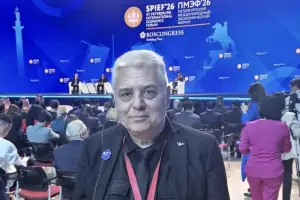 Belgrade/Saint Petersburg, 4 June 2026
Strengthening Serbia’s position in contemporary digital environment
-
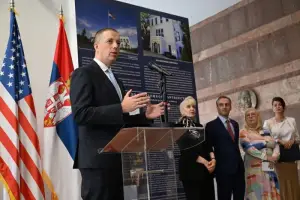 Belgrade, 4 June 2026
Serbia, US building partnership aimed at future, shared prosperity
-
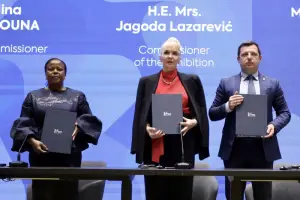 Belgrade, 3 June 2026
Contract on Gabon’s participation in Expo 2027 signed
-
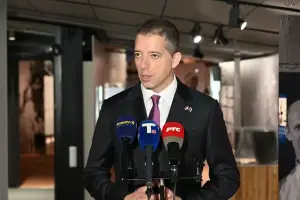 Belgrade/Helsinki, 3 June 2026
Serbia stands for peace, cooperation, respect for international law
-
 Belgrade/Helsinki, 2 June 2026
Great potential for strengthening economic ties with Finland
-
 Belgrade/Helsinki, 2 June 2026
Finland confirms strong support for Serbia’s European future
-
 Belgrade, 1 June 2026
Coordination of services to reduce risks from extreme weather events