
Q:
A:
Land management strategy to be implemented from 2009
Belgrade,
24 October 2007
State Secretary at the Serbian Ministry of Agriculture, Forestry and Water Management Danilo Golubovic said today that the land management strategy, which envisages a new reparcelling policy, will be implemented from the beginning of 2009.
Speaking at a press conference, Golubovic said that the draft of the strategy should be examined by the Serbian government by the beginning of 2008, and added that it will resolve a number of problems which Serbia has in this area.
He said that Serbia has small and unkempt properties and agriculture which is not adequately efficient since the size of parcels is not cost effective. This should be changed so that agriculture becomes more competitive and Serbia could enter the EU and the WTO, he remarked.
Golubovic said that besides the economic aspect, which implies increasing profit from business in agriculture, the strategy also deals with the social aspect of agriculture, which is raising the life standard of people in villages to an optimal level.
According to Golubovic, the policy of the strategy is not to destroy small producers by reparcelling, but to gain commercial farms, which would be ready to face competition.
Head of the department for agrarian resources at the Ministry Zoran Knezevic said that nearly 45% of population in Serbia directly deals in agriculture and solely depends upon it, or it provides them with additional income.
Head of the sector for rural development at the Food and Agriculture Organisation (FAO) of the UN David Palmer said that Serbia should benefit from the experiences of other countries in reparcelling.
The land management strategy in Serbia resulted from joint work of FAO experts and relevant ministries.
The strategy is based on five basic principles, which are viable implementation, flexibility, economic justification, continuity in rural development and harmonisaiton.
The general aim of the strategy is to design a concept for starting and realising the process of land consolidation at national level.
He said that Serbia has small and unkempt properties and agriculture which is not adequately efficient since the size of parcels is not cost effective. This should be changed so that agriculture becomes more competitive and Serbia could enter the EU and the WTO, he remarked.
Golubovic said that besides the economic aspect, which implies increasing profit from business in agriculture, the strategy also deals with the social aspect of agriculture, which is raising the life standard of people in villages to an optimal level.
According to Golubovic, the policy of the strategy is not to destroy small producers by reparcelling, but to gain commercial farms, which would be ready to face competition.
Head of the department for agrarian resources at the Ministry Zoran Knezevic said that nearly 45% of population in Serbia directly deals in agriculture and solely depends upon it, or it provides them with additional income.
Head of the sector for rural development at the Food and Agriculture Organisation (FAO) of the UN David Palmer said that Serbia should benefit from the experiences of other countries in reparcelling.
The land management strategy in Serbia resulted from joint work of FAO experts and relevant ministries.
The strategy is based on five basic principles, which are viable implementation, flexibility, economic justification, continuity in rural development and harmonisaiton.
The general aim of the strategy is to design a concept for starting and realising the process of land consolidation at national level.
-
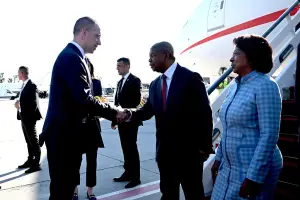 Belgrade, 8 June 2026
President of Angola arrives on official visit to Serbia
-
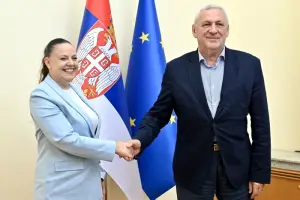 Belgrade, 5 June 2026
Cooperation with North Macedonia in field of innovation
-
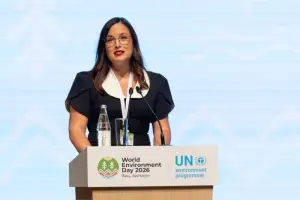 Belgrade/Baku, 5 June 2026
Serbia takes over hosting of World Environment Day 2027
-
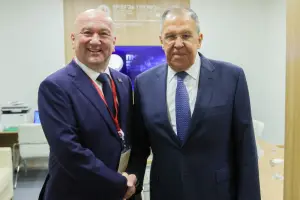 Belgrade/Saint Petersburg, 4 June 2026
Readiness to improve cooperation with Russia in areas of mutual interest
-
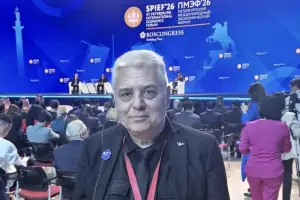 Belgrade/Saint Petersburg, 4 June 2026
Strengthening Serbia’s position in contemporary digital environment
-
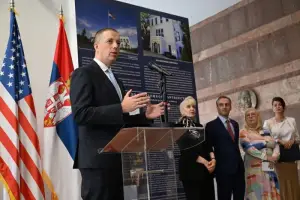 Belgrade, 4 June 2026
Serbia, US building partnership aimed at future, shared prosperity
-
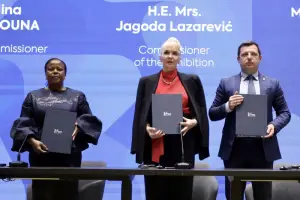 Belgrade, 3 June 2026
Contract on Gabon’s participation in Expo 2027 signed
-
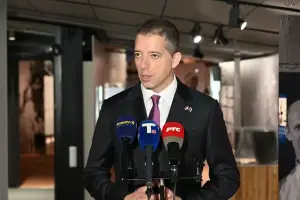 Belgrade/Helsinki, 3 June 2026
Serbia stands for peace, cooperation, respect for international law
-
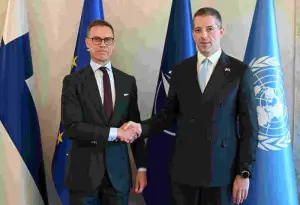 Belgrade/Helsinki, 2 June 2026
Great potential for strengthening economic ties with Finland
-
 Belgrade/Helsinki, 2 June 2026
Finland confirms strong support for Serbia’s European future