
Q:
A:
General product safety law to secure high level of consumer health protection
Belgrade,
23 October 2007
Serbian Minister of Trade and Services Predrag Bubalo said today that the draft law on general product safety envisages that guaranteed freedom in entrepreneurship regards the safety of products and only such products may be exported or imported.
Presenting the draft law in the Serbian Chamber of Commerce, Bubalo said that the Serbian legal system at present does not contain a general product safety law, which would be very important for sustainable development of Serbia and securing a high level of consumer health protection.
He said that the area of product safety is currently regulated by a large number of technical regulations which will continue to be valid, and pointed to the fact that the law will also be applied to other products which are not covered by these regulations, or if the regulations are not in harmony with EU legislation.
Bubalo explained that technical regulations will continue to be valid because the law cannot cover all safety hazards in food products.
He expressed expectation that the law will be adopted by the end of the year considering the fact that this law is part of our obligations under the Stabilisation and Association Agreement (SAA) with the EU.
According to Bubalo, the law on product safety will contribute to increasing competition among domestic companies and strengthen entrepreneurship since it will lead to high legal security to all those present in the market.
Bubalo said that implementation of the law will lead to new companies entering the market which will give an incentive to present companies to improve the quality of their currently low cost products.
Assistant Minister of Economy and Regional Development Borislava Jaksic pointed to the fact that the process of standardisation is of extraordinary importance in this area, and added that the Institute for Standardisation currently has 8,000 standards requiring obligatory implementation.
Jaksic explained that according to WTO rules, a standard may not require mandatory implementation unless relevant ministries adopt technical regulations for its implementation.
He said that the area of product safety is currently regulated by a large number of technical regulations which will continue to be valid, and pointed to the fact that the law will also be applied to other products which are not covered by these regulations, or if the regulations are not in harmony with EU legislation.
Bubalo explained that technical regulations will continue to be valid because the law cannot cover all safety hazards in food products.
He expressed expectation that the law will be adopted by the end of the year considering the fact that this law is part of our obligations under the Stabilisation and Association Agreement (SAA) with the EU.
According to Bubalo, the law on product safety will contribute to increasing competition among domestic companies and strengthen entrepreneurship since it will lead to high legal security to all those present in the market.
Bubalo said that implementation of the law will lead to new companies entering the market which will give an incentive to present companies to improve the quality of their currently low cost products.
Assistant Minister of Economy and Regional Development Borislava Jaksic pointed to the fact that the process of standardisation is of extraordinary importance in this area, and added that the Institute for Standardisation currently has 8,000 standards requiring obligatory implementation.
Jaksic explained that according to WTO rules, a standard may not require mandatory implementation unless relevant ministries adopt technical regulations for its implementation.
-
 Belgrade, 8 June 2026
President of Angola arrives on official visit to Serbia
-
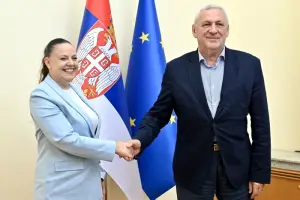 Belgrade, 5 June 2026
Cooperation with North Macedonia in field of innovation
-
 Belgrade/Baku, 5 June 2026
Serbia takes over hosting of World Environment Day 2027
-
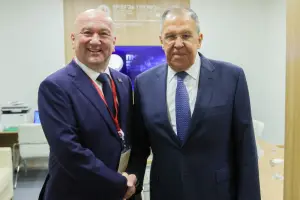 Belgrade/Saint Petersburg, 4 June 2026
Readiness to improve cooperation with Russia in areas of mutual interest
-
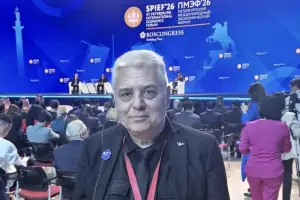 Belgrade/Saint Petersburg, 4 June 2026
Strengthening Serbia’s position in contemporary digital environment
-
 Belgrade, 4 June 2026
Serbia, US building partnership aimed at future, shared prosperity
-
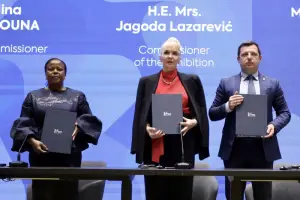 Belgrade, 3 June 2026
Contract on Gabon’s participation in Expo 2027 signed
-
 Belgrade/Helsinki, 3 June 2026
Serbia stands for peace, cooperation, respect for international law
-
 Belgrade/Helsinki, 2 June 2026
Great potential for strengthening economic ties with Finland
-
 Belgrade/Helsinki, 2 June 2026
Finland confirms strong support for Serbia’s European future