
Q:
A:
No justification for violence against children
Belgrade,
18 October 2007
State Secretary at the Serbian Ministry of Labour and Social Policy Ljiljana Lucic said today, opening the international conference "Children Without Violence", that no act of violence against children can be justified, but that every act can be prevented.
At this two-day conference which is being organised by this ministry and the Serbian government's Council for Children's Rights, as part of Serbia's chairmanship of the Council of Europe, and which is being held at the Belgrade City Hall, it is said that over 73% of children aged between two and 14 are submitted to some kind of mental or physical punishment in the family, of which 51% suffer lighter forms of punishment and 7% more severe.
Lucic said that violence is an act of severe breach of the rights of the child, jeopardises its development, including life itself, and consequences can be very serious and last for a lifetime.
Speaking about everything that has been done in Serbia on establishing the system of protection of children from violence, Lucic said that apart from initialling the Convention on the Rights of the Child in 1990, several new laws that regulate this area were adopted in the past two years.
Better cooperation has been established between centres for social work, the police, health institutions and non-governmental organisations from discovering abuse to taking care of abused children, in addition to opening several shelters for mothers and children who are victims of violence.
However, Lucic said that in spite of all efforts and results, a small number of children are included in the system of protection, while the majority remain unidentified and are therefore not taken care of.
Advisor at the programme "Building Europe for and with children" of the Council of Europe Samokhina Lioubov said that violence is usually hidden because children are afraid and ashamed to report violence they have suffered.
She said that parents do not have the right to physically punish children and that there is a series of conventions on protection of their rights. She added that there are also new forms of violence - Internet pornography and pornography over the phone.
Participants in this conference will exchange regional experiences in the protection of children from all forms of violence. Apart from domestic experts in this field, representatives of Bulgaria, Romania, Bosnia and Herzegovina, Albania and Montenegro will also speak at the conference.
Lucic said that violence is an act of severe breach of the rights of the child, jeopardises its development, including life itself, and consequences can be very serious and last for a lifetime.
Speaking about everything that has been done in Serbia on establishing the system of protection of children from violence, Lucic said that apart from initialling the Convention on the Rights of the Child in 1990, several new laws that regulate this area were adopted in the past two years.
Better cooperation has been established between centres for social work, the police, health institutions and non-governmental organisations from discovering abuse to taking care of abused children, in addition to opening several shelters for mothers and children who are victims of violence.
However, Lucic said that in spite of all efforts and results, a small number of children are included in the system of protection, while the majority remain unidentified and are therefore not taken care of.
Advisor at the programme "Building Europe for and with children" of the Council of Europe Samokhina Lioubov said that violence is usually hidden because children are afraid and ashamed to report violence they have suffered.
She said that parents do not have the right to physically punish children and that there is a series of conventions on protection of their rights. She added that there are also new forms of violence - Internet pornography and pornography over the phone.
Participants in this conference will exchange regional experiences in the protection of children from all forms of violence. Apart from domestic experts in this field, representatives of Bulgaria, Romania, Bosnia and Herzegovina, Albania and Montenegro will also speak at the conference.
-
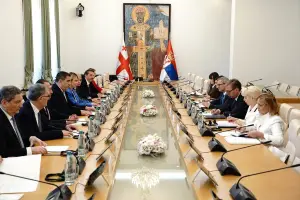 Belgrade/Tbilisi, 16 June 2026
Boosting Serbia-Georgia links in field of agriculture
-
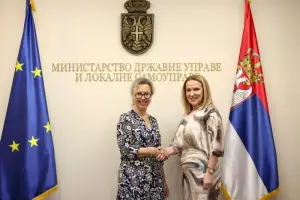 Belgrade, 16 June 2026
Enhancing partnership between Serbia, France in modernising public administration
-
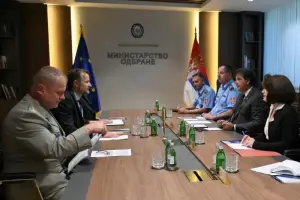 Belgrade, 16 June 2026
Strengthening regional, global security Serbia’s strategic commitment
-
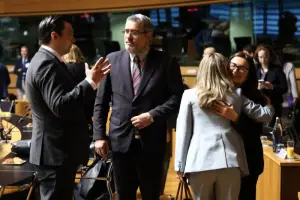 Belgrade/Luxembourg, 16 June 2026
Serbia’s evident momentum in reform processes on road to EU
-
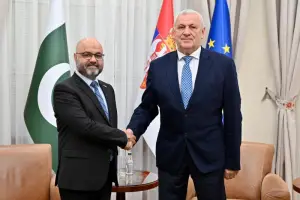 Belgrade, 16 June 2026
Great room for deepening cooperation with Pakistan in field of science
-
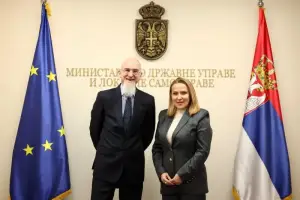 Belgrade, 15 June 2026
Exchange of experiences with Italy to further improve public administration
-
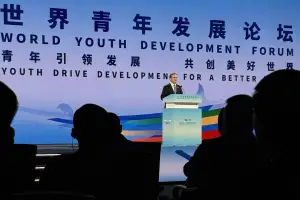 Belgrade/Wuhan, 15 June 2026
Youth policy among Serbia’s state priorities
-
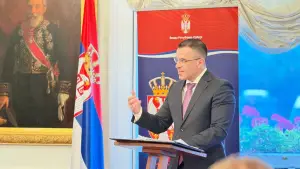 Belgrade/London, 14 June 2026
Serbia continues to strengthen cooperation with its diaspora
-
 Belgrade, 12 June 2026
Venice Commission confirms that Serbia improved set of judicial laws
-
 Belgrade, 12 June 2026
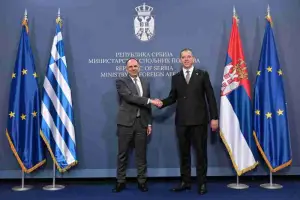
Serbia, Greece committed to region’s European perspective, stability