
Q:
A:
Tuberculosis rate drops in Serbia
Belgrade,
17 October 2007
Serbian Minister of Health Tomica Milosavljevic said today at the opening of an annual meeting on tuberculosis that the rate of patients with this disease in Serbia is dropping and that control of tuberculosis in Serbia in the past three years can serve as an example to other states.
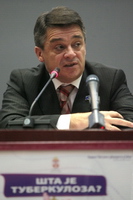
Tomica Milosavljevic
Author:
Tanjug
Speaking at the meeting held in Sava Centre, Milosavljevic said that Serbia has a tuberculosis rate which is lower than in other European countries, specifying that 29 out of 100,000 people have the disease, while in 1990s that number was 37 out of 100,000 people.
He said that the aim is to reduce the number of those infected to 25 out of 100,000 people by 2009.
Director of the World Health Organisation (WHO) for Serbia Dorit Nican said that this organisation has been included in the fight against tuberculosis in Serbia for a long time, through providing expert and technical assistance and support to the Ministry of Health and health institutions.
As part of the project approved by the Global fund to Fight AIDS, Tuberculosis and Malaria, for which Serbia received $4 million, upon the recommendation of WHO, 626 specialists for pulmonary diseases and tuberculosis were trained, as well as 4,666 general practitioners, 247 nurses and 193 laboratory workers in Serbia, Nican said.
Control of tuberculosis is possible, and the WHO defined the strategy "Directly Observed Therapy - short regimen" (DOTS), which represents an organisational framework for the fight against this disease in all countries of the world.
He said that the aim is to reduce the number of those infected to 25 out of 100,000 people by 2009.
Director of the World Health Organisation (WHO) for Serbia Dorit Nican said that this organisation has been included in the fight against tuberculosis in Serbia for a long time, through providing expert and technical assistance and support to the Ministry of Health and health institutions.
As part of the project approved by the Global fund to Fight AIDS, Tuberculosis and Malaria, for which Serbia received $4 million, upon the recommendation of WHO, 626 specialists for pulmonary diseases and tuberculosis were trained, as well as 4,666 general practitioners, 247 nurses and 193 laboratory workers in Serbia, Nican said.
Control of tuberculosis is possible, and the WHO defined the strategy "Directly Observed Therapy - short regimen" (DOTS), which represents an organisational framework for the fight against this disease in all countries of the world.
-
 Belgrade, 17 June 2026
Serbia appreciates Slovenia's continued support in European integration process
-
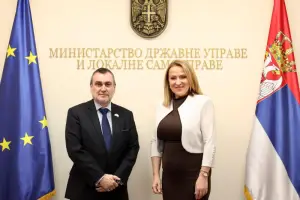 Belgrade, 17 June 2026
Deepening cooperation with Spain in field of modernising public administration
-
 Belgrade/Tbilisi, 16 June 2026
Boosting Serbia-Georgia links in field of agriculture
-
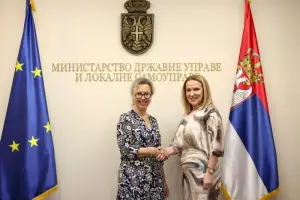 Belgrade, 16 June 2026
Enhancing partnership between Serbia, France in modernising public administration
-
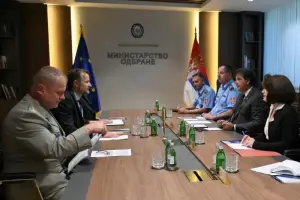 Belgrade, 16 June 2026
Strengthening regional, global security Serbia’s strategic commitment
-
 Belgrade/Luxembourg, 16 June 2026
Serbia’s evident momentum in reform processes on road to EU
-
 Belgrade, 16 June 2026
Great room for deepening cooperation with Pakistan in field of science
-
 Belgrade, 15 June 2026
Exchange of experiences with Italy to further improve public administration
-
 Belgrade/Wuhan, 15 June 2026
Youth policy among Serbia’s state priorities
-
 Belgrade/London, 14 June 2026
Serbia continues to strengthen cooperation with its diaspora