
Q:
A:
Joint European future for Serbia, Macedonia
Skopje,
24 July 2007
Serbian Deputy Prime Minister Bozidar Djelic invited Macedonian authorities in Skopje today to endorse the formation of a regional initiative which would aim at creating a joint position of Western Balkan states in the EU integration process.
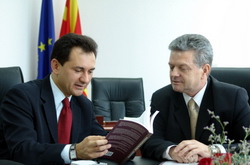
Bozidar Djelic, left, and Zivko Jankulovski
Author:
Tanjug
According to Djelic, by signing a joint declaration on European future, states in the region would form a community somewhat similar to the Visegrad Group, which was formed with the aim of speedy accession of central and eastern European countries to the EU.
At separate talks with Macedonian Deputy Prime Minister in charge of agriculture and education Zivko Jankulovski and Minister of Economy Vera Rafailovska, Djelic stressed that Serbia and Macedonia have a joint European future.
According to Djelic, Serbia and Macedonia share three joint interests – strengthening trade cooperation, EU integrations and improvement of road and energy infrastructure.
Serbs see Macedonians as their greatest friends, but friendships should always be reaffirmed and led by joint interests, said Djelic following the meeting with Jankulovski.
His meeting with the Macedonian Deputy Prime Minister concerned trade-related issues and the collocutors agreed that trade between their countries can be even better.
Serbia is currently Macedonia’s topmost foreign partner, whereas by its trade volume Macedonia is Serbia’s ninth-ranked foreign partner. From the beginning of the year until now, the volume of foreign trade between Serbia and Macedonia has increased by over 50%, said the Deputy Prime Minister.
Djelic pointed out that in the field of infrastructural cooperation, Serbia and Macedonia will cooperate on construction of a modern grid network, enabling Serbia’s southern neighbour to have a better power supply, as well as on completion of the Belgrade-Skopje highway, from Leskovac to the Macedonian border.
The Serbian Deputy Prime Minister said that Serbia expects an economic boom, noting that Serbia’s economic growth since the beginning of the year reached 8.6%.
In the years to come, Serbia will attract great attention of business circles and I am assured that Macedonian companies will find their place in the Serbian market, Djelic said.
Djelic spoke with Macedonian Minister of Economy Vera Rafailovska about the Central European Free Trade Agreement (CEFTA) that Serbia is about to ratify soon, issues of transit of goods through Serbia and foreign trade.
Speaking at a joint press conference with Macedonian Prime Minister Nikola Gruevski, held after their meeting, Djelic said that Serbia seeks Macedonian support, as a traditional friend, in keeping its sovereignty and territorial integrity.
According to him, the creation of a new state upon Serbian territory cannot be in anyone's interest.
He reiterated that the Serbian government believes that the time has come for true dialogue between Belgrade and Pristina to start which would lead to a sustainable compromise as the best solution for the entire region.
Gruevski said that the issue of the future status of Kosovo-Metohija can be best resolved through agreement, which in his opinion, is very difficult at the moment.
Djelic recalled however that Serbian parliament is to decide today on the resolution on Kosovo-Metohija which, among other things, envisages reconsideration of relations with countries which might acknowledge a unilateral declaration of independence by Pristina.
He stressed that any decision regarding the future status of Kosovo-Metohija must be brought exclusively in the UN Security Council.
During his one-day official visit to Macedonia, Djelic will also meet with Governor of the Macedonian National Bank Petar Gosev, and head of the Democratic Party of Serbs in Macedonia Ivan Stojiljkovic.
Djelic rounded up his visit to Macedonia in Ohrid this evening meeting with Macedonian President Branko Crvenkoski, whom he acquainted with the official policy of Belgrade on the question of the future status of Kosovo-Metohija, as well as the contents of the resolution on Kosovo-Metohija.
Djelic conveyed to Crvenkovski that Serbia expects Macedonia to support the policy for resolving the Kosovo-Metohija issue through a compromise between Belgrade and Pristina.
The Macedonian President said that a solution reached through compromise is one which is in the best interest of Macedonia and added that Skopje is hoping for precisely such a result of negotiations.
Djelic and Crvenkovski expressed satisfaction with the economic cooperation between Serbia and Macedonia, and said that they expect the trend of growth in trade between the two countries to continue.
The Macedonian President and Serbian Deputy Prime Minister also expressed the willingness to intensify cooperation between the two countries in the process of European integration.
At separate talks with Macedonian Deputy Prime Minister in charge of agriculture and education Zivko Jankulovski and Minister of Economy Vera Rafailovska, Djelic stressed that Serbia and Macedonia have a joint European future.
According to Djelic, Serbia and Macedonia share three joint interests – strengthening trade cooperation, EU integrations and improvement of road and energy infrastructure.
Serbs see Macedonians as their greatest friends, but friendships should always be reaffirmed and led by joint interests, said Djelic following the meeting with Jankulovski.
His meeting with the Macedonian Deputy Prime Minister concerned trade-related issues and the collocutors agreed that trade between their countries can be even better.
Serbia is currently Macedonia’s topmost foreign partner, whereas by its trade volume Macedonia is Serbia’s ninth-ranked foreign partner. From the beginning of the year until now, the volume of foreign trade between Serbia and Macedonia has increased by over 50%, said the Deputy Prime Minister.
Djelic pointed out that in the field of infrastructural cooperation, Serbia and Macedonia will cooperate on construction of a modern grid network, enabling Serbia’s southern neighbour to have a better power supply, as well as on completion of the Belgrade-Skopje highway, from Leskovac to the Macedonian border.
The Serbian Deputy Prime Minister said that Serbia expects an economic boom, noting that Serbia’s economic growth since the beginning of the year reached 8.6%.
In the years to come, Serbia will attract great attention of business circles and I am assured that Macedonian companies will find their place in the Serbian market, Djelic said.
Djelic spoke with Macedonian Minister of Economy Vera Rafailovska about the Central European Free Trade Agreement (CEFTA) that Serbia is about to ratify soon, issues of transit of goods through Serbia and foreign trade.
Speaking at a joint press conference with Macedonian Prime Minister Nikola Gruevski, held after their meeting, Djelic said that Serbia seeks Macedonian support, as a traditional friend, in keeping its sovereignty and territorial integrity.
According to him, the creation of a new state upon Serbian territory cannot be in anyone's interest.
He reiterated that the Serbian government believes that the time has come for true dialogue between Belgrade and Pristina to start which would lead to a sustainable compromise as the best solution for the entire region.
Gruevski said that the issue of the future status of Kosovo-Metohija can be best resolved through agreement, which in his opinion, is very difficult at the moment.
Djelic recalled however that Serbian parliament is to decide today on the resolution on Kosovo-Metohija which, among other things, envisages reconsideration of relations with countries which might acknowledge a unilateral declaration of independence by Pristina.
He stressed that any decision regarding the future status of Kosovo-Metohija must be brought exclusively in the UN Security Council.
During his one-day official visit to Macedonia, Djelic will also meet with Governor of the Macedonian National Bank Petar Gosev, and head of the Democratic Party of Serbs in Macedonia Ivan Stojiljkovic.
Djelic rounded up his visit to Macedonia in Ohrid this evening meeting with Macedonian President Branko Crvenkoski, whom he acquainted with the official policy of Belgrade on the question of the future status of Kosovo-Metohija, as well as the contents of the resolution on Kosovo-Metohija.
Djelic conveyed to Crvenkovski that Serbia expects Macedonia to support the policy for resolving the Kosovo-Metohija issue through a compromise between Belgrade and Pristina.
The Macedonian President said that a solution reached through compromise is one which is in the best interest of Macedonia and added that Skopje is hoping for precisely such a result of negotiations.
Djelic and Crvenkovski expressed satisfaction with the economic cooperation between Serbia and Macedonia, and said that they expect the trend of growth in trade between the two countries to continue.
The Macedonian President and Serbian Deputy Prime Minister also expressed the willingness to intensify cooperation between the two countries in the process of European integration.
-
 Belgrade, 19 June 2026
Serbia committed to protecting refugees, improving asylum system
-
 Belgrade, 19 June 2026
Visit of BYD representatives confirms strengthening of economic cooperation with China
-
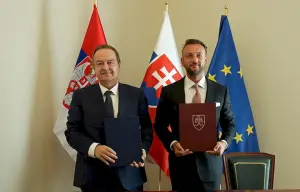 Belgrade/Bratislava, 9 June 2026
Agreement signed with Slovakia on joint surveillance of Serbia’s state border
-
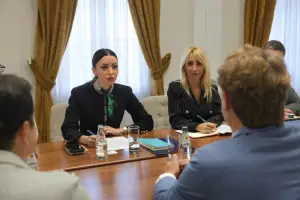 Belgrade, 3 June 2026
Bizerba continues to develop production in Serbia
-
 Belgrade, 2 June 2026
Small entrepreneurs driving force of domestic economy
-
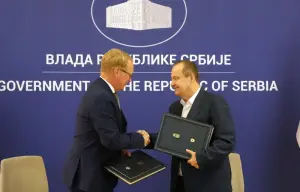 Belgrade, 1 June 2026
Serbia joins Frontex Partnership Academies Network
-
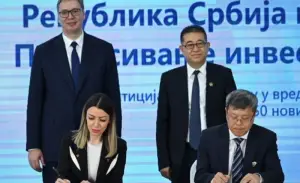 Belgrade/Shanghai, 28 May 2026
Commercial contracts signed with leading Chinese companies
-
 Belgrade/Jiaxing, 27 May 2026
Serbia entering new phase of technological, industrial development
-
 Belgrade, 27 May 2026
Dačić extends Kurban Bayram greetings
-
 Belgrade/Jinan, 26 May 2026
Strengthening international standing, economy through cooperation with China