Q:
A:
Russia, China against any imposed solution for Kosovo
Belgrade,
28 March 2007
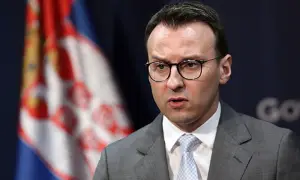
Coordinator of the state team for negotiations on the future status of Kosovo-Metohija Leon Kojen said today that he does not believe that the UN Security Council might pass a new resolution that would substitute Resolution 1244.
Kojen told the Tanjug news agency that a lot of diplomatic effort and political good will would be necessary to come up with a new resolution that would be acceptable for Serbia, Kosovo Albanians and all other members of the Security Council, as well as for many other countries that see a very dangerous precedent in Kosovo's possible independence for solving political conflicts in other parts of the world.
Opinions on the province's future status are very divided, especially among permanent UN Security Council members, Kojen said and explained that on one side there are the United States, Great Britain and France, that fully support Ahtisaari's proposal for independence and think that further negotiations are pointless.
On the other side there are Russia and China that oppose to any imposed solution, believe that possibilities of negotiations have not been used up and on several occasions supported Serbia's sovereignty and territorial integrity at the UN Security Council.
Kojen explained that other UN Security Council members are somewhere in between, with some being closer to the opinion of the Western forces, such as Belgium, Qatar and Panama, while others, such as Indonesia, South Africa and Congo are rather skeptical towards Ahtisaari's plan.
These countries will wait to see what the outcome of the first debates at the UN Security Council will be, especially between Russia and the US, before reaching their final decisions.
He said that together with other coordinator of the state team Slobodan Samardzic, he pointed out at the talks held last week in New York that Serbia is not only ready for the continuation of talks, but for any other form of constructive participation in the process of determining the province's future status.
Kojen also said that those ethnic Albanians who support violence in the province also support stopping further negotiations on Kosovo-Metohija status. He also noted that new violence would cause problems to UNMIK and KFOR whose duty is to secure public peace and order and guarantee safety to all citizens of Kosovo.
Some countries, especially in Africa, Asia and Latin America, regard Kosovo’s possible independence with great concern, Kojen said.
He said that some big powers claim today that Kosovo should be given independence even at the price of violating sovereignty and territorial integrity of one internationally recognised, democratic and peaceable state.
Smaller countries have reasons to be concerned as Kosovo’s independence would be imposed on Serbia by force, which would exclude political means in conflict situations, Kojen said.
Opinions on the province's future status are very divided, especially among permanent UN Security Council members, Kojen said and explained that on one side there are the United States, Great Britain and France, that fully support Ahtisaari's proposal for independence and think that further negotiations are pointless.
On the other side there are Russia and China that oppose to any imposed solution, believe that possibilities of negotiations have not been used up and on several occasions supported Serbia's sovereignty and territorial integrity at the UN Security Council.
Kojen explained that other UN Security Council members are somewhere in between, with some being closer to the opinion of the Western forces, such as Belgium, Qatar and Panama, while others, such as Indonesia, South Africa and Congo are rather skeptical towards Ahtisaari's plan.
These countries will wait to see what the outcome of the first debates at the UN Security Council will be, especially between Russia and the US, before reaching their final decisions.
He said that together with other coordinator of the state team Slobodan Samardzic, he pointed out at the talks held last week in New York that Serbia is not only ready for the continuation of talks, but for any other form of constructive participation in the process of determining the province's future status.
Kojen also said that those ethnic Albanians who support violence in the province also support stopping further negotiations on Kosovo-Metohija status. He also noted that new violence would cause problems to UNMIK and KFOR whose duty is to secure public peace and order and guarantee safety to all citizens of Kosovo.
Some countries, especially in Africa, Asia and Latin America, regard Kosovo’s possible independence with great concern, Kojen said.
He said that some big powers claim today that Kosovo should be given independence even at the price of violating sovereignty and territorial integrity of one internationally recognised, democratic and peaceable state.
Smaller countries have reasons to be concerned as Kosovo’s independence would be imposed on Serbia by force, which would exclude political means in conflict situations, Kojen said.
-
 Belgrade, 28 August 2026
Church broken into, ransacked in Bušince village in Kosovska Kamenica
-
 Belgrade, 27 August 2026
Remembrance of suffering of Serb civilians in village of Klečka
-
 Belgrade, 30 July 2026
Continued illegal demolition of Serb-owned buildings near Lake Gazivode
-
 Belgrade, 29 July 2026
Works in Special Protective Zone of Visoki Dečani Monastery must be halted
-
 Belgrade, 23 July 2026
Priština continues with unilateral, illegal moves
-
 Belgrade/Zurich, 4 June 2026
Exhibition in Zurich on position of Serbs in Kosovo and Metohija
-
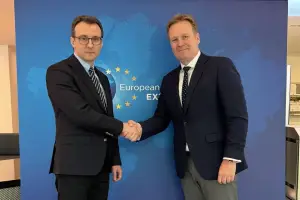 Belgrade/Brussels, 12 May 2026
Belgrade seeking concrete steps towards establishment of Community of Serb Municipalities
-
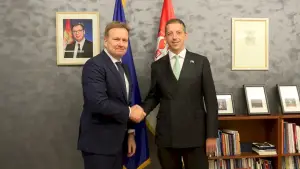 Belgrade/Brussels, 11 May 2026
Belgrade-Priština dialogue not dialogue on mutual recognition
-
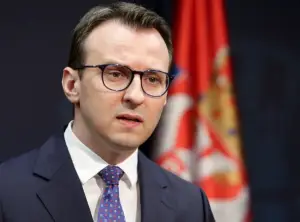 Belgrade, 10 April 2026
Serbian health centres closed in villages of Suvo Grlo, Banje