Q:
A:
Serbia ready to continue Kosovo status negotiations under UN umbrella
Moscow,
23 March 2007
President of the Coordinating Centre for Kosovo-Metohija Sanda Raskovic-Ivic met with Speaker of the Russian Duma Boris Gryzlov and expressed satisfaction with Russian support to Serbia, which is of historical importance.
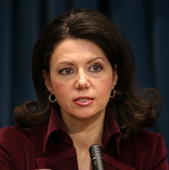
Sanda Raskovic-Ivic
Raskovic-Ivic, who traveled to Moscow with head of the economic team for Kosovo-Metohija Nenad Popovic at the invitation of the Russian Duma, said that the message of the Serbian leadership is that Serbia is fully prepared to continue negotiations on Kosovo-Metohija within the United Nations.
She pointed out that the discussion on the status of the Serbian southern province should be more serious and more thorough, adding that talks on technical issues presented in Martti Ahtisaari’s plan should be continued
According to her, Serbia also supports the involvement of the Contact Group in the Kosovo negotiations process.
Gryzlov announced that Kosovo negotiations should continue and last as long as it is necessary, adding that the solution which is accepted by Belgrade should be supported.
The situation in Kosovo and Ahtisaari’s actions arouse concern of Moscow, Gryzlov said and noted that Ahtisaari’s position has been wrong from the very start as he completely ignored the position of Belgrade and focused on Kosovo gaining independence.
According to him, Kosovo becoming independent would affect separatist tendencies worldwide.
The Serbian delegation also met today with Chairman of the International Affairs Committee of the State Duma Konstantin Kosachev.
Kosachev said that Russia would use its veto at the Security Council if its members insist "these days or very soon" that a decision on giving independence to Kosovo should be put to a vote.
If the Security Council fails to adopt any solution, there is no alternative, but to continue the negotiating process, Kosachev said and stressed that he is convinced that Russia has the power and possibilities to insist on that.
Speaking at a roundtable which was also attended by deputies and members of International Affairs Committee of the State Duma, as well as members of Russian academies and institutes, Raskovic-Ivic pointed out that imposed independence of Kosovo-Metohija would not only humiliate Serbia, but would also lead to complete ethnic cleansing of the province.
There is no Serbian government that would be willing to give up 15% of its territory and Kosovo, and in the event of "the worst solution", Serbia would reconsider its relations with countries that would recognise Kosovo's independence.
Loncar said that Serbia is open for communication but that compromise does not mean compensation, and that the offer of integration without a part of the state territory is unacceptable for Serbia, just as it would be for any other country.
We in Serbia believe that by defending our territorial integrity, we also defend the world peace and order and UN principles. Every support, especially of friendly Russia, is very welcome at this moment, Loncar pointed out and added that Serbia believes that the entire international order is based on international law and legitimacy, and not on force and terrorism.
Raskovic-Ivic underlined that Serbia wants to continue negotiations within the UN and the Contact Group and that the status talks should be more serious and intensive. In that process, it is necessary to talk again about decentralisation, security, and protection of cultural and religious heritage, which is crucial for the return of Serbs.
She recalled that Serbia was very constructive in the negotiations on future status of Kosovo, which can be seen from a large number of amendments it made to the plan of UN Special Envoy Martti Ahtisaari and added that Serbia offers ethnic Albanians high-level autonomy in which they would have their own president, parliament, government and judiciary, and they could also make regional treaties and have a high level of financial autonomy.
That is absolute self-government in which they would not have army, a place in the UN and control of borders, Raskovic-Ivic said and added that Serbia believes that a compromise solution is in the substantial autonomy which is a bridge between the right to the protection of territorial integrity and the right to people's self-determination.
She underlined that independence of Kosovo would be a precedent for at least 50 crisis spots in the world in which ethnic conflicts would explode, adding that Kosovo-Metohija is a "spiritual vertical" for Serbia, the cradle of the Serbian Orthodox Church and medieval state, with 1,300 churches and monasteries.
Raskovic-Ivic said that since the adoption of UN SC Resolution 1244, there have been 7,000 attacks against Serbs, of which more than 4,800 were armed attacks, 931 Serbs have been killed and no one answered for that, and only 2% of internally displaced persons returned to the province.
She pointed out that the discussion on the status of the Serbian southern province should be more serious and more thorough, adding that talks on technical issues presented in Martti Ahtisaari’s plan should be continued
According to her, Serbia also supports the involvement of the Contact Group in the Kosovo negotiations process.
Gryzlov announced that Kosovo negotiations should continue and last as long as it is necessary, adding that the solution which is accepted by Belgrade should be supported.
The situation in Kosovo and Ahtisaari’s actions arouse concern of Moscow, Gryzlov said and noted that Ahtisaari’s position has been wrong from the very start as he completely ignored the position of Belgrade and focused on Kosovo gaining independence.
According to him, Kosovo becoming independent would affect separatist tendencies worldwide.
The Serbian delegation also met today with Chairman of the International Affairs Committee of the State Duma Konstantin Kosachev.
Kosachev said that Russia would use its veto at the Security Council if its members insist "these days or very soon" that a decision on giving independence to Kosovo should be put to a vote.
If the Security Council fails to adopt any solution, there is no alternative, but to continue the negotiating process, Kosachev said and stressed that he is convinced that Russia has the power and possibilities to insist on that.
Speaking at a roundtable which was also attended by deputies and members of International Affairs Committee of the State Duma, as well as members of Russian academies and institutes, Raskovic-Ivic pointed out that imposed independence of Kosovo-Metohija would not only humiliate Serbia, but would also lead to complete ethnic cleansing of the province.
There is no Serbian government that would be willing to give up 15% of its territory and Kosovo, and in the event of "the worst solution", Serbia would reconsider its relations with countries that would recognise Kosovo's independence.
Loncar said that Serbia is open for communication but that compromise does not mean compensation, and that the offer of integration without a part of the state territory is unacceptable for Serbia, just as it would be for any other country.
We in Serbia believe that by defending our territorial integrity, we also defend the world peace and order and UN principles. Every support, especially of friendly Russia, is very welcome at this moment, Loncar pointed out and added that Serbia believes that the entire international order is based on international law and legitimacy, and not on force and terrorism.
Raskovic-Ivic underlined that Serbia wants to continue negotiations within the UN and the Contact Group and that the status talks should be more serious and intensive. In that process, it is necessary to talk again about decentralisation, security, and protection of cultural and religious heritage, which is crucial for the return of Serbs.
She recalled that Serbia was very constructive in the negotiations on future status of Kosovo, which can be seen from a large number of amendments it made to the plan of UN Special Envoy Martti Ahtisaari and added that Serbia offers ethnic Albanians high-level autonomy in which they would have their own president, parliament, government and judiciary, and they could also make regional treaties and have a high level of financial autonomy.
That is absolute self-government in which they would not have army, a place in the UN and control of borders, Raskovic-Ivic said and added that Serbia believes that a compromise solution is in the substantial autonomy which is a bridge between the right to the protection of territorial integrity and the right to people's self-determination.
She underlined that independence of Kosovo would be a precedent for at least 50 crisis spots in the world in which ethnic conflicts would explode, adding that Kosovo-Metohija is a "spiritual vertical" for Serbia, the cradle of the Serbian Orthodox Church and medieval state, with 1,300 churches and monasteries.
Raskovic-Ivic said that since the adoption of UN SC Resolution 1244, there have been 7,000 attacks against Serbs, of which more than 4,800 were armed attacks, 931 Serbs have been killed and no one answered for that, and only 2% of internally displaced persons returned to the province.

-
 Belgrade, 28 August 2026
Church broken into, ransacked in Bušince village in Kosovska Kamenica
-
 Belgrade, 27 August 2026
Remembrance of suffering of Serb civilians in village of Klečka
-
 Belgrade, 30 July 2026
Continued illegal demolition of Serb-owned buildings near Lake Gazivode
-
 Belgrade, 29 July 2026
Works in Special Protective Zone of Visoki Dečani Monastery must be halted
-
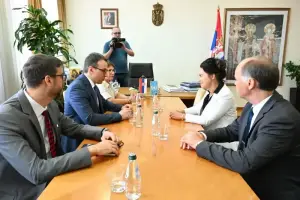 Belgrade, 23 July 2026
Priština continues with unilateral, illegal moves
-
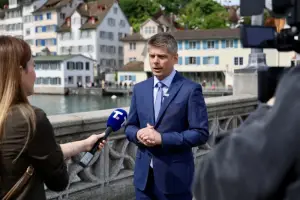 Belgrade/Zurich, 4 June 2026
Exhibition in Zurich on position of Serbs in Kosovo and Metohija
-
 Belgrade/Brussels, 12 May 2026
Belgrade seeking concrete steps towards establishment of Community of Serb Municipalities
-
 Belgrade/Brussels, 11 May 2026
Belgrade-Priština dialogue not dialogue on mutual recognition
-
 Belgrade, 10 April 2026
Serbian health centres closed in villages of Suvo Grlo, Banje