Q:
A:
Three years since March violence against Serbs in Kosovo marked
Belgrade,
17 March 2007
Today is three years since the outbreak of ethnically motivated conflicts in Kosovo-Metohija on March 17 and 18, 2004, in which 19 persons got killed and 954 got wounded.
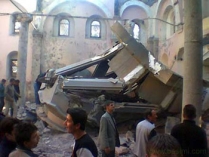
Nearly 800 houses were destroyed, several thousands of Serbs were expelled from their homes, 35 Serbian Orthodox churches and monasteries were destroyed, including many medieval monasteries of invaluable cultural value.
According to UNMIK, 4,012 Serbs were expelled from their homes and 561 Serbian houses were burned down while seven Serbian villages in Kosovo-Metohija were completely destroyed.
The two-day pogrom in Kosovo-Metohija happened after UNMIK police found bodies of three boys on the Ibar River near the village of Cabar, northern Kosovo.
The mass rallies of Kosovo Albanians, who accused Serbs for the death of three boys, broke out first in the southern part of Kosovska Mitrovica and spread to other parts of Kosovo during the day.
The violence in the Serbian southern province was condemned by the UN Security Council and the then UN Secretary General, Kofi Annan, as well as all important international institutions and organisations, governments of many countries, including the US and Russia.
NATO then sent additional troops to Kosovo-Metohija as well as NATO Commander for Southeastern Europe Admiral Gregory Johnson, who confirmed that the violence in Kosovo was organised and orchestrated.
The third anniversary of the pogrom against Serbs in Kosovo-Metohija was marked by memorial service for the victims in all churches and monasteries of the Diocese of Raska and Prizren.
Bishop of Raska and Prizren Artemije said in Gracanica that Serbs only have one choice, i.e., never to accept the separation of Kosovo-Metohija from Serbia.
According to UNMIK, 4,012 Serbs were expelled from their homes and 561 Serbian houses were burned down while seven Serbian villages in Kosovo-Metohija were completely destroyed.
The two-day pogrom in Kosovo-Metohija happened after UNMIK police found bodies of three boys on the Ibar River near the village of Cabar, northern Kosovo.
The mass rallies of Kosovo Albanians, who accused Serbs for the death of three boys, broke out first in the southern part of Kosovska Mitrovica and spread to other parts of Kosovo during the day.
The violence in the Serbian southern province was condemned by the UN Security Council and the then UN Secretary General, Kofi Annan, as well as all important international institutions and organisations, governments of many countries, including the US and Russia.
NATO then sent additional troops to Kosovo-Metohija as well as NATO Commander for Southeastern Europe Admiral Gregory Johnson, who confirmed that the violence in Kosovo was organised and orchestrated.
The third anniversary of the pogrom against Serbs in Kosovo-Metohija was marked by memorial service for the victims in all churches and monasteries of the Diocese of Raska and Prizren.
Bishop of Raska and Prizren Artemije said in Gracanica that Serbs only have one choice, i.e., never to accept the separation of Kosovo-Metohija from Serbia.
VIDEO: A documentary on three days of numerous terrorist attacks on Serb and non-Albanian populations in Kosovo-Metohija which lasted from March 17 to 19, 2004.
-
 Belgrade, 28 August 2026
Church broken into, ransacked in Bušince village in Kosovska Kamenica
-
 Belgrade, 27 August 2026
Remembrance of suffering of Serb civilians in village of Klečka
-
 Belgrade, 30 July 2026
Continued illegal demolition of Serb-owned buildings near Lake Gazivode
-
 Belgrade, 29 July 2026
Works in Special Protective Zone of Visoki Dečani Monastery must be halted
-
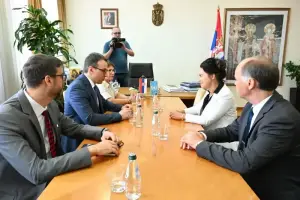 Belgrade, 23 July 2026
Priština continues with unilateral, illegal moves
-
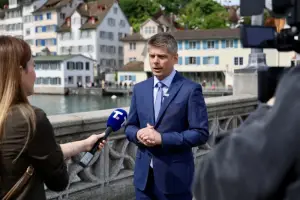 Belgrade/Zurich, 4 June 2026
Exhibition in Zurich on position of Serbs in Kosovo and Metohija
-
 Belgrade/Brussels, 12 May 2026
Belgrade seeking concrete steps towards establishment of Community of Serb Municipalities
-
 Belgrade/Brussels, 11 May 2026
Belgrade-Priština dialogue not dialogue on mutual recognition
-
 Belgrade, 10 April 2026
Serbian health centres closed in villages of Suvo Grlo, Banje