Q:
A:
Aggression against Kosovo Serbs on March 17, 2004 is a big warning
Belgrade,
16 March 2007
Head of the Economic team for Kosovo-Metohija and southern Serbia Nenad Popovic, on the occasion of the third anniversary of pogrom against Kosovo Serbs, said that the memory of the aggression against the Serbian people on March 17, 2004 is a big warning and an obligation for all participants in the negotiations on the future status of Kosovo-Metohija to address this issue wisely and responsibly.
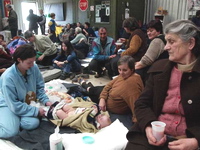
Serbs who fled from their homes during the March violence
Popovic said that on March 17 it is exactly three years since the beginning of organised and systematic violence against the Serbian people in Kosovo-Metohija. During those tragic March days, dozens of people were killed and over 1,000 injured.
In addition, more than 1,000 houses were destroyed or damaged, as well as around forty religious and dozens of community facilities. Several Orthodox cemeteries were defiled, and several thousand Serbs were forced to leave their homes.
He said that in this way six towns and nine villages that had been inhabited for centuries by Serbs were completely ethnically cleansed, and the process of return of the displaced persons was stopped.
It is frustrating that not one of the perpetrators of the March pogrom against the Serbs, either the organisers or direct executors, has been brought to justice for what they did. This worrying fact speaks volumes about the crisis of institutions in Kosovo-Metohija and non-existence of the rule of law in the southern Serbian province, Popovic stressed.
He said that today, three years after this crime, the security of the Serbian population in Kosovo-Metohija is very poor and there is no freedom of movement.
Especially worrying is the latest information about the appearance of organised groups of people in black uniforms who intercept and terrorise citizens, and it has been noticed that there are many members of the allegedly disbanded "Liberation Army of Kosovo" among those people. This additionally confirms the thesis that an independent Kosovo advocated by representatives of Kosovo Albanians would be a source of a lasting instability in the region.
Substantial autonomy for Kosovo within the Republic of Serbia, proposed by the Serbian state negotiating team at the Vienna negotiations for the solution of the Kosovo status, would be the best solution for it and the only solution that gives a solid base for building future political and economic sustainability because an independent Kosovo would be economically unsustainable, Popovic concluded.
In addition, more than 1,000 houses were destroyed or damaged, as well as around forty religious and dozens of community facilities. Several Orthodox cemeteries were defiled, and several thousand Serbs were forced to leave their homes.
He said that in this way six towns and nine villages that had been inhabited for centuries by Serbs were completely ethnically cleansed, and the process of return of the displaced persons was stopped.
It is frustrating that not one of the perpetrators of the March pogrom against the Serbs, either the organisers or direct executors, has been brought to justice for what they did. This worrying fact speaks volumes about the crisis of institutions in Kosovo-Metohija and non-existence of the rule of law in the southern Serbian province, Popovic stressed.
He said that today, three years after this crime, the security of the Serbian population in Kosovo-Metohija is very poor and there is no freedom of movement.
Especially worrying is the latest information about the appearance of organised groups of people in black uniforms who intercept and terrorise citizens, and it has been noticed that there are many members of the allegedly disbanded "Liberation Army of Kosovo" among those people. This additionally confirms the thesis that an independent Kosovo advocated by representatives of Kosovo Albanians would be a source of a lasting instability in the region.
Substantial autonomy for Kosovo within the Republic of Serbia, proposed by the Serbian state negotiating team at the Vienna negotiations for the solution of the Kosovo status, would be the best solution for it and the only solution that gives a solid base for building future political and economic sustainability because an independent Kosovo would be economically unsustainable, Popovic concluded.
-
 Belgrade, 28 August 2026
Church broken into, ransacked in Bušince village in Kosovska Kamenica
-
 Belgrade, 27 August 2026
Remembrance of suffering of Serb civilians in village of Klečka
-
 Belgrade, 30 July 2026
Continued illegal demolition of Serb-owned buildings near Lake Gazivode
-
 Belgrade, 29 July 2026
Works in Special Protective Zone of Visoki Dečani Monastery must be halted
-
 Belgrade, 23 July 2026
Priština continues with unilateral, illegal moves
-
 Belgrade/Zurich, 4 June 2026
Exhibition in Zurich on position of Serbs in Kosovo and Metohija
-
 Belgrade/Brussels, 12 May 2026
Belgrade seeking concrete steps towards establishment of Community of Serb Municipalities
-
 Belgrade/Brussels, 11 May 2026
Belgrade-Priština dialogue not dialogue on mutual recognition
-
 Belgrade, 10 April 2026
Serbian health centres closed in villages of Suvo Grlo, Banje