Q:
A:
Serbia will not accept an independent Kosovo-Metohija
Vienna,
21 February 2007
Coordinator in the state team for negotiations on the future status of Kosovo-Metohija Leon Kojen said this evening that there are huge differences in the positions of Belgrade, the position taken in the proposal by UN Special Envoy Marti Ahtisaari, and the position of the ethnic-Albanian delegation, on the issue of the future status of Kosovo-Metohija.
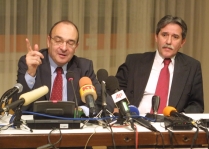
Leon Kojen, left, and Slobodan Samardzic at today's press conference in Vienna
Author:
Fonet
Speaking at a press conference following the first day of the new round of negotiations in Vienna on the status of Kosovo-Metohija, Kojen reiterated that Ahtisaari’s proposal is unacceptable for Serbia when it comes to the basic question, and that is independent status for Kosovo-Metohija, and it is clear that the proposal is built upon the idea of independence for the province, even though that term has not been used.
According to Kojen, Belgrade is offering Kosovo substantial autonomy within Serbia and cannot accept any kind of independence and due to that reason the Belgrade delegation today rejected all terms of Ahtisaari’s document which are connected to independence in any form.
In the upcoming days when the annexes will be discussed, the Serbian side will present its view of the issue, said Kojen, and explained that the Serbian side will explain the concept of substantial autonomy tomorrow in amendments to Annex 1.
Kojen said that the Serbian negotiating team has the impression that Pristina thinks that the question of the status was settled back in 1999, which they reiterated today.
That is completely unrealistic, because in that case the international community would not even have begun the process of solving the status issue, stressed Kojen. He conveyed Ahtisaari’s statement that he is listening to the two delegations attentively, and encourages further contact between Belgrade and Pristina, and would be pleased if agreement is reached on some questions.
Kojen expressed the conviction that when debate on the status issue reaches the UN Security Council, Russia and China will support Serbia.
Russia has given support to Serbia because the two countries have the same stand regarding the issue of safeguarding territorial integrity and sovereignty of a country and respect of international law, explained Kojen. He added that there is no reason to believe that Russia will change her stand.
He said that he does not believe that Pristina’s expectation that a Security Council decision to give independence to Kosovo-Metohija will be fulfilled.
The second coordinator of the state negotiating team Slobodan Samardzic reiterated that Belgrade always insisted on holding negotiations on status, adding that only one session was held on this issue, on July 24 last year.
There were no talks on this, the most important issue, Samardzic said and underlined that it was Ahtisaari's task and that of this team to encourage talks on this issue.
He said that the UN envoy tried to organise negotiations on the status question today, but now it is too late for that because Belgrade and Pristina received a document that has legal formulations.
Soon this issue will be placed before a competent body, and that is the UN Security Council and we will see how the thing will go there, Samardzic said and added that Ahtisaari's mandate is not to make final documents, but to give a proposal.
Samardzic said that it is unacceptable that this proposal has not been discussed at all and that the main part of the document has not been examined earlier, but only the annexes.
According to him, one year after the beginning of negotiations, negotiators had an opportunity today in Vienna to talk about the status again. Belgrade did not offer a new position, but amendments to the Serbian platform.
Member of the negotiating team Marko Jaksic disputed Ahtisaari's document in the part referring to status. He explained that not even the NATO and KFOR troops did manage to save Serbs and other non-Albanians in Kosovo and therefore, there is a question what will happen to Serbs in a creation made by ethnic cleansing and violence.
We believe that ethnic violence that has been taking place in the past eight years cannot be a recommendation for Albanians to get a new state in the Balkans, Jaksic stressed.
He warned that the acceptance of Ahtisaari's proposal would first of all be an award and definitely a message to all separatist movements in the world that goals can be achieved through violence, expulsion and ethnic cleansing, and underlined that an independent Kosovo-Metohija is incompatible with the survival of Serbs in the province.
According to Kojen, Belgrade is offering Kosovo substantial autonomy within Serbia and cannot accept any kind of independence and due to that reason the Belgrade delegation today rejected all terms of Ahtisaari’s document which are connected to independence in any form.
In the upcoming days when the annexes will be discussed, the Serbian side will present its view of the issue, said Kojen, and explained that the Serbian side will explain the concept of substantial autonomy tomorrow in amendments to Annex 1.
Kojen said that the Serbian negotiating team has the impression that Pristina thinks that the question of the status was settled back in 1999, which they reiterated today.
That is completely unrealistic, because in that case the international community would not even have begun the process of solving the status issue, stressed Kojen. He conveyed Ahtisaari’s statement that he is listening to the two delegations attentively, and encourages further contact between Belgrade and Pristina, and would be pleased if agreement is reached on some questions.
Kojen expressed the conviction that when debate on the status issue reaches the UN Security Council, Russia and China will support Serbia.
Russia has given support to Serbia because the two countries have the same stand regarding the issue of safeguarding territorial integrity and sovereignty of a country and respect of international law, explained Kojen. He added that there is no reason to believe that Russia will change her stand.
He said that he does not believe that Pristina’s expectation that a Security Council decision to give independence to Kosovo-Metohija will be fulfilled.
The second coordinator of the state negotiating team Slobodan Samardzic reiterated that Belgrade always insisted on holding negotiations on status, adding that only one session was held on this issue, on July 24 last year.
There were no talks on this, the most important issue, Samardzic said and underlined that it was Ahtisaari's task and that of this team to encourage talks on this issue.
He said that the UN envoy tried to organise negotiations on the status question today, but now it is too late for that because Belgrade and Pristina received a document that has legal formulations.
Soon this issue will be placed before a competent body, and that is the UN Security Council and we will see how the thing will go there, Samardzic said and added that Ahtisaari's mandate is not to make final documents, but to give a proposal.
Samardzic said that it is unacceptable that this proposal has not been discussed at all and that the main part of the document has not been examined earlier, but only the annexes.
According to him, one year after the beginning of negotiations, negotiators had an opportunity today in Vienna to talk about the status again. Belgrade did not offer a new position, but amendments to the Serbian platform.
Member of the negotiating team Marko Jaksic disputed Ahtisaari's document in the part referring to status. He explained that not even the NATO and KFOR troops did manage to save Serbs and other non-Albanians in Kosovo and therefore, there is a question what will happen to Serbs in a creation made by ethnic cleansing and violence.
We believe that ethnic violence that has been taking place in the past eight years cannot be a recommendation for Albanians to get a new state in the Balkans, Jaksic stressed.
He warned that the acceptance of Ahtisaari's proposal would first of all be an award and definitely a message to all separatist movements in the world that goals can be achieved through violence, expulsion and ethnic cleansing, and underlined that an independent Kosovo-Metohija is incompatible with the survival of Serbs in the province.
-
 Belgrade, 28 August 2026
Church broken into, ransacked in Bušince village in Kosovska Kamenica
-
 Belgrade, 27 August 2026
Remembrance of suffering of Serb civilians in village of Klečka
-
 Belgrade, 30 July 2026
Continued illegal demolition of Serb-owned buildings near Lake Gazivode
-
 Belgrade, 29 July 2026
Works in Special Protective Zone of Visoki Dečani Monastery must be halted
-
 Belgrade, 23 July 2026
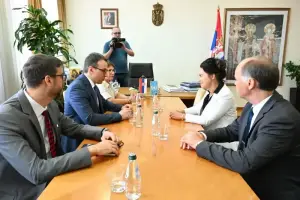
Priština continues with unilateral, illegal moves
-
 Belgrade/Zurich, 4 June 2026
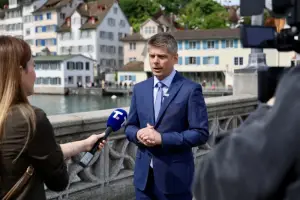
Exhibition in Zurich on position of Serbs in Kosovo and Metohija
-
 Belgrade/Brussels, 12 May 2026
Belgrade seeking concrete steps towards establishment of Community of Serb Municipalities
-
 Belgrade/Brussels, 11 May 2026
Belgrade-Priština dialogue not dialogue on mutual recognition
-
 Belgrade, 10 April 2026
Serbian health centres closed in villages of Suvo Grlo, Banje