Q:
A:
Fleiner warns of dangers posed by independence for Kosovo
Belgrade/Berlin,
31 January 2007
Permanent Advisor of the state team for negotiations on the future status of Kosovo-Metohija and Director of the Institute for Federalism in Fribourg, Switzerland Thomas Fleiner has warned that if the UN Security Council separates Kosovo-Metohija from Serbia, whose sovereignty and territorial integrity is guaranteed by international law through the UN SC Resolution 1244, it would be the first time in history that an organ of the UN unilaterally, against the will of the majority, breaks up a country and nation.
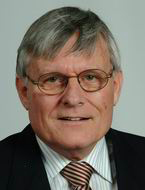
Thomas Fleiner
Author:
federalism.ch
In an article published today in the German daily “Frankfurter Allgemeine Zeitung” Fleiner states that such an action has no legal basis in international law.
People who have separatist ambitions could in the future, internationalise their conflicts even further to involve the Security Council, says Fleiner, adding that history tells us that such decisions bring lasting peace only if they rest on a state-legal basis with the aim of building confidence and reconciliation between peoples in a conflict.
Reminding that US Special Envoy for talks on the future status of Kosovo-Metohija Marti Ahtisaari is now leading negotiations between Belgrade and Pristina, Fleiner writes that individual members of the Security Council wish to adopt a solution through a decree, if no agreement is reached.
That “Sword of Damocles” in no way makes negotiations easier, says Fleiner, stressing that the right to a constructive approach and equal opportunities for participants, as an absolute condition for lasting peace, will be thus jeopardized.
In peace negotiations mediators should regulate procedure, and not contents of the solution, says Fleiner, adding that Ahtisaari is encroaching upon contents, because he wishes to present a solution to the Security Council which is in accordance with his expectations and supported by a minimum of one side.
Fleiner says that the new Constitution of Serbia acknowledges wide autonomy for Kosovo-Metohija, but not unilateral secessionist rights.
Fleiner recalls that the Serbian community, including those who are persecuted, comprising a total of some 300,000 people, is fearful of ethnic-Albanian aggression and want the province to be closely joined with Serbia.
In his article Fleiner poses the question, who can resolve the conflict? For instance, can an autonomous Hong Kong unilaterally secede from China? Who has the right to decide the fate of a part of a state – the province itself, peoples of the province or these together with the peoples of the entire state, or even the UN?
He recalls the decision by the Badinter Commission in autumn of 1991, according to which republics of the former Yugoslavia, and not the provinces, can realise the right to a sovereign state.
According to that decision, a federal state does not exist at a time when member states are in mutual conflict and block the federation, writes Fleiner.
He says that it is not strange then that due to the threat of secession many countries fear federal solutions, even if they can bring stability.
He goes on to give the instance of the decision brought by the Canadian court in 1998 regarding Quebec’s right to self-determination, where this right was not acknowledged, because that would, as it was put, oppose the fundamental principles of democracy, a legal state, federalism and the protection of minorities.
As long as that position is maintained while dealing with the issue of Kosovo-Metohija, people, including minorities, should reach a solution through consensus, concludes Fleiner.
People who have separatist ambitions could in the future, internationalise their conflicts even further to involve the Security Council, says Fleiner, adding that history tells us that such decisions bring lasting peace only if they rest on a state-legal basis with the aim of building confidence and reconciliation between peoples in a conflict.
Reminding that US Special Envoy for talks on the future status of Kosovo-Metohija Marti Ahtisaari is now leading negotiations between Belgrade and Pristina, Fleiner writes that individual members of the Security Council wish to adopt a solution through a decree, if no agreement is reached.
That “Sword of Damocles” in no way makes negotiations easier, says Fleiner, stressing that the right to a constructive approach and equal opportunities for participants, as an absolute condition for lasting peace, will be thus jeopardized.
In peace negotiations mediators should regulate procedure, and not contents of the solution, says Fleiner, adding that Ahtisaari is encroaching upon contents, because he wishes to present a solution to the Security Council which is in accordance with his expectations and supported by a minimum of one side.
Fleiner says that the new Constitution of Serbia acknowledges wide autonomy for Kosovo-Metohija, but not unilateral secessionist rights.
Fleiner recalls that the Serbian community, including those who are persecuted, comprising a total of some 300,000 people, is fearful of ethnic-Albanian aggression and want the province to be closely joined with Serbia.
In his article Fleiner poses the question, who can resolve the conflict? For instance, can an autonomous Hong Kong unilaterally secede from China? Who has the right to decide the fate of a part of a state – the province itself, peoples of the province or these together with the peoples of the entire state, or even the UN?
He recalls the decision by the Badinter Commission in autumn of 1991, according to which republics of the former Yugoslavia, and not the provinces, can realise the right to a sovereign state.
According to that decision, a federal state does not exist at a time when member states are in mutual conflict and block the federation, writes Fleiner.
He says that it is not strange then that due to the threat of secession many countries fear federal solutions, even if they can bring stability.
He goes on to give the instance of the decision brought by the Canadian court in 1998 regarding Quebec’s right to self-determination, where this right was not acknowledged, because that would, as it was put, oppose the fundamental principles of democracy, a legal state, federalism and the protection of minorities.
As long as that position is maintained while dealing with the issue of Kosovo-Metohija, people, including minorities, should reach a solution through consensus, concludes Fleiner.
-
 Belgrade, 28 August 2026
Church broken into, ransacked in Bušince village in Kosovska Kamenica
-
 Belgrade, 27 August 2026
Remembrance of suffering of Serb civilians in village of Klečka
-
 Belgrade, 30 July 2026
Continued illegal demolition of Serb-owned buildings near Lake Gazivode
-
 Belgrade, 29 July 2026
Works in Special Protective Zone of Visoki Dečani Monastery must be halted
-
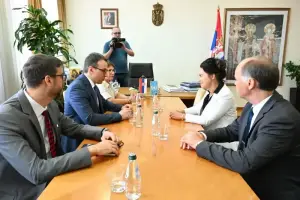 Belgrade, 23 July 2026
Priština continues with unilateral, illegal moves
-
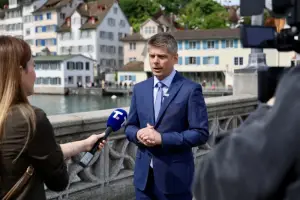 Belgrade/Zurich, 4 June 2026
Exhibition in Zurich on position of Serbs in Kosovo and Metohija
-
 Belgrade/Brussels, 12 May 2026
Belgrade seeking concrete steps towards establishment of Community of Serb Municipalities
-
 Belgrade/Brussels, 11 May 2026
Belgrade-Priština dialogue not dialogue on mutual recognition
-
 Belgrade, 10 April 2026
Serbian health centres closed in villages of Suvo Grlo, Banje