Q:
A:
New Constitution provides government with clear position and constitutional mandate on Kosovo
Belgrade,
6 November 2006
Member of the state team for negotiations on Kosovo's future status Thomas Fleiner said that the new Constitution will indeed influence the talks on the solution to the Kosovo issue because the Serbian government now has a clearly-stated position and a constitutional mandate ensuring that in all future talks Kosovo-Metohija will be considered a constituent part of Serbia.
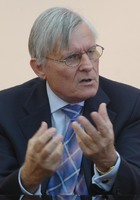
Thomas Fleiner
Author:
Fonet
In an interview to the FoNet news agency, Fleiner said that this is very consequential since the old Constitution did not provide strong autonomy for Kosovo-Metohija, whereas the new one does.
I therefore think that the international community should acknowledge that the Serbian people have accepted the new Constitution, added Fleiner.
He believes it to be obvious that thus far the talks have not yielded any results, adding that this is not the responsibility of the negotiating parties.
Fleiner said the talks must be resumed and added that it now becoming clear that the solution cannot be imposed and that the international community must come up with a new way of finding a solution in order to promote the talks.
We have not been able to reach compromise on even a smallest issue. The Serbian side is always accused of not being willing to compromise. The peace negotiator is responsible for the negotiating process and the contents of the talks should be left to the negotiating parties to discuss, he explained.
According to Fleiner, if the international community accepts that the final solution to Kosovo-Metohija has to result from compromise, it is necessary that both sides consent to it.
I believe that the decision on status would have to be prolonged even until after next spring. I do not even think that a consensus-based decision will be reached until then, added Fleiner.
He warned that the international community is unaware of the historical responsibility it has towards the entire Balkans. He also emphasised that Russia is taking the negotiating process seriously and it can use its right to veto the Security Council's decision if it cannot otherwise persuade the US of its importance in the Security Council.
According to Fleiner, the case of Kosovo-Metohija could have disastrous consequences worldwide, strengthening all secessionist movements which would in turn make all conflicts more brutal and internationalise their own problems in order to be granted independence by the Security Council.
The Serbian team is ready to compromise if a proposed solution is acceptable for all people living in the province. We are striving to find a solution for these people to help them live freely with their families and to help the displaced return to their homes, explained Fleiner.
When asked what Serbia could do if Kosovo-Metohija gets conditional independence and other countries simply begin acknowledging this, Fleiner replied that individual recognition of Kosovo-Metohija's independence would create a state of anarchy because in its Resolution 1244 the Security Council included a provision on sovereignty.
Another consequence of such a decision would be reflected on Serbia since it would be under pressure and blackmailed by other countries in the sense "if you do not accept this or that condition, we will recognise Kosovo". I believe and hope that the Security Council, and particularly Russia, is aware of this grave responsibility, stressed Fleiner.
When asked whether the fear of Kosovo Albanian reaction, if their expectations fall through, would be an argument in favour of independence, Fleiner responded that this is precisely an argument against independence.
I therefore think that the international community should acknowledge that the Serbian people have accepted the new Constitution, added Fleiner.
He believes it to be obvious that thus far the talks have not yielded any results, adding that this is not the responsibility of the negotiating parties.
Fleiner said the talks must be resumed and added that it now becoming clear that the solution cannot be imposed and that the international community must come up with a new way of finding a solution in order to promote the talks.
We have not been able to reach compromise on even a smallest issue. The Serbian side is always accused of not being willing to compromise. The peace negotiator is responsible for the negotiating process and the contents of the talks should be left to the negotiating parties to discuss, he explained.
According to Fleiner, if the international community accepts that the final solution to Kosovo-Metohija has to result from compromise, it is necessary that both sides consent to it.
I believe that the decision on status would have to be prolonged even until after next spring. I do not even think that a consensus-based decision will be reached until then, added Fleiner.
He warned that the international community is unaware of the historical responsibility it has towards the entire Balkans. He also emphasised that Russia is taking the negotiating process seriously and it can use its right to veto the Security Council's decision if it cannot otherwise persuade the US of its importance in the Security Council.
According to Fleiner, the case of Kosovo-Metohija could have disastrous consequences worldwide, strengthening all secessionist movements which would in turn make all conflicts more brutal and internationalise their own problems in order to be granted independence by the Security Council.
The Serbian team is ready to compromise if a proposed solution is acceptable for all people living in the province. We are striving to find a solution for these people to help them live freely with their families and to help the displaced return to their homes, explained Fleiner.
When asked what Serbia could do if Kosovo-Metohija gets conditional independence and other countries simply begin acknowledging this, Fleiner replied that individual recognition of Kosovo-Metohija's independence would create a state of anarchy because in its Resolution 1244 the Security Council included a provision on sovereignty.
Another consequence of such a decision would be reflected on Serbia since it would be under pressure and blackmailed by other countries in the sense "if you do not accept this or that condition, we will recognise Kosovo". I believe and hope that the Security Council, and particularly Russia, is aware of this grave responsibility, stressed Fleiner.
When asked whether the fear of Kosovo Albanian reaction, if their expectations fall through, would be an argument in favour of independence, Fleiner responded that this is precisely an argument against independence.
-
 Belgrade, 28 August 2026
Church broken into, ransacked in Bušince village in Kosovska Kamenica
-
 Belgrade, 27 August 2026
Remembrance of suffering of Serb civilians in village of Klečka
-
 Belgrade, 30 July 2026
Continued illegal demolition of Serb-owned buildings near Lake Gazivode
-
 Belgrade, 29 July 2026
Works in Special Protective Zone of Visoki Dečani Monastery must be halted
-
 Belgrade, 23 July 2026
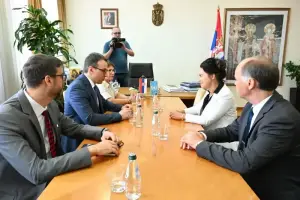
Priština continues with unilateral, illegal moves
-
 Belgrade/Zurich, 4 June 2026
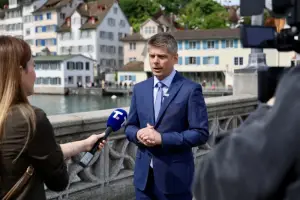
Exhibition in Zurich on position of Serbs in Kosovo and Metohija
-
 Belgrade/Brussels, 12 May 2026
Belgrade seeking concrete steps towards establishment of Community of Serb Municipalities
-
 Belgrade/Brussels, 11 May 2026
Belgrade-Priština dialogue not dialogue on mutual recognition
-
 Belgrade, 10 April 2026
Serbian health centres closed in villages of Suvo Grlo, Banje