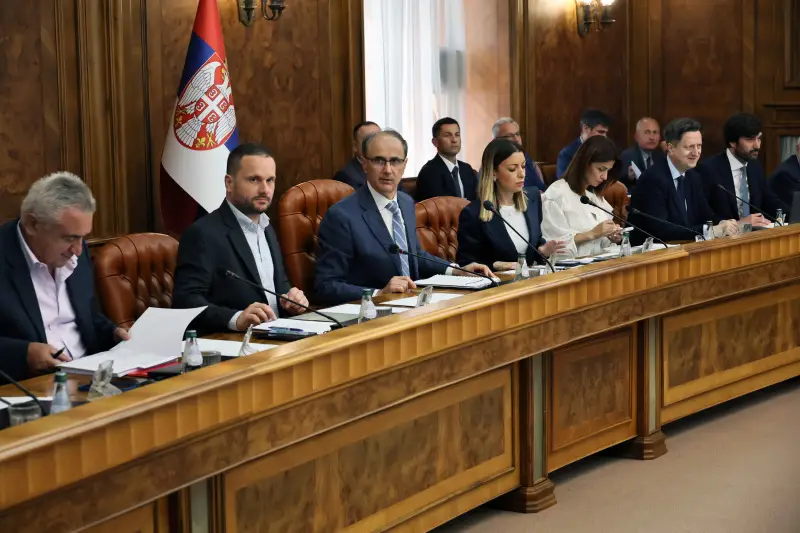
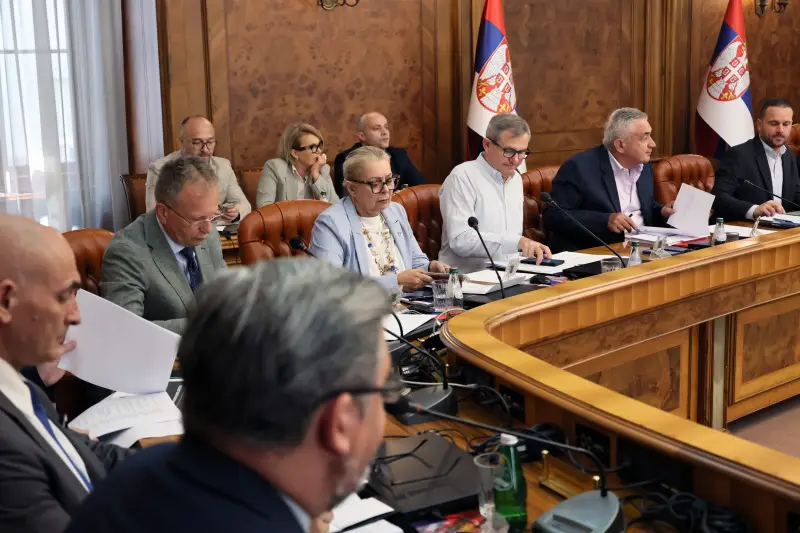
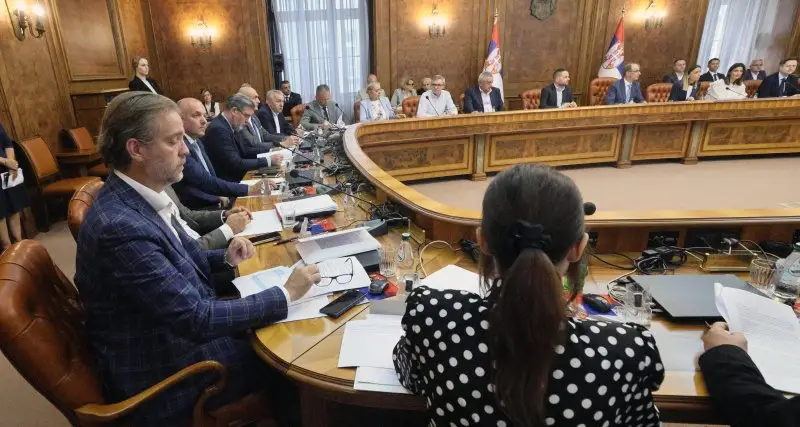
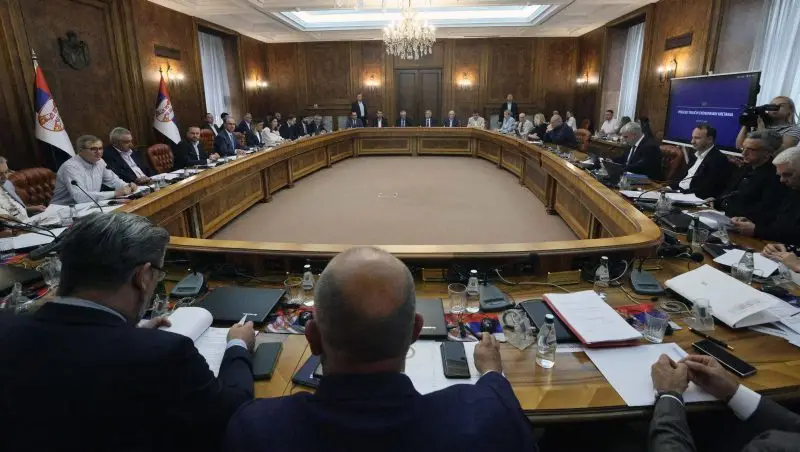
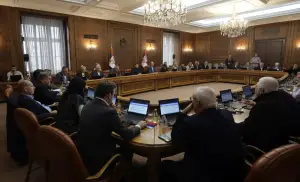
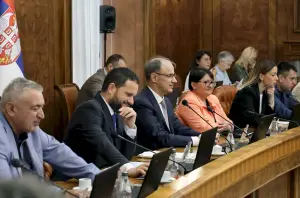
Prime Minister Professor Đuro Macut, MD, DSc, chaired today a session of the Council for the Coordination of Activities and Measures for Gross Domestic Product (GDP) Growth, at which macroeconomic and other key challenges were reviewed, along with current economic indicators and the further priorities of economic policy.

Q:
A:
Government continues with measures to stimulate investment, exports, employment
Belgrade,
7 July 2026
It was noted at the session that Serbia continues to record stable macroeconomic results, with year-on-year inflation standing at 2.7% in June 2026, among the lowest rates in Europe.
The members of the council reviewed the current situation across their respective sectors, presented Prime Minister Macut with a macroeconomic overview and the status of capital projects, and submitted a report on activities to identify key companies in the industrial production sector.
Regarding individual indicators, it was noted that tourism recorded annual growth in the number of overnight stays of 5.5% in May 2026, while the number of overnight stays by foreign tourists increased by 9.3%.
Retail trade rose by 6.2% in May this year compared with the same period last year, while, in the foreign trade sector, exports went up by 7.7% and imports by 1% in the January-May period this year.
The average net salary reached €1,038, representing a real year-on-year increase of 11.5%.
The council also underlined the importance of continuing the investment cycle and accelerating the implementation of strategic infrastructure and development projects, which have a direct impact on economic growth, employment and the competitiveness of the Serbian economy.
The Prime Minister stated that the government remains committed to preserving macroeconomic stability, improving the business environment and strengthening its partnership with the business community.
He stressed that measures that encourage investments, exports and employment will continue.
In the period ahead, the main focus will remain on further improving citizens’ living standards, strengthening the industrial base and increasing investment, while preserving macroeconomic stability.
-
 Author: Slobodan Miljević
 -
 Author: Slobodan Miljević
 -
 Author: Slobodan Miljević
 -
 Author: Slobodan Miljević
 -
 Author: Slobodan Miljević
-
 Belgrade, 12 October 2026
5th “Wine Vision by Open Balkan” international fair ends
-
 Belgrade, 8 October 2026
Government adopts multiple documents across various sectors
-
 Belgrade, 5 October 2026
“Wine Vision by Open Balkan” to be held from 10 to 12 October
-
 Belgrade, 1 October 2026
Conclusion adopted on remediation plan for Deliblato Sands area
-
 Belgrade, 28 September 2026
Continuity of reforms in EU accession process
-
 Belgrade, 24 September 2026
Government adopts decrees, decisions of importance for migration, sport
-
 Belgrade, 17 September 2026
Linking state support measures for housing for families with children
-
 Belgrade, 14 September 2026
Official request for overflight clearance for Serbian government aircraft submitted on 11 September
-
 Belgrade, 11 September 2026
Eligibility expanded for rural house purchase grant scheme
-
 Belgrade, 9 September 2026
Serbia achieves one of highest GDP growth rates in Europe