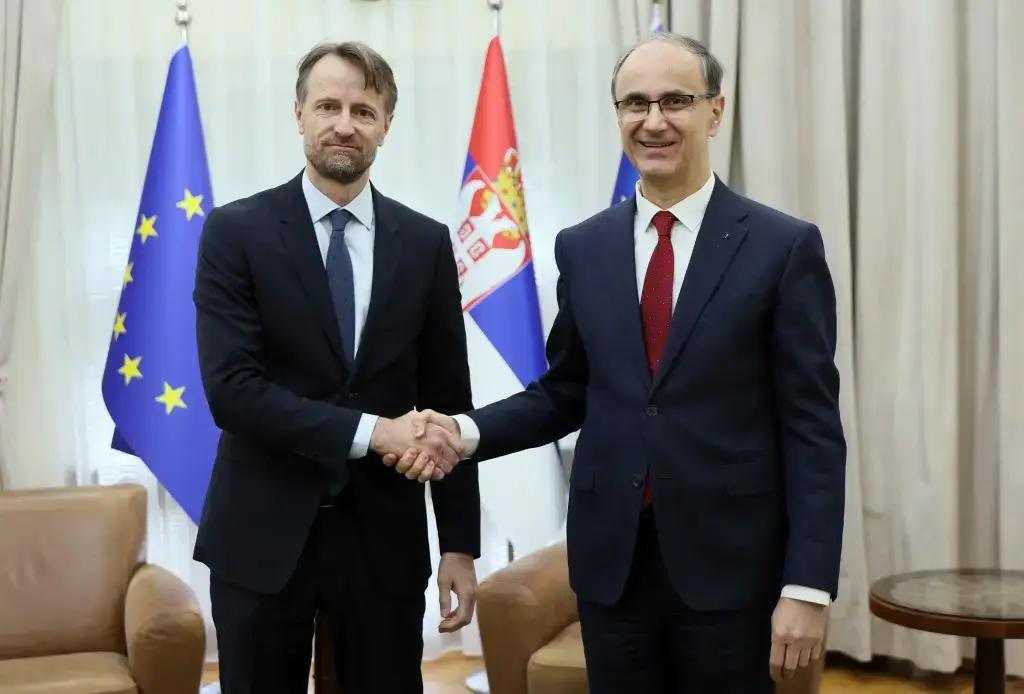
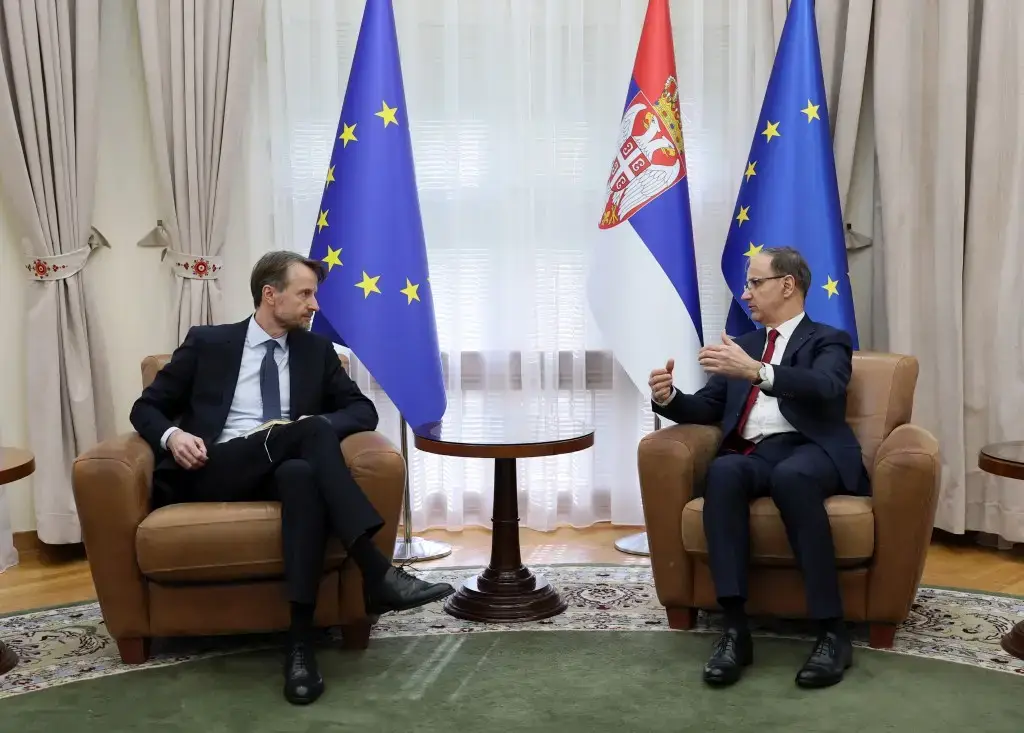
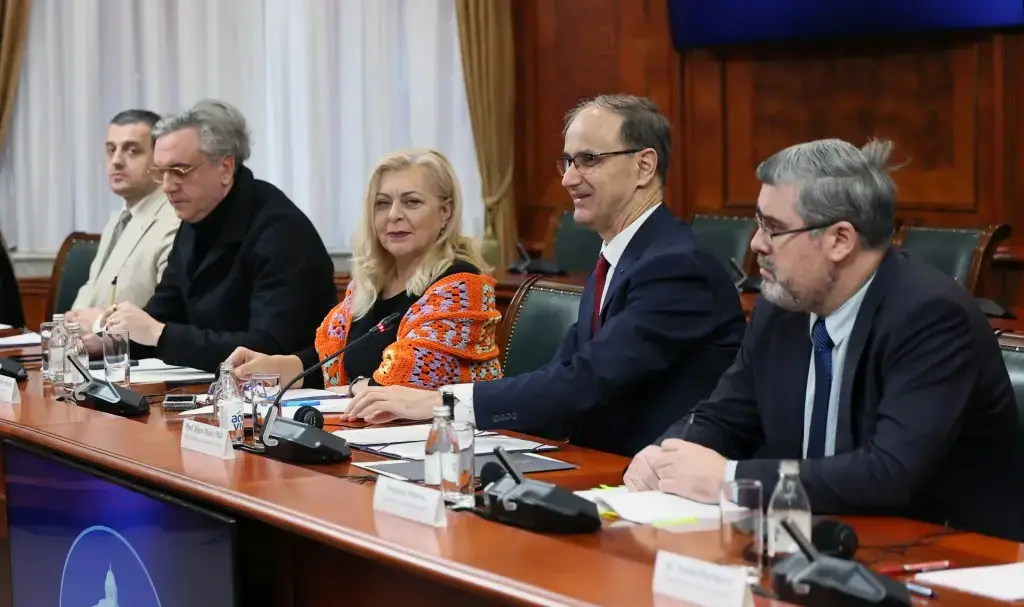
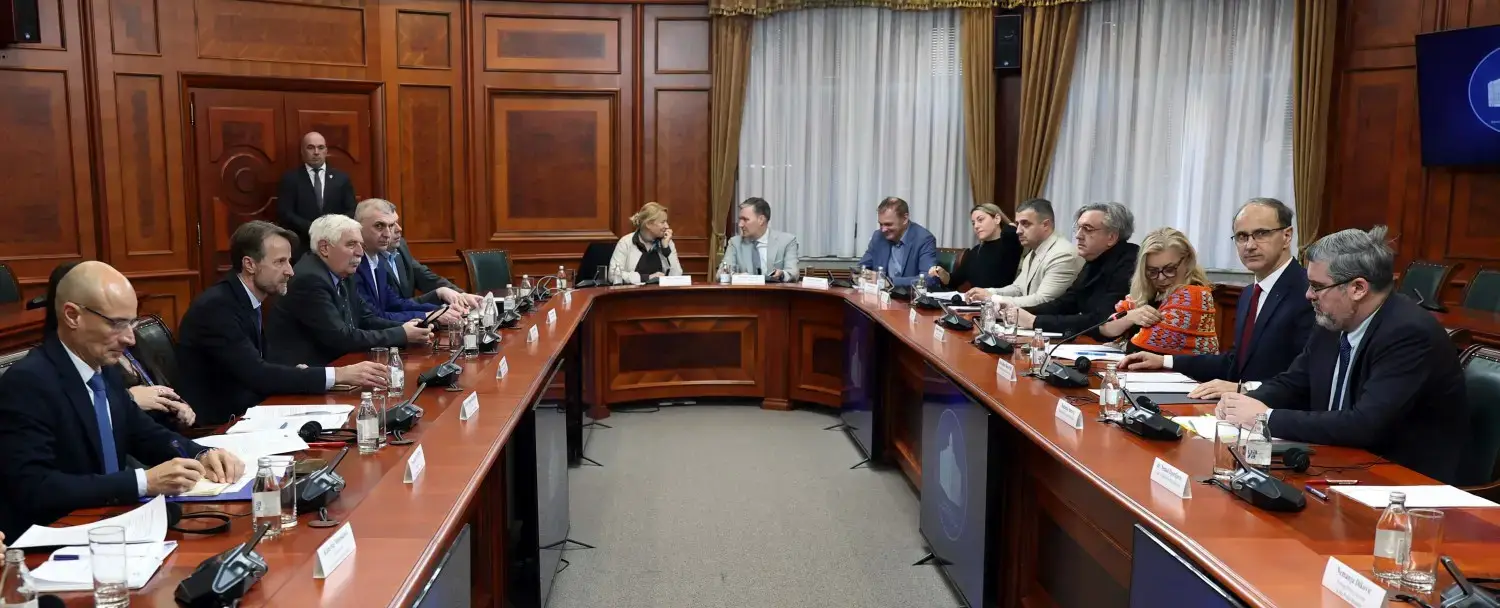
Prime Minister Professor Đuro Macut, MD, DSc, met today with Head of the Delegation of the European Union to Serbia Andreas von Beckerath to discuss the issue of restrictions on the stay of professional drivers in the Schengen Area, a problem faced by drivers from Serbia in their day-to-day work.

Q:
A:
Serbia proposes solutions to mitigate restrictions on drivers’ stays in Schengen Area
Belgrade,
19 January 2026
Macut said that since the introduction of the electronic border control system, this problem has escalated and threatens to completely paralyse the operations of Serbia’s transport community, as well as those of other Western Balkan economies.
According to him, this restriction places professional drivers engaged in international road transport in a position where they are allowed to carry out passenger and freight transport activities for only six months a year, which, he stressed, is economically unsustainable for employers and renders the profession unviable.
The Prime Minister underlined that this also represents a threat to Serbia’s transport community, which could, in effect, be forced to shut down in this way.
He noted that flight crew and railway staff are already exempt from this rule, adding that Serbia is offering concrete solutions that do not require amendments to the Schengen Borders Code.
In order to preserve competitiveness, transport efficiency and the continuity of trade and investment flows, Macut reiterated the proposed solutions also outlined in the non-paper that he handed over to his interlocutor today.
The proposals include amendments to the 90/180 rule for professional drivers and a special status for the region within the Entry/Exit System (EES).
Macut said that Serbia remains fully committed to constructive dialogue with the European Commission and Member States, with the aim of finding a solution that will ensure the smooth flow of goods, the stability of supply chains and compliance with EU rules.
He expressed confidence that, through a partnership-based approach, it is possible to arrive at a model that will at the same time safeguard the interests of the European Union, the market and the transport industry.
The Prime Minister also expressed readiness to continue the dialogue, in cooperation with relevant institutions, in order to find a sustainable solution that will ensure stability, security and efficiency of transport and economic exchange in the region and beyond.
-
 Author: Slobodan Miljević
 -
 Author: Slobodan Miljević
 -
 Author: Slobodan Miljević
 -
 Author: Slobodan Miljević
-
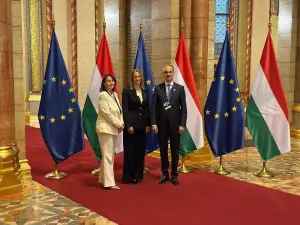 Belgrade/Budapest, 23 October 2026
Good relations with Hungary help Serbia on its European path
-
 Belgrade, 23 October 2026
Prime Minister Macut at commemoration of 70th anniversary of Hungarian Revolution
-
 Belgrade/Budva, 22 October 2026
Serbia one of key factors in regional integration
-
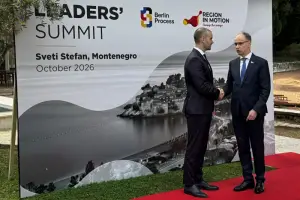 Belgrade/Sveti Stefan, 22 October 2026
Serbia committed to continuing reforms on path to full EU membership
-
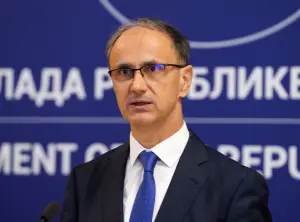 Belgrade, 21 October 2026
Prime Minister Macut to attend Berlin Process Leaders’ Summit in Sveti Stefan
-
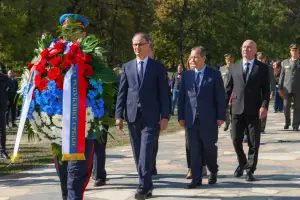 Kragujevac, 21 October 2026
Macut pays tribute to civilians executed during World War II
-
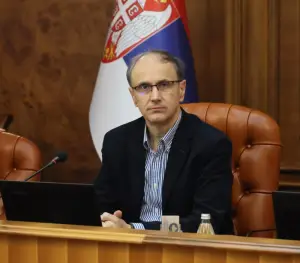 Belgrade, 21 October 2026
Importance of maintaining public order, peace on election day
-
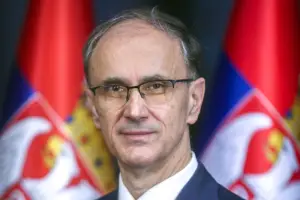 Belgrade, 20 October 2026
Macut congratulates Luca Niculescu on his election as new Prime Minister of Romania
-
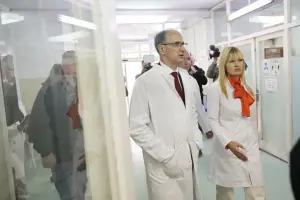 Petrovac na Mlavi/Žagubica, 19 October 2026
Strengthening healthcare institutions among government priorities
-
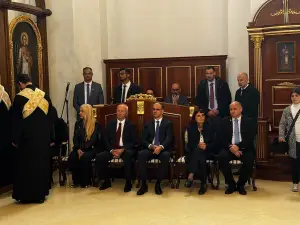 Belgrade/Dalj, 17 October 2026
Serbia to continue supporting its people, Serbian Orthodox Church in Croatia