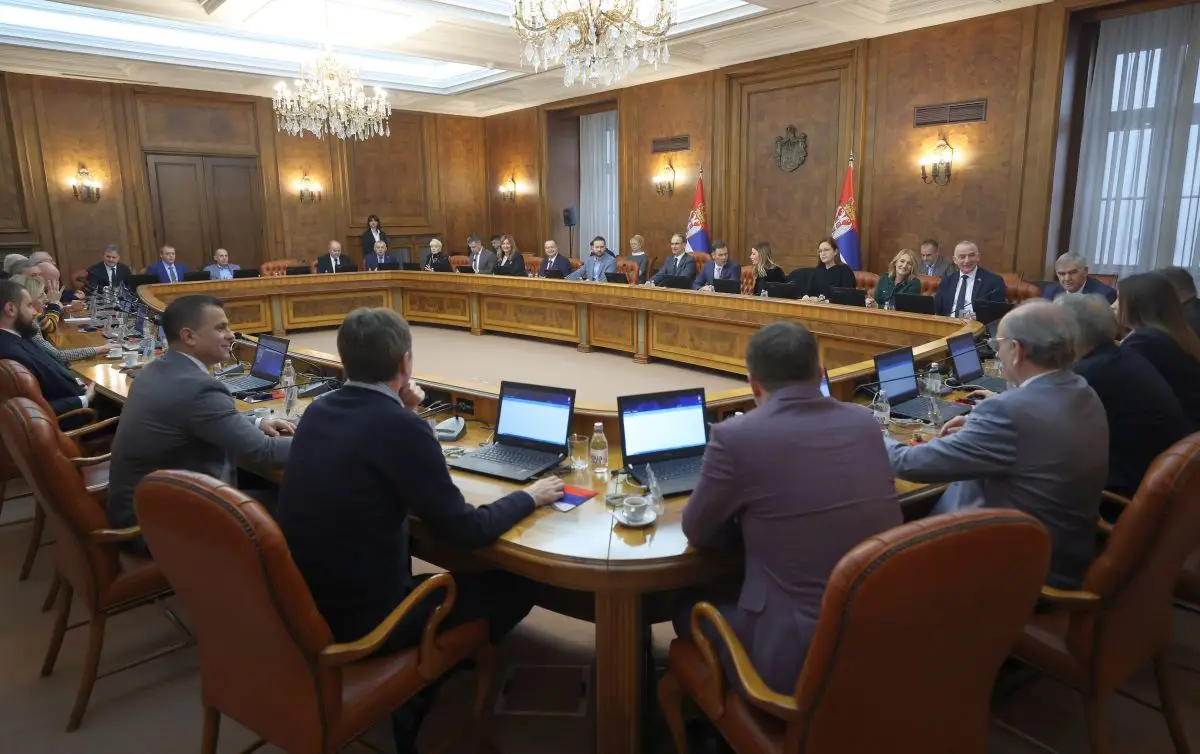
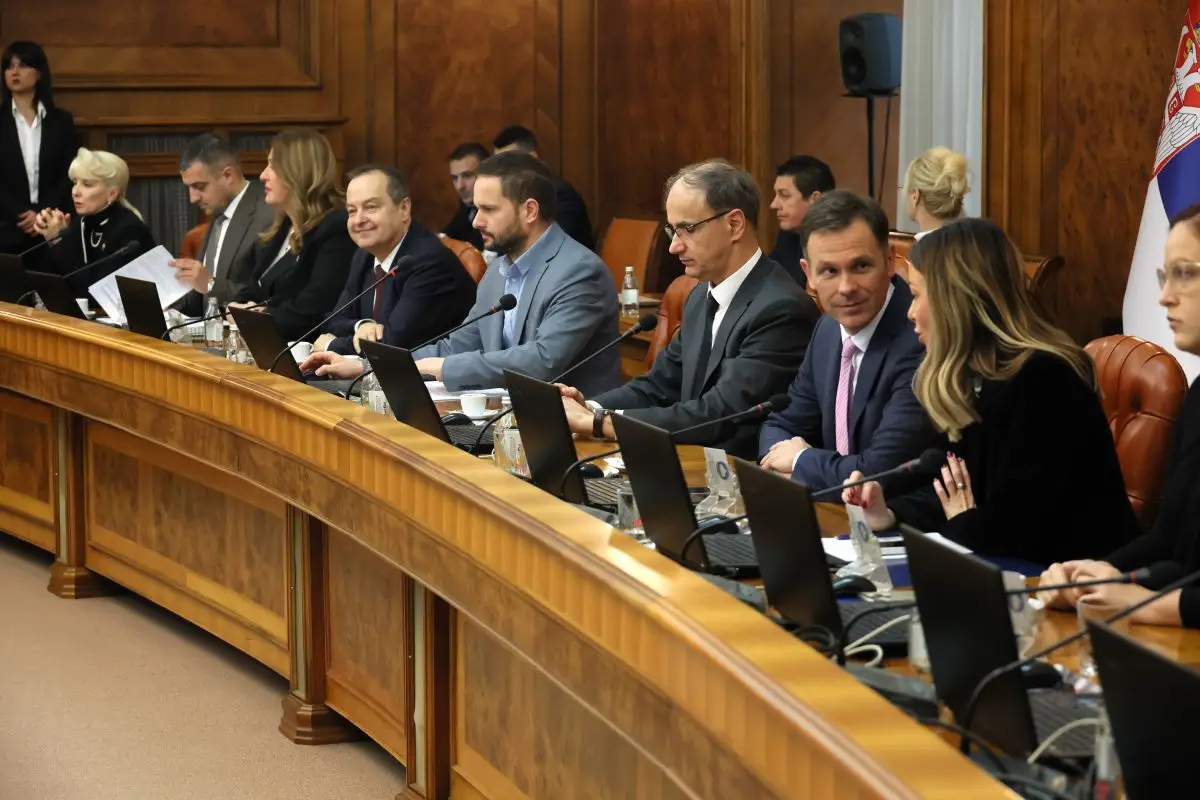
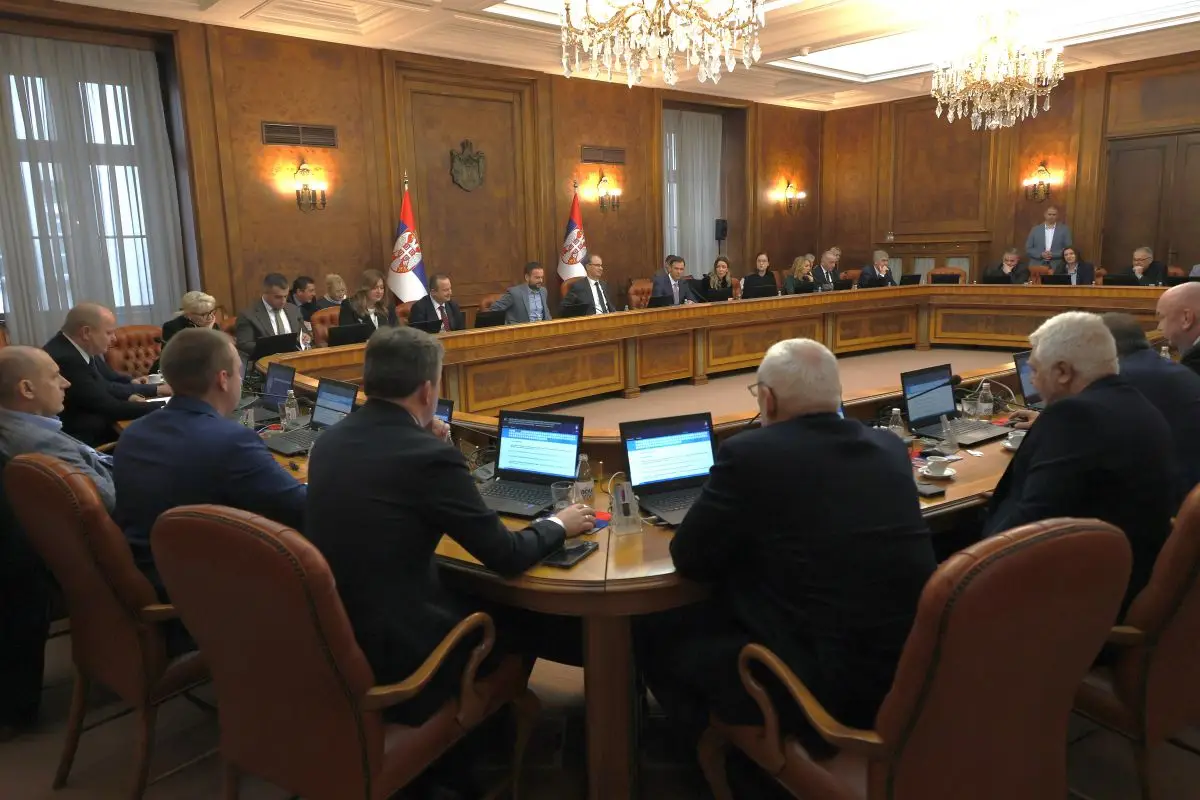
The Serbian government adopted today three decisions designating as cultural properties of exceptional importance the sculpture Danubius from the Lepenski Vir site, the museum object Votive Cart, and the embroidery on cloth Praise by Nun Jefimija – Shroud for the Relics of Prince Lazar.

Q:
A:
Government designates three cultural properties of exceptional importance
Belgrade,
4 December 2025
The sculpture Danubius is a monumental, fully preserved stone sculpture.
On an elongated, egg-shaped pebble, a fish-like being is modelled, with the face of the sculpture formed on one side of the pebble in deep relief made by pecking.
The Votive Cart, that is, the famous Dupljaja Cart, depicts an anthropomorphic deity seated in a three-wheeled cart drawn by three marsh ducks, two male and one female.
The government members also adopted the Decision designating Praise by Nun Jefimija – Shroud for the Relics of Prince Lazar as a cultural property of exceptional importance, since this museum object is of great significance for the cultural and historical development of the Serbian people in the Middle Ages, especially in the period following the Battle of Kosovo, which was one of the turning points in the history of Serbia.
The largest part of the shroud is decorated using the gold embroidery technique, with silver-gilt thread on a base of red satin silk, and is filled with text embroidered in 26 lines.
This cultural property represents a distinctive combination of literary and applied art and expresses, in a lyrical manner, the personal and collective tragedy embodied in the martyrdom of Prince Lazar.
The government members also adopted resolutions approving decisions to establish cooperation between the city of Belgrade and the city of Tashkent in the Republic of Uzbekistan, between Novi Sad and Larnaca in the Republic of Cyprus, and between the municipality of Trstenik in Serbia and the municipality of Agios Vasileios on Crete, in the Hellenic Republic.
-
 Author: Slobodan Miljević
 -
 Author: Slobodan Miljević
 -
 Author: Slobodan Miljević
-
 Belgrade, 17 September 2026
Linking state support measures for housing for families with children
-
 Belgrade, 14 September 2026
Official request for overflight clearance for Serbian government aircraft submitted on 11 September
-
 Belgrade, 11 September 2026
Eligibility expanded for rural house purchase grant scheme
-
 Belgrade, 9 September 2026
Serbia achieves one of highest GDP growth rates in Europe
-
 Belgrade, 8 September 2026
Monetary awards for volleyball players after winning European Championship bronze
-
 Belgrade, 7 September 2026
Government proposes dissolving parliament, calling elections
-
 Belgrade, 3 September 2026
Science, tourism development strategies adopted
-
 Belgrade, 27 August 2026
Serbia's Nature Protection Programme for 2026-2031 adopted
-
 Belgrade, 24 August 2026
Even more active approach to fulfilling obligations in European integration process
-
 Belgrade, 20 August 2026
Government adopts 2026 budget revision bill