
Q:
A:
Lists of industrial products and pace of their liberalisation submitted to EU
Belgrade,
30 January 2006
Director of the Serbian government's EU Integration Office Tanja Miscevic stated that the Serbian negotiating team submitted lists to the EU on products and pace of liberalisation of our country's market in the industrial products sector. In the agriculture sectors that work will be finalised by the end of January.
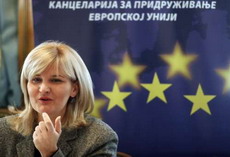
Tanja Miscevic
Author:
Tanjug
Miscevic told the Tanjug news agency that the negotiating teams of Serbia and Montenegro pledged during the first round of talks to complete that job before the beginning of the second round of talks due to be held from February 20 to 23 in Belgrade.
According to Miscevic, it is most important that the methodology regarding what is included in insensitive, sensitive and extremely sensitive products has been established. The pace of reduction of certain tariffs will be defined in agreement with the Serbian Chamber of Commerce, producers and agricultural producers.
She said that it is necessary to protect the domestic economy which is very sensitive, but that the state shouldn't exaggerate in that process because it is vital to be realistic about what our potentials are and then protect certain producers, and to approve free entrance to our market of EU products that Serbia doesn't produce.
The Director of the EU Integration Office said that Serbia is currently preparing a new action plan of legislative activity which is necessary for the harmonisation of domestic laws with those of the EU.
The action plan includes a list of laws that must be approved by the government and then by the Serbian parliament, defining which ministry and which person within that ministry is authorised for the preparation of certain laws, Miscevic explained.
She said that there are no problems concerning willingness to adopt the laws, it is only slightly difficult because these laws have never existed in our legislation and those who are to pass them have to be familiar with EU legislation.
Such laws include the law on foreign trade operations, the law on customs tariffs, the law on competition, the law on consumer protection, but there are many others.
She stressed that Serbia needs to harmonise 120,000 pages of the text with the EU legislation, most of which deal with agriculture and environmental protection.
The good thing is that it is not necessary that all 120,000 pages of the text be adopted at once. In this stage of negotiating on the Stabilisation and Association Agreement, we have to regulate the issues concerned with the functioning of a single market, the Director of the EU Integration Office pointed out.
Croatia's experience shows that in this stage of negotiating on the Stabilisation and Association Agreement, approximately 400 laws and 700 by-laws should be adopted.
She recalled that during last year the Serbian parliament adopted more than 200 laws, adding that although not all these laws are in the domain of the integration process, the crucial systemic laws that were adopted are necessary for the integration process.
Miscevic pointed out that means Serbia-Montenegro doesn't start from scratch because it has already adopted a number of laws. She added that the process of harmonisation of legislation had been initiated by the previous government in 2003, and the present government continued it in 2004 and 2005.
She said that the Stabilisation and Association Agreement regulates significant aspects of establishing political dialogue between the associated country and the EU, which is carried out through the association institutions, through the Council for Stabilisation and Association and various boards and committees, from the government to the parliament. In that way, a regular flow of political dialogue is established, as a very important element for monitoring internal reforms and improving the entire process, Miscevic explained.
The negotiations officially started in October last year, but in fact began on November 7 when the first official round of talks was held, while the technical round of talks was held on December 20 and 21.
Miscevic explained that the first official round of talks focused on issues related to the preamble, political dialogue, regional and financial cooperation, which are all general principles underlying the EU, and the first technical talks opened the negotiations on liberalisation of trade of industrial and agricultural products.
Currently, she said, the goods of Serbia-Montenegro have a completely free approach to the EU market according to the autonomous trade preferential rates, which were unanimously approved by the EU to the western Balkans region.
That mechanism was renewed in 2005 and will be effective until 2010, and the only exception to full liberalisation will be made in the case of beef, fish products, wine and textile goods, which are regulated separately.
The purpose of the Stabilisation and Association Agreement is to define how and at what pace customs tariffs for EU goods will be reduced and when full liberalisation will occur, that is which year the free trade zone with the EU will be established, the Director of the EU Integration Office said.
She added that the EU gives a maximum deadline of 10 years which cannot be extended, and every country seeking EU membership sets on its own time period needed to fully open its market.
According to Miscevic, it is most important that the methodology regarding what is included in insensitive, sensitive and extremely sensitive products has been established. The pace of reduction of certain tariffs will be defined in agreement with the Serbian Chamber of Commerce, producers and agricultural producers.
She said that it is necessary to protect the domestic economy which is very sensitive, but that the state shouldn't exaggerate in that process because it is vital to be realistic about what our potentials are and then protect certain producers, and to approve free entrance to our market of EU products that Serbia doesn't produce.
The Director of the EU Integration Office said that Serbia is currently preparing a new action plan of legislative activity which is necessary for the harmonisation of domestic laws with those of the EU.
The action plan includes a list of laws that must be approved by the government and then by the Serbian parliament, defining which ministry and which person within that ministry is authorised for the preparation of certain laws, Miscevic explained.
She said that there are no problems concerning willingness to adopt the laws, it is only slightly difficult because these laws have never existed in our legislation and those who are to pass them have to be familiar with EU legislation.
Such laws include the law on foreign trade operations, the law on customs tariffs, the law on competition, the law on consumer protection, but there are many others.
She stressed that Serbia needs to harmonise 120,000 pages of the text with the EU legislation, most of which deal with agriculture and environmental protection.
The good thing is that it is not necessary that all 120,000 pages of the text be adopted at once. In this stage of negotiating on the Stabilisation and Association Agreement, we have to regulate the issues concerned with the functioning of a single market, the Director of the EU Integration Office pointed out.
Croatia's experience shows that in this stage of negotiating on the Stabilisation and Association Agreement, approximately 400 laws and 700 by-laws should be adopted.
She recalled that during last year the Serbian parliament adopted more than 200 laws, adding that although not all these laws are in the domain of the integration process, the crucial systemic laws that were adopted are necessary for the integration process.
Miscevic pointed out that means Serbia-Montenegro doesn't start from scratch because it has already adopted a number of laws. She added that the process of harmonisation of legislation had been initiated by the previous government in 2003, and the present government continued it in 2004 and 2005.
She said that the Stabilisation and Association Agreement regulates significant aspects of establishing political dialogue between the associated country and the EU, which is carried out through the association institutions, through the Council for Stabilisation and Association and various boards and committees, from the government to the parliament. In that way, a regular flow of political dialogue is established, as a very important element for monitoring internal reforms and improving the entire process, Miscevic explained.
The negotiations officially started in October last year, but in fact began on November 7 when the first official round of talks was held, while the technical round of talks was held on December 20 and 21.
Miscevic explained that the first official round of talks focused on issues related to the preamble, political dialogue, regional and financial cooperation, which are all general principles underlying the EU, and the first technical talks opened the negotiations on liberalisation of trade of industrial and agricultural products.
Currently, she said, the goods of Serbia-Montenegro have a completely free approach to the EU market according to the autonomous trade preferential rates, which were unanimously approved by the EU to the western Balkans region.
That mechanism was renewed in 2005 and will be effective until 2010, and the only exception to full liberalisation will be made in the case of beef, fish products, wine and textile goods, which are regulated separately.
The purpose of the Stabilisation and Association Agreement is to define how and at what pace customs tariffs for EU goods will be reduced and when full liberalisation will occur, that is which year the free trade zone with the EU will be established, the Director of the EU Integration Office said.
She added that the EU gives a maximum deadline of 10 years which cannot be extended, and every country seeking EU membership sets on its own time period needed to fully open its market.
-
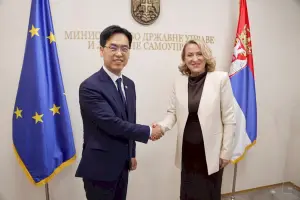 Belgrade, 10 July 2026
Advancing cooperation with Republic of Korea in digital governance
-
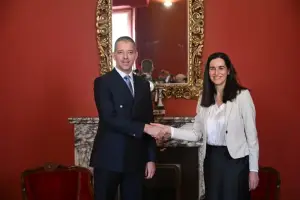 Belgrade/Rome, 10 July 2026
Continued strengthening of overall cooperation between Serbia, Hungary
-
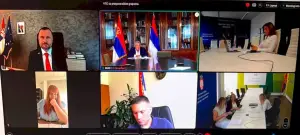 Belgrade/Brussels, 9 July 2026
Continuing activities to meet European Commission’s recommendations
-
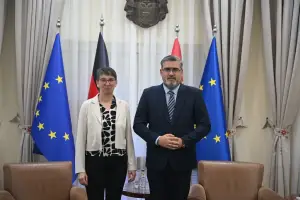 Belgrade, 9 July 2026
German development support important pillar for Serbia’s reforms, European path
-
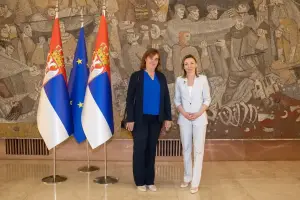 Belgrade, 8 July 2026
Continued cooperation with GIZ on improving position of women in Serbia
-
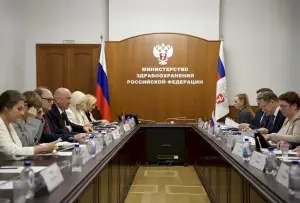 Belgrade/Moscow, 8 July 2026
Cooperation between Serbia, Russia in field of modern oncology therapies
-
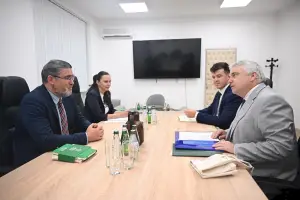 Belgrade, 8 July 2026
Ireland’s support for reform processes in Serbia on path to EU
-
 Belgrade, 8 July 2026
Continued strengthening of cooperation with Belgium in European integration process
-
 Belgrade, 7 July 2026
Possibilities for improving cooperation with Russia in several areas
-
 Belgrade, 7 July 2026
UN support for building equal opportunities society continues