
Q:
A:
Key quality of Resolution on Kosovo-Metohija is its European character
Belgrade,
19 November 2005
Advisor to the Serbian Prime Minister Aleksandar Simic said today that unanimous support of all political forces in Serbia to the Draft resolution on Kosovo-Metohija is of great importance, because it is a matter of unity and integrity of the state.
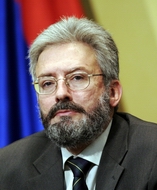
Aleksandar Simic
In an interview to the Tanjug news agency, Simic stressed the importance of this issue and pointed out that the essential quality of the Resolution on Kosovo-Metohija is its European character, reiterating in this way the position stated in the Serbian Prime Minister Vojislav Kostunica’s speech at the UN Security Council session of October 10.
The essence of pro-European efforts of the Serbian government and the democratic forces in Serbia in general, as well as the reason the government supports the European way of resolving the Kosovo issue is that the European way of resolving disputes emerging among West European countries, particularly in the aftermath of the World War II, has always been a way of tolerance, cooperation and unity, because those are the values that guarantee stability, said Simic.
Simic recalled that the security in the European framework has become more prominent and achievable because a system based on unity and not separation, integration and not disintegration, has been created.
If the Kosovo issue is regarded from that position, then the thesis that it is necessary to disintegrate the territory of former Yugoslavia only to integrate again its former republics and provinces in the framework created and dictated from Brussels, sounds contrary to all reason, said Simic.
According to Simic, the Brussels framework was historically created for quite the opposite reason – to prevent disintegration processes and consequent wars, or in the case of former Yugoslavia, civil wars led on its territory.
The Resolution explains why it is necessary to respect the sovereignty and territorial integrity of states and current international legal order in the process of defining the future status of Kosovo-Metohija, because only that principle leads to future security in the region, stressed Simic.
He pointed out that the Serbian people to a great extent accept the European values in a firm belief that they guarantee no wars in the future, because Europe has not been at war for more than 60 years, and no great economic disturbances and instability, as well as a more predictable existence.
What is important here is that such an aspect of security is connected with the security of wider communities, which means states or religions, or the whole Balkan region.
Inviolability of state borders is of key importance for safeguarding the stability and general security in the region, Simic said and added that any alteration of internationally recognised borders of Serbia would crush the principles established by the Badinter Commission in 1991-92.
If those principles are to be altered in order to mark autonomous provinces as territories that somebody possesses and therefore has the right to turn into internationally recognised borders, that would prove the existence of double standards, which is not good, said the advisor to the Prime Minister.
Simic said that what is particularly disputable in the claims of Kosovo Albanians and those who lobby for them is the right of Kosovo Albanians as a nation to self-determination.
What is crystal clear here is that national minorities have no right to self-determination. That is the general position of international law that has been verified several times through different decisions, opinions and conventions that regulate the status of national minorities, said Simic.
He recalled the case from the 1920s – the case of the Aland Islands in Finland, inhabited by ethnic Swedes. At the request of the League of Nations, a commission consisting of international lawyers defended the position that the Swedes that inhabited the islands were in fact a national minority in Finland and, as such, had no right to self-determination.
In any case, it is evident that ethnic Albanians do have their own state called Albania, added Simic.
He said that the upcoming talks on Kosovo will indeed be the crucial moment in which the international community and the key negotiators will have to choose between two options: the respect of international legal principles and continuation of the policy of multiethnicity, which implies greater costs and efforts, economic, human and moral, or more that a perilous precedent of tailoring borders and shattering democratic states. This other option would create an insurmountable problem, because it would prove that a political aim can be achieved through violence, concluded Simic.
The essence of pro-European efforts of the Serbian government and the democratic forces in Serbia in general, as well as the reason the government supports the European way of resolving the Kosovo issue is that the European way of resolving disputes emerging among West European countries, particularly in the aftermath of the World War II, has always been a way of tolerance, cooperation and unity, because those are the values that guarantee stability, said Simic.
Simic recalled that the security in the European framework has become more prominent and achievable because a system based on unity and not separation, integration and not disintegration, has been created.
If the Kosovo issue is regarded from that position, then the thesis that it is necessary to disintegrate the territory of former Yugoslavia only to integrate again its former republics and provinces in the framework created and dictated from Brussels, sounds contrary to all reason, said Simic.
According to Simic, the Brussels framework was historically created for quite the opposite reason – to prevent disintegration processes and consequent wars, or in the case of former Yugoslavia, civil wars led on its territory.
The Resolution explains why it is necessary to respect the sovereignty and territorial integrity of states and current international legal order in the process of defining the future status of Kosovo-Metohija, because only that principle leads to future security in the region, stressed Simic.
He pointed out that the Serbian people to a great extent accept the European values in a firm belief that they guarantee no wars in the future, because Europe has not been at war for more than 60 years, and no great economic disturbances and instability, as well as a more predictable existence.
What is important here is that such an aspect of security is connected with the security of wider communities, which means states or religions, or the whole Balkan region.
Inviolability of state borders is of key importance for safeguarding the stability and general security in the region, Simic said and added that any alteration of internationally recognised borders of Serbia would crush the principles established by the Badinter Commission in 1991-92.
If those principles are to be altered in order to mark autonomous provinces as territories that somebody possesses and therefore has the right to turn into internationally recognised borders, that would prove the existence of double standards, which is not good, said the advisor to the Prime Minister.
Simic said that what is particularly disputable in the claims of Kosovo Albanians and those who lobby for them is the right of Kosovo Albanians as a nation to self-determination.
What is crystal clear here is that national minorities have no right to self-determination. That is the general position of international law that has been verified several times through different decisions, opinions and conventions that regulate the status of national minorities, said Simic.
He recalled the case from the 1920s – the case of the Aland Islands in Finland, inhabited by ethnic Swedes. At the request of the League of Nations, a commission consisting of international lawyers defended the position that the Swedes that inhabited the islands were in fact a national minority in Finland and, as such, had no right to self-determination.
In any case, it is evident that ethnic Albanians do have their own state called Albania, added Simic.
He said that the upcoming talks on Kosovo will indeed be the crucial moment in which the international community and the key negotiators will have to choose between two options: the respect of international legal principles and continuation of the policy of multiethnicity, which implies greater costs and efforts, economic, human and moral, or more that a perilous precedent of tailoring borders and shattering democratic states. This other option would create an insurmountable problem, because it would prove that a political aim can be achieved through violence, concluded Simic.
-
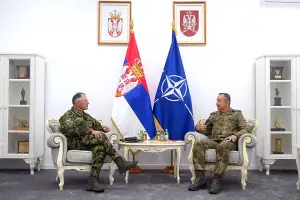 Belgrade, 2 October 2026
KFOR’s obligation to protect Serbs in Kosovo and Metohija
-
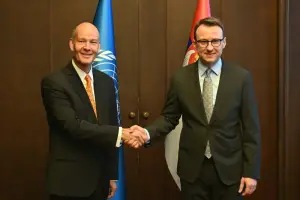 Belgrade, 29 September 2026
UNMIK’s responsible response to violations of Serb rights in Kosovo and Metohija necessary
-
 Belgrade, 27 September 2026
Continuation of unfounded arrests of Serbs in municipality of Zubin Potok
-
 Belgrade, 16 September 2026
Serbia continues fight for justice, truth about suffering of Serbian people in Kosovo and Metohija
-
 Belgrade, 10 September 2026
Belgrade committed to dialogue despite obstructions from Priština
-
 Belgrade, 4 September 2026
Priština continues demolition of Serb properties at Gazivode
-
 Belgrade, 28 August 2026
Church broken into, ransacked in Bušince village in Kosovska Kamenica
-
 Belgrade, 27 August 2026
Remembrance of suffering of Serb civilians in village of Klečka
-
 Belgrade, 30 July 2026
Continued illegal demolition of Serb-owned buildings near Lake Gazivode
-
 Belgrade, 29 July 2026
Works in Special Protective Zone of Visoki Dečani Monastery must be halted