
Q:
A:
OSCE Ministerial Council held in constructive atmosphere
Belgrade,
5 December 2015
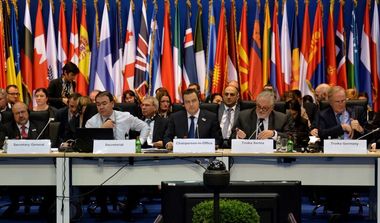
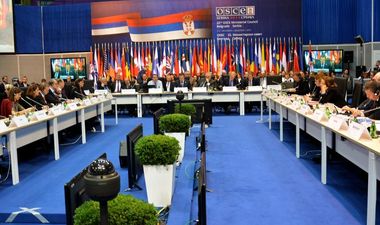
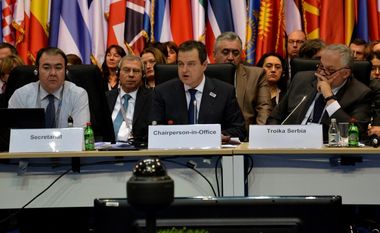
First Deputy Prime Minister and Minister of Foreign Affairs Ivica Dacic said yesterday that the 22nd Ministerial Council took place in a good, constructive and frank atmosphere and that laid solid foundations for the continuation of the dialogue.
Author:
Fonet
The official website of the Serbian government brings in its entirety the final word of the OSCE Chairperson-in-Office and the First Deputy Prime Minister at the 22nd Ministerial Council of the OSCE:
“Excellences, Ladies and Gentlemen,
We are about to conclude two days of intense discussions on the multiple challenges facing the OSCE region today. Ministers have held a number of bilateral meetings. I hope that your stay in Belgrade was a productive and pleasant one.
The Belgrade Ministerial Council was held in a year marking 40 years of the adoption of the Helsinki Final Act. This important anniversary reminded us of the importance of the values and principles this document is based upon. All year round, we have endeavored, in very complicated circumstances, to promote these values and principles through the work of our Chairmanship. We have invested a lot of efforts to reach consensus on a number of issues at this Ministerial Council. However, in some of the cases this was not possible.
In spite of it, I believe that this meeting took place in a good, constructive and frank atmosphere. I believe that the constructive spirit of this Meeting laid solid foundations for the continuation of the dialogue. We will soon turn the Chairmanship over to Germany. We hope that next year, by building on the basis we laid down here in Belgrade, the dialogue will be resumed in order to make views closer on many issues. In the present atmosphere of mistrust and divisions, it is what we need the most.
Among the meetings held on the margins of this event, as Minister Steinmeier noted earlier, I would also like to single out the meeting between Ministers Lavrov and Çavuşoğlu, the first since the downing of the Russian aircraft; Minister Lavrov and Secretary of State Kerry also met here in Belgrade. I hope that these as well as other meetings between Ministers have helped overcome the differences and to the much needed trust and confidence building within the OSCE. Allow me to summarize our deliberations, including informal discussions during a working lunch on 3 December, as follows: Deep concern was expressed about the crisis in and around Ukraine, which was one of the central elements of discussion. There is a shared interest in responding as a community to the challenge of terrorism and violent extremism, which is having a profound impact on all of Europe and all of the Middle East. Recognition was given to the urgency of the migration and refugee crisis and its significant impact on a number of participating states and partners for cooperation, since the OSCE can play a valuable role in responding to the crisis.
While participating States disagreed on the root causes of the crisis in and around Ukraine, they expressed strong support for the continuous and broad engagement of the OSCE in the Ukraine crisis. They also expressed commitment to intensifying efforts aimed at further de-escalation and readiness to take additional steps in support of its settlement by peaceful means in full respect for the norms and principles of international law enshrined in the United Nations Charter and the Helsinki Final Act. There was a broad agreement that consolidating the ceasefire in eastern Ukraine and taking further steps toward a lasting political settlement must continue to command the highest priority so as to avoid further loss of lives and human suffering and as an essential condition for progress in overcoming the wider crisis in European security. It was underscored that the sovereignty, independence, and territorial integrity of Ukraine must be fully respected. A number of participating States also considered that the crisis in and around Ukraine stems from violation of principles enshrined in the Helsinki Final Act (in particular regarding the status of Crimea).
The strong engagement of the Normandy Format, including at the highest levels, was recognized as instrumental to enabling the full and timely implementation of the Minsk Agreements. All sides were urged to build on the progress achieved so far and to continue effective co-operation with the OSCE, notably within the context of the Trilateral Contact Group and its four working groups.
“Excellences, Ladies and Gentlemen,
We are about to conclude two days of intense discussions on the multiple challenges facing the OSCE region today. Ministers have held a number of bilateral meetings. I hope that your stay in Belgrade was a productive and pleasant one.
The Belgrade Ministerial Council was held in a year marking 40 years of the adoption of the Helsinki Final Act. This important anniversary reminded us of the importance of the values and principles this document is based upon. All year round, we have endeavored, in very complicated circumstances, to promote these values and principles through the work of our Chairmanship. We have invested a lot of efforts to reach consensus on a number of issues at this Ministerial Council. However, in some of the cases this was not possible.
In spite of it, I believe that this meeting took place in a good, constructive and frank atmosphere. I believe that the constructive spirit of this Meeting laid solid foundations for the continuation of the dialogue. We will soon turn the Chairmanship over to Germany. We hope that next year, by building on the basis we laid down here in Belgrade, the dialogue will be resumed in order to make views closer on many issues. In the present atmosphere of mistrust and divisions, it is what we need the most.
Among the meetings held on the margins of this event, as Minister Steinmeier noted earlier, I would also like to single out the meeting between Ministers Lavrov and Çavuşoğlu, the first since the downing of the Russian aircraft; Minister Lavrov and Secretary of State Kerry also met here in Belgrade. I hope that these as well as other meetings between Ministers have helped overcome the differences and to the much needed trust and confidence building within the OSCE. Allow me to summarize our deliberations, including informal discussions during a working lunch on 3 December, as follows: Deep concern was expressed about the crisis in and around Ukraine, which was one of the central elements of discussion. There is a shared interest in responding as a community to the challenge of terrorism and violent extremism, which is having a profound impact on all of Europe and all of the Middle East. Recognition was given to the urgency of the migration and refugee crisis and its significant impact on a number of participating states and partners for cooperation, since the OSCE can play a valuable role in responding to the crisis.
While participating States disagreed on the root causes of the crisis in and around Ukraine, they expressed strong support for the continuous and broad engagement of the OSCE in the Ukraine crisis. They also expressed commitment to intensifying efforts aimed at further de-escalation and readiness to take additional steps in support of its settlement by peaceful means in full respect for the norms and principles of international law enshrined in the United Nations Charter and the Helsinki Final Act. There was a broad agreement that consolidating the ceasefire in eastern Ukraine and taking further steps toward a lasting political settlement must continue to command the highest priority so as to avoid further loss of lives and human suffering and as an essential condition for progress in overcoming the wider crisis in European security. It was underscored that the sovereignty, independence, and territorial integrity of Ukraine must be fully respected. A number of participating States also considered that the crisis in and around Ukraine stems from violation of principles enshrined in the Helsinki Final Act (in particular regarding the status of Crimea).
The strong engagement of the Normandy Format, including at the highest levels, was recognized as instrumental to enabling the full and timely implementation of the Minsk Agreements. All sides were urged to build on the progress achieved so far and to continue effective co-operation with the OSCE, notably within the context of the Trilateral Contact Group and its four working groups.
Author:
Fonet
The significant contribution of the OSCE to reducing tensions and fostering peace and stability in Ukraine was widely praised. In particular, full support was given to the Special Monitoring Mission to Ukraine, which plays a leading role in assisting in the implementation of de-escalation measures, thereby helping to ease tensions and achieve progress toward the peaceful resolution of the crisis. Ministers as well called for full implementation of the Minsk Agreements and unimpeded and unfettered access for the SMM.
Recognition was given to the significant role of the OSCE as a regional security organization under Chapter VIII of the United Nations Charter in contributing to international peace and security in all three dimensions, as well as to promoting security and confidence in the OSCE area through confidence- and security-building measures. It was widely acknowledged that a strengthened OSCE could make an even greater contribution to addressing the threats and challenges facing the OSCE area, including a growing number of new and emerging threats to security, through its comprehensive approach encompassing the politico-military, environmental and economic, and human dimensions of security.
While acknowledging the persistence of divergent security threat perceptions, the participating States recognized that, especially at a time when the OSCE region faces an array of complex challenges to security that cannot be tackled by any single State alone, efforts to rebuild trust and confidence among the participating States must be intensified. Despite different views among participating States on how best to engage in constructive dialogue aimed at finding common solutions to these challenges, the importance of engaging in such a debate was not contested, and opportunities for co-operation in confronting these challenges together must be sought out and supported. Each conflict, both in the OSCE area and in the neighboring regions, requires action based on solidarity and joint efforts, and respect for the culture of consensus. It is the only way that enables the creation of the conditions conducive to motivating sides in conflict to seek mutually acceptable solutions. The OSCE values run counter unilateral actions that undermine the letter and spirit of the Helsinki Final Act.
It was affirmed that the OSCE engagement in Ukraine offers valuable lessons and demonstrates the critical importance of the OSCE as a forum for inclusive dialogue and joint action, particularly in times of crisis. There was significant support for stepping up efforts to strengthen the capacities of the OSCE as a key instrument for early warning, conflict prevention, crisis management, conflict resolution, post-conflict rehabilitation and reconciliation, and widespread commitment to taking further steps to strengthen OSCE capacities in addressing the conflict cycle.
The participating States recognized the need to undertake additional concerted efforts to push for settlement of the protracted conflicts, which will continue to endanger the daily lives of the populations concerned and to pose a security risk for the OSCE region as long as they remain unresolved. Noting the deterioration of the situation on the ground, a number of participating States called on the relevant parties to re-energize efforts to resolve these conflicts, including by ensuring the continuity of the established negotiation formats, and where possible, increasing the frequency of meetings, including at the highest levels, and participating in them in good faith. All parties were also called upon to refrain from the use of violence, reduce tensions and build confidence while taking full advantage of the role that the OSCE can play in supporting relevant initiatives.
It was widely acknowledged that the politico-military aspect of security represents an integral and key element of the concept of comprehensive security, which is the basis for all OSCE activities. There was a recognition of the need to foster military transparency by re-energizing efforts aimed at finding common ground for initiating dialogue on modernizing and updating conventional arms control regimes and confidence- and security-building measures as an indispensable element for rebuilding co-operative security in Europe. Particular emphasis was given to fighting terrorism in all its forms and manifestations, including the phenomenon of foreign terrorist fighters, and to countering radicalization and violent extremism that can lead to terrorism.
Continued efforts by the Organization to address transnational threats and other significant threats and challenges affecting the OSCE region were endorsed. by firmly opposing intolerance and discrimination against religious and ethnic minorities, ensuring freedom of religion and belief, and promoting interfaith and intercultural dialogue. Deepest sympathy was extended to the victims of deadly terrorist attacks in Paris other parts of the OSCE region and beyond.
Similar commitment was expressed for continued efforts to fight organized crime and trafficking in illicit drugs, arms and human beings, and to address challenges stemming from instability in neighboring regions, including those related to irregular migration flows into the OSCE region. Fighting corruption and supporting good governance must also continue in order to ensure political stability, sustainable development and security throughout the OSCE area. Continued exploration of the security risks associated with climate change and the security benefits of climate change mitigation and adaptation also received support. The participating States reaffirmed their commitment to co-operate closely with the OSCE Partners for Co-operation in Asia and the Mediterranean region. There was a broad understanding of the need to intensify joint work on issues such as countering terrorism and addressing migrant crisis. In this regard, participating States stressed the need to work towards making this important cooperation more effective.
They also supported strengthening OSCE co-ordination and co-operation with relevant international organizations in accordance with the 1999 Platform for Co-operative Security.
Numerous participating States acknowledged the important role played by civil society and independent media in helping to ensure full respect for human rights, fundamental freedoms and the rule of law, as well as in promoting good governance and the development of free and pluralistic societies. Many ministers particularly emphasized their support for the mandates and independence of OSCE’s institutions.
The participating States once again recognized that the OSCE, on the strength of its comprehensive security concept encompassing the politico-military, environmental and economic, and the human dimensions of security, is uniquely placed to improve relations among participating States as well as to improve people’s lives, collectively and individually.
Participating States reaffirmed their full adherence to the Charter of the United Nations signed seventy years ago, to the Helsinki Final Act signed forty years ago and to all OSCE norms, principles and commitments in all three dimensions which were subsequently agreed, and which apply equally to all OSCE participating States. In this anniversary year, other important milestones were also recalled, such as the 1990 Charter of Paris and the 2010 Astana Commemorative Declaration in which participating States recommitted themselves to the vision of a free, democratic, common and indivisible Euro-Atlantic and Eurasian security community.
The importance of fully respecting the fundamental principles enshrined in the OSCE’s founding document, the Helsinki Final Act, which clearly define how States should behave towards each other and toward their citizens, and which remain indispensable for bridging the differences between us, was underscored.
Recognition was given to the significant role of the OSCE as a regional security organization under Chapter VIII of the United Nations Charter in contributing to international peace and security in all three dimensions, as well as to promoting security and confidence in the OSCE area through confidence- and security-building measures. It was widely acknowledged that a strengthened OSCE could make an even greater contribution to addressing the threats and challenges facing the OSCE area, including a growing number of new and emerging threats to security, through its comprehensive approach encompassing the politico-military, environmental and economic, and human dimensions of security.
While acknowledging the persistence of divergent security threat perceptions, the participating States recognized that, especially at a time when the OSCE region faces an array of complex challenges to security that cannot be tackled by any single State alone, efforts to rebuild trust and confidence among the participating States must be intensified. Despite different views among participating States on how best to engage in constructive dialogue aimed at finding common solutions to these challenges, the importance of engaging in such a debate was not contested, and opportunities for co-operation in confronting these challenges together must be sought out and supported. Each conflict, both in the OSCE area and in the neighboring regions, requires action based on solidarity and joint efforts, and respect for the culture of consensus. It is the only way that enables the creation of the conditions conducive to motivating sides in conflict to seek mutually acceptable solutions. The OSCE values run counter unilateral actions that undermine the letter and spirit of the Helsinki Final Act.
It was affirmed that the OSCE engagement in Ukraine offers valuable lessons and demonstrates the critical importance of the OSCE as a forum for inclusive dialogue and joint action, particularly in times of crisis. There was significant support for stepping up efforts to strengthen the capacities of the OSCE as a key instrument for early warning, conflict prevention, crisis management, conflict resolution, post-conflict rehabilitation and reconciliation, and widespread commitment to taking further steps to strengthen OSCE capacities in addressing the conflict cycle.
The participating States recognized the need to undertake additional concerted efforts to push for settlement of the protracted conflicts, which will continue to endanger the daily lives of the populations concerned and to pose a security risk for the OSCE region as long as they remain unresolved. Noting the deterioration of the situation on the ground, a number of participating States called on the relevant parties to re-energize efforts to resolve these conflicts, including by ensuring the continuity of the established negotiation formats, and where possible, increasing the frequency of meetings, including at the highest levels, and participating in them in good faith. All parties were also called upon to refrain from the use of violence, reduce tensions and build confidence while taking full advantage of the role that the OSCE can play in supporting relevant initiatives.
It was widely acknowledged that the politico-military aspect of security represents an integral and key element of the concept of comprehensive security, which is the basis for all OSCE activities. There was a recognition of the need to foster military transparency by re-energizing efforts aimed at finding common ground for initiating dialogue on modernizing and updating conventional arms control regimes and confidence- and security-building measures as an indispensable element for rebuilding co-operative security in Europe. Particular emphasis was given to fighting terrorism in all its forms and manifestations, including the phenomenon of foreign terrorist fighters, and to countering radicalization and violent extremism that can lead to terrorism.
Continued efforts by the Organization to address transnational threats and other significant threats and challenges affecting the OSCE region were endorsed. by firmly opposing intolerance and discrimination against religious and ethnic minorities, ensuring freedom of religion and belief, and promoting interfaith and intercultural dialogue. Deepest sympathy was extended to the victims of deadly terrorist attacks in Paris other parts of the OSCE region and beyond.
Similar commitment was expressed for continued efforts to fight organized crime and trafficking in illicit drugs, arms and human beings, and to address challenges stemming from instability in neighboring regions, including those related to irregular migration flows into the OSCE region. Fighting corruption and supporting good governance must also continue in order to ensure political stability, sustainable development and security throughout the OSCE area. Continued exploration of the security risks associated with climate change and the security benefits of climate change mitigation and adaptation also received support. The participating States reaffirmed their commitment to co-operate closely with the OSCE Partners for Co-operation in Asia and the Mediterranean region. There was a broad understanding of the need to intensify joint work on issues such as countering terrorism and addressing migrant crisis. In this regard, participating States stressed the need to work towards making this important cooperation more effective.
They also supported strengthening OSCE co-ordination and co-operation with relevant international organizations in accordance with the 1999 Platform for Co-operative Security.
Numerous participating States acknowledged the important role played by civil society and independent media in helping to ensure full respect for human rights, fundamental freedoms and the rule of law, as well as in promoting good governance and the development of free and pluralistic societies. Many ministers particularly emphasized their support for the mandates and independence of OSCE’s institutions.
The participating States once again recognized that the OSCE, on the strength of its comprehensive security concept encompassing the politico-military, environmental and economic, and the human dimensions of security, is uniquely placed to improve relations among participating States as well as to improve people’s lives, collectively and individually.
Participating States reaffirmed their full adherence to the Charter of the United Nations signed seventy years ago, to the Helsinki Final Act signed forty years ago and to all OSCE norms, principles and commitments in all three dimensions which were subsequently agreed, and which apply equally to all OSCE participating States. In this anniversary year, other important milestones were also recalled, such as the 1990 Charter of Paris and the 2010 Astana Commemorative Declaration in which participating States recommitted themselves to the vision of a free, democratic, common and indivisible Euro-Atlantic and Eurasian security community.
The importance of fully respecting the fundamental principles enshrined in the OSCE’s founding document, the Helsinki Final Act, which clearly define how States should behave towards each other and toward their citizens, and which remain indispensable for bridging the differences between us, was underscored.
Author:
Fonet
Ladies and gentlemen,
In performing our tasks as the Chairmanship, we have not been alone. Quite the opposite: we have been able to count on the goodwill and support of the participating States, in first instance our partners in the Troika. And we have benefited from the assistance of so many friends and colleagues, who as part of the broad OSCE family have played their role in making sure that everything comes together as it should. And now, unmistakably it is time to say thank you.
I wish to start by thanking the Secretary General, dear Lamberto, for the excellent cooperation. My thanks also go to all OSCE staff whether located in the Secretariat or in the many field locations for their invaluable support to our Chairmanship. I am also grateful for the excellent relations I have enjoyed with the Office for Democratic Institutions and Human Rights, the High Commissioner on National Minorities, the Representative on Freedom of the Media, and the OSCE Parliamentary Assembly.
The Chairperson-in-Office has an array of Special and Personal Representatives. To all of them I express sincere thanks for their cooperation and support. I would make a special mention of those I relied most on by virtue of my office. Let me acknowledge the work of: Angelo Gnaedinger on the South Caucasus, Andrej Kasprzyk on the conflict dealt with by the Minsk Group, Radojko Bogojević on the ‘5+2 Process’, Gérard Stoudmann on the Western Balkans, and Heidi Tagliavini and Martin Sajdik on Ukraine. Of course, in Ukraine, I have also closely cooperated with the Chief Monitor of the SMM, Ambassador Apakan, to whom I am grateful for his tireless efforts.
Among other Permanent Representatives to the OSCE in Vienna, allow me to thank the Troika Ambassadors and the Chairs of the three Committees. I also express my gratitude to Wolfgang Ischinger as the Chairperson of the Panel of Eminent Persons for stimulating forward-looking discussion on European security as a common project.
Last but not least, I thank the Head of the Chairmanship Task Force in the Ministry of Foreign Affairs of Serbia, and our Permanent Representative in Vienna and their teams. I have very much appreciated working with you.
Before closing, let me assure you that I felt privileged to serve the OSCE at this critical juncture. Looking ahead, I wish Germany and Austria all the best for their important task in the coming two years. In particular, I wish my successor as Chairperson-in-Office, Foreign Minister Steinmeier, every success as we move into the next year. Dear Frank, you have my full support.
Finally, I thank all of you, Ministers and delegates, for coming to this Ministerial Council and for joining in our discussions. Thank you,” Dacic concluded.
In performing our tasks as the Chairmanship, we have not been alone. Quite the opposite: we have been able to count on the goodwill and support of the participating States, in first instance our partners in the Troika. And we have benefited from the assistance of so many friends and colleagues, who as part of the broad OSCE family have played their role in making sure that everything comes together as it should. And now, unmistakably it is time to say thank you.
I wish to start by thanking the Secretary General, dear Lamberto, for the excellent cooperation. My thanks also go to all OSCE staff whether located in the Secretariat or in the many field locations for their invaluable support to our Chairmanship. I am also grateful for the excellent relations I have enjoyed with the Office for Democratic Institutions and Human Rights, the High Commissioner on National Minorities, the Representative on Freedom of the Media, and the OSCE Parliamentary Assembly.
The Chairperson-in-Office has an array of Special and Personal Representatives. To all of them I express sincere thanks for their cooperation and support. I would make a special mention of those I relied most on by virtue of my office. Let me acknowledge the work of: Angelo Gnaedinger on the South Caucasus, Andrej Kasprzyk on the conflict dealt with by the Minsk Group, Radojko Bogojević on the ‘5+2 Process’, Gérard Stoudmann on the Western Balkans, and Heidi Tagliavini and Martin Sajdik on Ukraine. Of course, in Ukraine, I have also closely cooperated with the Chief Monitor of the SMM, Ambassador Apakan, to whom I am grateful for his tireless efforts.
Among other Permanent Representatives to the OSCE in Vienna, allow me to thank the Troika Ambassadors and the Chairs of the three Committees. I also express my gratitude to Wolfgang Ischinger as the Chairperson of the Panel of Eminent Persons for stimulating forward-looking discussion on European security as a common project.
Last but not least, I thank the Head of the Chairmanship Task Force in the Ministry of Foreign Affairs of Serbia, and our Permanent Representative in Vienna and their teams. I have very much appreciated working with you.
Before closing, let me assure you that I felt privileged to serve the OSCE at this critical juncture. Looking ahead, I wish Germany and Austria all the best for their important task in the coming two years. In particular, I wish my successor as Chairperson-in-Office, Foreign Minister Steinmeier, every success as we move into the next year. Dear Frank, you have my full support.
Finally, I thank all of you, Ministers and delegates, for coming to this Ministerial Council and for joining in our discussions. Thank you,” Dacic concluded.
-
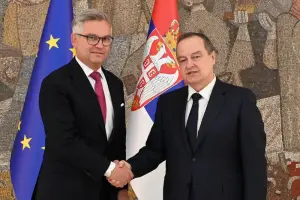 Belgrade, 29 April 2026
Continued dialogue with EU crucial for maintaining stability
-
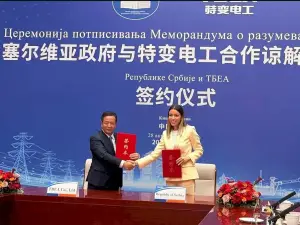 Belgrade/Tianjin/Shijiazhuang, 29 April 2026
China’s TBEA interested in transformer production in Serbia
-
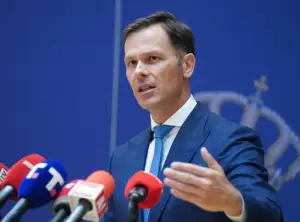 Belgrade, 29 April 2026
Serbia successfully completes another government bond issue
-
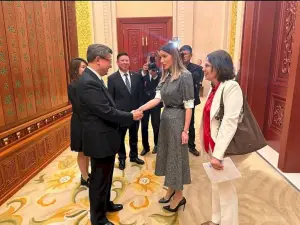 Belgrade/Shijiazhuang, 28 April 2026
Support for increased sales of Serbian products on Chinese market
-
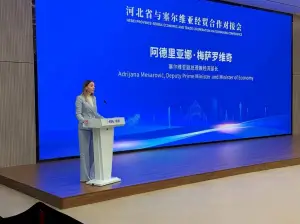 Belgrade/Shijiazhuang, 27 April 2026
New opportunities for Serbian products on Chinese market
-
 Belgrade/Shijiazhuang, 26 April 2026
Importance of strategic partnership with HBIS company confirmed
-
 Belgrade/Jinan, 26 April 2026
Serbia builds partnerships with leading Chinese companies
-
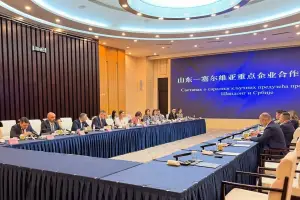 Belgrade/Jinan, 25 April 2026
Chinese companies plan new investments in Serbia
-
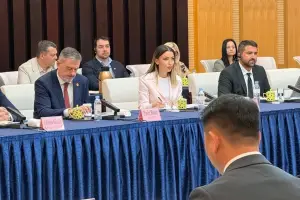 Belgrade/Jinan, 25 April 2026
Jinan Economic Forum confirms companies' interest in investing in Serbia
-
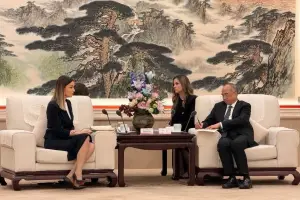 Belgrade/Jinan, 25 April 2026
Support for sale of Serbian wines, other products on Chinese market agreed