
Q:
A:
Two years of effective fiscal policy
Belgrade,
1 July 2010
The Ministry of Finance stated that the main feature of its work during the last two years has been the implementation of an effective fiscal policy and its top achievement has been the liquidity of the budget.
According to a report on two years of its work issued by the Finance Ministry, presented to Prime Minister Mirko Cvetkovic, the trend of high nominal and real growth in public expenditure has been halted and public spending has been cut significantly.
The 2009 budget revision has reduced the share of public expenditure in the GDP by nearly 2%, which is a record reduction in Serbia’s recent history.
The structure of public spending has also been improved, with increased investment and decreased current expenditure.
The Finance Ministry initiated and concluded negotiations with the IMF in order to maintain macroeconomic stability and to mitigate the effects of the global economic crisis.
A $520 million arrangement was signed in November 2008 as a precaution. In March 2009, a new €2.9 billion arrangement was signed.
Owing to the Vienna Agreement, commercial banks maintained credit exposure to Serbia and provided further funds last year.
In order to prevent the effects of the crisis from expanding further, the Finance Ministry raised the limit of deposit insurance from €3,000 to €50,000, suspended the tax on income from interest on foreign currency savings and the capital gains tax on income from the transfer of securities.
A decision was made to treat the years of service of workers as consecutive, in companies which have not settled debts related to the pension and disability insurance fund for the period from 1 January 2004 to 31 December 2009.
This will make it possible for more than 47,000 workers to retire. The state has set aside nearly RSD 13 billion in financial aid for this purpose, up until now.
During the last two years, €1,625,385,000, and more than RSD 10 billion was provided in financial support to various projects.
Most of the funds were set aside for infrastructure projects (€957.885 million), financing for Small and Medium-Sized Enterprises (€280 million), science (€225 million), health (€80.5 million) and education (€50 million).
Corridor 10 is at the top of the list of priorities and €809 million was obtained from international financial institutions for the projects, while RSD 7.5 billion was allocated from the budget.
A further RSD 1.85 billion was set aside from the budget for expropriation of land for building Corridor 10.
Significant funding was secured in non-repayable assistance to Serbia. Agreements were signed providing a total of €89 million. Non-repayable assistance from IPF funds stands at a total of €535 million.
Agreements on trans-border cooperation were signed, which will bring €141 million in assistance.
Public finances were stabilised, reflected in the regularity with which the state settles its financial obligations.
The issuance of 3, 6, 12 and 18 month treasury bills made it possible to develop the national securities market. A total of RSD 130 billion was thus secured for financing the budget deficit and for refinancing overdue obligations.
In the area of the reform of public finances, the Law on state support was adopted which establishes a system of monitoring state support. The Law on public procurement was passed, which is one of the first systemic anti-corruption laws. The Law on the budget system was passed which has established a framework for better expenditure monitoring.
New standards were introduced for drafting the budget, which will show revenues and expenditure in a comprehensive manner. The budget for this year, for the first time, shows the income of budget beneficiaries, the amount of sums set aside for non-repayable assistance and loan projects, as well as tax revenue loss resulting from tax relief and tax reduction.
A new Customs Law was passed, which has simplified and accelerated customs procedures and 18 double tax avoidance agreements were either concluded or initialled.
Amendments to the Law on income tax, cut rates of taxes on income from capital and capital gains from 20% to 10%. The amount of non-taxable income was equalised for all categories of annual income tax payers.
Amendments to the Law on corporate profit tax means that a system has been created for a profit tax on legal entities. One of the new amendments introduced is that the tax year does not have to match the calendar year.
The parliament passed a total of 93 laws proposed by the Ministry of Finance.
Owing to an effective fiscal policy during the last two years, the financial services company Standard & Poor's improved Serbia’s credit rating from BB minus to BB stable.
It is estimated that external pressures faced by Serbia have decreased and that budget consolidation will occur in the medium-term.
A better credit rating will help Serbia obtain loans under much more favourable conditions and improve its investment climate.
Serbia is the only country in the region which has improved its credit rating.
Further improvement is expected to take place after the completion of reforms in public administration and the pension system. This will improve Serbia’s public finance situation, concludes the statement.
The 2009 budget revision has reduced the share of public expenditure in the GDP by nearly 2%, which is a record reduction in Serbia’s recent history.
The structure of public spending has also been improved, with increased investment and decreased current expenditure.
The Finance Ministry initiated and concluded negotiations with the IMF in order to maintain macroeconomic stability and to mitigate the effects of the global economic crisis.
A $520 million arrangement was signed in November 2008 as a precaution. In March 2009, a new €2.9 billion arrangement was signed.
Owing to the Vienna Agreement, commercial banks maintained credit exposure to Serbia and provided further funds last year.
In order to prevent the effects of the crisis from expanding further, the Finance Ministry raised the limit of deposit insurance from €3,000 to €50,000, suspended the tax on income from interest on foreign currency savings and the capital gains tax on income from the transfer of securities.
A decision was made to treat the years of service of workers as consecutive, in companies which have not settled debts related to the pension and disability insurance fund for the period from 1 January 2004 to 31 December 2009.
This will make it possible for more than 47,000 workers to retire. The state has set aside nearly RSD 13 billion in financial aid for this purpose, up until now.
During the last two years, €1,625,385,000, and more than RSD 10 billion was provided in financial support to various projects.
Most of the funds were set aside for infrastructure projects (€957.885 million), financing for Small and Medium-Sized Enterprises (€280 million), science (€225 million), health (€80.5 million) and education (€50 million).
Corridor 10 is at the top of the list of priorities and €809 million was obtained from international financial institutions for the projects, while RSD 7.5 billion was allocated from the budget.
A further RSD 1.85 billion was set aside from the budget for expropriation of land for building Corridor 10.
Significant funding was secured in non-repayable assistance to Serbia. Agreements were signed providing a total of €89 million. Non-repayable assistance from IPF funds stands at a total of €535 million.
Agreements on trans-border cooperation were signed, which will bring €141 million in assistance.
Public finances were stabilised, reflected in the regularity with which the state settles its financial obligations.
The issuance of 3, 6, 12 and 18 month treasury bills made it possible to develop the national securities market. A total of RSD 130 billion was thus secured for financing the budget deficit and for refinancing overdue obligations.
In the area of the reform of public finances, the Law on state support was adopted which establishes a system of monitoring state support. The Law on public procurement was passed, which is one of the first systemic anti-corruption laws. The Law on the budget system was passed which has established a framework for better expenditure monitoring.
New standards were introduced for drafting the budget, which will show revenues and expenditure in a comprehensive manner. The budget for this year, for the first time, shows the income of budget beneficiaries, the amount of sums set aside for non-repayable assistance and loan projects, as well as tax revenue loss resulting from tax relief and tax reduction.
A new Customs Law was passed, which has simplified and accelerated customs procedures and 18 double tax avoidance agreements were either concluded or initialled.
Amendments to the Law on income tax, cut rates of taxes on income from capital and capital gains from 20% to 10%. The amount of non-taxable income was equalised for all categories of annual income tax payers.
Amendments to the Law on corporate profit tax means that a system has been created for a profit tax on legal entities. One of the new amendments introduced is that the tax year does not have to match the calendar year.
The parliament passed a total of 93 laws proposed by the Ministry of Finance.
Owing to an effective fiscal policy during the last two years, the financial services company Standard & Poor's improved Serbia’s credit rating from BB minus to BB stable.
It is estimated that external pressures faced by Serbia have decreased and that budget consolidation will occur in the medium-term.
A better credit rating will help Serbia obtain loans under much more favourable conditions and improve its investment climate.
Serbia is the only country in the region which has improved its credit rating.
Further improvement is expected to take place after the completion of reforms in public administration and the pension system. This will improve Serbia’s public finance situation, concludes the statement.
-
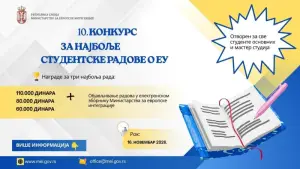 Belgrade, 15 October 2026
10th competition for best student papers on EU announced
-
 Belgrade/Moscow, 13 October 2026
Enhancing cooperation with Russia in areas of strategic importance
-
 Belgrade, 12 October 2026
Significant potential for further deepening bilateral relations with Sri Lanka
-
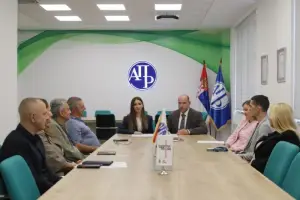 Belgrade, 9 October 2026
SBRA enables electronic submission of applications to Media Register
-
 Belgrade, 3 October 2026
Children’s Week to focus on combating violence against children
-
 Belgrade, 1 October 2026
Serbia joins partnership for development, application of artificial intelligence
-
 Kruševac, 28 September 2026
Training for foreign armed forces personnel at Nuclear, Biological and Chemical Defence Centre in Kruševac
-
 Belgrade, 22 September 2026
Cooperation with Justice Ministry of key importance for UNODC ROSEE
-
 Belgrade, 21 September 2026
Stronger cooperation with UNICEF on improving care for children
-
 Belgrade, 16 September 2026
Serbia committed to further strengthening relations with Republic of Korea