
Q:
A:
Regulations concerning visa free travel for Serbian citizens
Belgrade,
9 December 2009
The Serbian Ministry of Interior issued a statement today concerning incorrect interpretations in certain media about the conditions applicable to visa free travel for Serbian citizens.
According to the Interior Ministry’s statement, from December 19 Serbian citizens will not need visas to travel to 25 EU countries. Visas will not be required to travel to Norway, Switzerland and Iceland, which are not EU countries, but are Schengen countries.
Visa will still be required for travelling to Great Britain and Ireland, which are members of the EU but are not part of the Schengen area.
Visas have been removed for short term travel of a total of 90 days in the Schengen area during a period of 180 days.
One period of 180 days will start from the first entry across a Schengen border and after the duration of 180 days from the first exit across a Schengen border, a new period of 180 days will begin during which it will be possible to travel again for a total of 90 days.
Additional financial or administrative conditions will not be applicable to Serbian citizens who have biometric passports.
Usual border control measures will still be applicable when entering the Schengen area. These are measures enforced by all countries including Serbia and are aimed at preventing cross border crime and illegal immigration and ensuring public security.
EU border control personnel will continue to implement these measures regarding Serbian citizens travelling to Schengen countries. The primary aim of these measures is to ensure that there is no intention to stay more than the allowed 90 days.
Serbian citizens might be required to state the end destination and to present evidence that they have adequate funds for covering travel expenses.
There is no fixed amount of funds related to the duration of stay and in practical terms this is determined by each individual country, for instance in the case of tourism a hotel booking or evidence of other accommodation might be required.
If the purpose of travel is participation in a seminar or conference an invitation letter or a list of registered guests might be required.
In the case of a visit to family or friends who live in the Schengen area a formal guarantee letter will not be required but citizens should be able to state precise data concerning the person they are visiting, including their address, by presenting an invitation letter or a photocopy of the personal documents of their host.
This is not a formal condition for travelling in the Schengen area but will contribute to simplifying and accelerating border checks, particularly in the case of a language barrier while communicating with border control personnel.
It is important to highlight that the border control personnel of Schengen countries reserve the right to deny entry if they assess that the person in question poses a security threat or health risk or if an official warning concerning the person has been issued to not allow entry.
The right of border control personnel to deny entry was in force previously and was applicable to those who had been issued a valid visa.
This rule will continue to remain in force and is not related to the removal of visa restrictions as it is a standard border control regulation.
A valid international driver’s license and international insurance will be required when travelling by private transport. If the vehicle in question belongs to another person suitable authorization provided by the owner of the vehicle will be required.
These are usual regulations applicable to international road transport and are not related to the removal of visa restrictions.
Travel health insurance is not a condition for travelling but it is highly recommended for personal security in the case of any medical need that might arise while travelling.
It is important to stress that the removal of visa restrictions for short stays does not entitle Serbian citizens to permanent stays, residence or employment in the EU.
Staying in the Schengen area for more than a period of 90 days or working without required permits is illegal. Serbian citizens who wish to stay in the Schengen area for more than 90 days or to find employment are required to apply for the suitable visas prior to travelling.
Serbian citizens who have new biometric passports will not require visas. Those citizens who have the old “blue” passport are still required to obtain a visa before travelling.
Despite the intensive diplomatic efforts made by Serbia, at the moment the removal of visa restrictions for Serbian citizens living in the Autonomous Province of Kosovo-Metohija is not possible. These citizens are issued passports by the Coordinating Administration of the Interior Ministry.
Holders of passports issued by the Coordinating Administration will still require visas for travelling to the Schengen area.
The removal of visa restrictions is valid for Internally Displaced Persons who are holders of the new biometric passports issued by their local police station, concludes the statement.
Visa will still be required for travelling to Great Britain and Ireland, which are members of the EU but are not part of the Schengen area.
Visas have been removed for short term travel of a total of 90 days in the Schengen area during a period of 180 days.
One period of 180 days will start from the first entry across a Schengen border and after the duration of 180 days from the first exit across a Schengen border, a new period of 180 days will begin during which it will be possible to travel again for a total of 90 days.
Additional financial or administrative conditions will not be applicable to Serbian citizens who have biometric passports.
Usual border control measures will still be applicable when entering the Schengen area. These are measures enforced by all countries including Serbia and are aimed at preventing cross border crime and illegal immigration and ensuring public security.
EU border control personnel will continue to implement these measures regarding Serbian citizens travelling to Schengen countries. The primary aim of these measures is to ensure that there is no intention to stay more than the allowed 90 days.
Serbian citizens might be required to state the end destination and to present evidence that they have adequate funds for covering travel expenses.
There is no fixed amount of funds related to the duration of stay and in practical terms this is determined by each individual country, for instance in the case of tourism a hotel booking or evidence of other accommodation might be required.
If the purpose of travel is participation in a seminar or conference an invitation letter or a list of registered guests might be required.
In the case of a visit to family or friends who live in the Schengen area a formal guarantee letter will not be required but citizens should be able to state precise data concerning the person they are visiting, including their address, by presenting an invitation letter or a photocopy of the personal documents of their host.
This is not a formal condition for travelling in the Schengen area but will contribute to simplifying and accelerating border checks, particularly in the case of a language barrier while communicating with border control personnel.
It is important to highlight that the border control personnel of Schengen countries reserve the right to deny entry if they assess that the person in question poses a security threat or health risk or if an official warning concerning the person has been issued to not allow entry.
The right of border control personnel to deny entry was in force previously and was applicable to those who had been issued a valid visa.
This rule will continue to remain in force and is not related to the removal of visa restrictions as it is a standard border control regulation.
A valid international driver’s license and international insurance will be required when travelling by private transport. If the vehicle in question belongs to another person suitable authorization provided by the owner of the vehicle will be required.
These are usual regulations applicable to international road transport and are not related to the removal of visa restrictions.
Travel health insurance is not a condition for travelling but it is highly recommended for personal security in the case of any medical need that might arise while travelling.
It is important to stress that the removal of visa restrictions for short stays does not entitle Serbian citizens to permanent stays, residence or employment in the EU.
Staying in the Schengen area for more than a period of 90 days or working without required permits is illegal. Serbian citizens who wish to stay in the Schengen area for more than 90 days or to find employment are required to apply for the suitable visas prior to travelling.
Serbian citizens who have new biometric passports will not require visas. Those citizens who have the old “blue” passport are still required to obtain a visa before travelling.
Despite the intensive diplomatic efforts made by Serbia, at the moment the removal of visa restrictions for Serbian citizens living in the Autonomous Province of Kosovo-Metohija is not possible. These citizens are issued passports by the Coordinating Administration of the Interior Ministry.
Holders of passports issued by the Coordinating Administration will still require visas for travelling to the Schengen area.
The removal of visa restrictions is valid for Internally Displaced Persons who are holders of the new biometric passports issued by their local police station, concludes the statement.
-
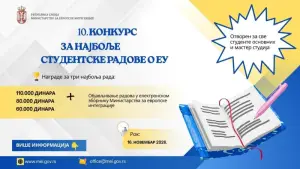 Belgrade, 15 October 2026
10th competition for best student papers on EU announced
-
 Belgrade/Moscow, 13 October 2026
Enhancing cooperation with Russia in areas of strategic importance
-
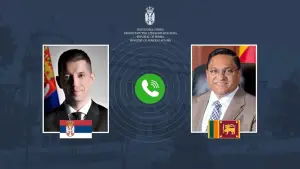 Belgrade, 12 October 2026
Significant potential for further deepening bilateral relations with Sri Lanka
-
 Belgrade, 9 October 2026
SBRA enables electronic submission of applications to Media Register
-
 Belgrade, 3 October 2026
Children’s Week to focus on combating violence against children
-
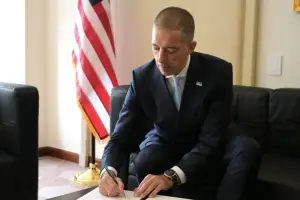 Belgrade, 1 October 2026
Serbia joins partnership for development, application of artificial intelligence
-
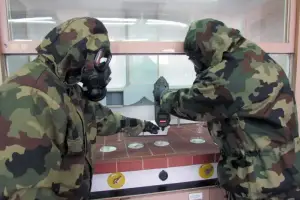 Kruševac, 28 September 2026
Training for foreign armed forces personnel at Nuclear, Biological and Chemical Defence Centre in Kruševac
-
 Belgrade, 22 September 2026
Cooperation with Justice Ministry of key importance for UNODC ROSEE
-
 Belgrade, 21 September 2026
Stronger cooperation with UNICEF on improving care for children
-
 Belgrade, 16 September 2026
Serbia committed to further strengthening relations with Republic of Korea