Q:
A:
One year since Serbia signed SAA with EU
Belgrade,
29 April 2009
The EU Integration Office stated that Serbia signed the Stabilisation and Association Agreement (SAA) with the EU on this date one year ago.
Although the implementation of the Transitional Trade Agreement and the ratification of SAA are waiting for the greenlight from the EU Council of Ministers, the Serbian government formally began to implement the trade part of the Agreement on January 30, 2009.
The application of this Agreement is of utmost importance for Serbia, considering it provides a free trade zone between Serbia and the EU.
The portion of Serbia’s foreign trade includes 56% trade with the EU.
CEFTA countries, which also cherish the European perspective, are the second largest market for Serbia, which means that in the future over 80% of Serbian exports will go to the EU.
Although the EU has not formally started with the implementation of the Agreement, Serbian products on the European market enjoy a priviledged position.
Since November 2000, the EU has applied a customs-free regime to Serbia, saving Serbian exporters around $385 million last year or around €2 billion in the previous eight years.
Exports from Serbia to the EU increased 265% in 2008, compared to 2001.
In the past two months, the amount of uncollected customs fees for imports from the EU totalled €10 million.
The level of foreign direct investments from the EU stood at around €165 million for the same period.
Dutch Heineken and VDL, German LEONI and Slovene Merkur announced investments in Serbia.
The Serbian government adopted 72 bills that are directly or indirectly related to EU integration in the last quarter of 2008 and in the first quarter of 2009.
In the period from January to March 2009, 53% of planned “EU” laws were adopted.
The application of this Agreement is of utmost importance for Serbia, considering it provides a free trade zone between Serbia and the EU.
The portion of Serbia’s foreign trade includes 56% trade with the EU.
CEFTA countries, which also cherish the European perspective, are the second largest market for Serbia, which means that in the future over 80% of Serbian exports will go to the EU.
Although the EU has not formally started with the implementation of the Agreement, Serbian products on the European market enjoy a priviledged position.
Since November 2000, the EU has applied a customs-free regime to Serbia, saving Serbian exporters around $385 million last year or around €2 billion in the previous eight years.
Exports from Serbia to the EU increased 265% in 2008, compared to 2001.
In the past two months, the amount of uncollected customs fees for imports from the EU totalled €10 million.
The level of foreign direct investments from the EU stood at around €165 million for the same period.
Dutch Heineken and VDL, German LEONI and Slovene Merkur announced investments in Serbia.
The Serbian government adopted 72 bills that are directly or indirectly related to EU integration in the last quarter of 2008 and in the first quarter of 2009.
In the period from January to March 2009, 53% of planned “EU” laws were adopted.
-
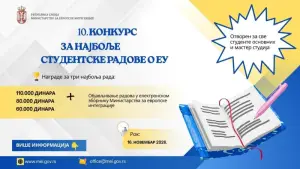 Belgrade, 15 October 2026
10th competition for best student papers on EU announced
-
 Belgrade/Moscow, 13 October 2026
Enhancing cooperation with Russia in areas of strategic importance
-
 Belgrade, 12 October 2026
Significant potential for further deepening bilateral relations with Sri Lanka
-
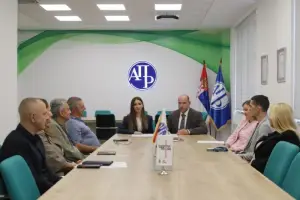 Belgrade, 9 October 2026
SBRA enables electronic submission of applications to Media Register
-
 Belgrade, 3 October 2026
Children’s Week to focus on combating violence against children
-
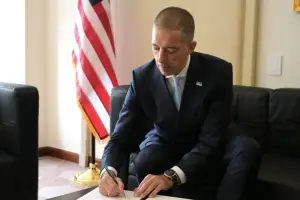 Belgrade, 1 October 2026
Serbia joins partnership for development, application of artificial intelligence
-
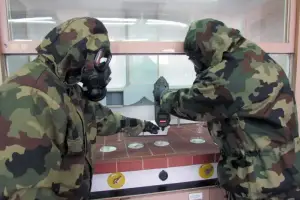 Kruševac, 28 September 2026
Training for foreign armed forces personnel at Nuclear, Biological and Chemical Defence Centre in Kruševac
-
 Belgrade, 22 September 2026
Cooperation with Justice Ministry of key importance for UNODC ROSEE
-
 Belgrade, 21 September 2026
Stronger cooperation with UNICEF on improving care for children
-
 Belgrade, 16 September 2026
Serbia committed to further strengthening relations with Republic of Korea