Q:
A:
Government’s anti-crisis measures already yield good results
Belgrade,
9 April 2009
In an interview with the Politika daily, Serbian Prime Minister Mirko Cvetkovic stated that government measures for alleviating the consequences of the crisis have already yielded good results.
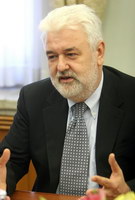
The government’s official web site quotes part of Prime Minister Mirko Cvetkovic’s statement:
Did the government adopt the anti-crisis measures in time?
The government did its best to mitigate the negative effects of the crisis and if recession worsens it will make even more efforts and adopt additional measures. During the last three months of 2008 the government realised what would happen. Firstly we wanted to see how other nations react in times of crisis. Industrial production in Serbia in December 2008 fell by 12%, in January 2009 by 19.5% and in February 2009 it went down by 19%. The government adopted the first package of measures for the protection of the banking sector in last October. Afterwards, it drafted the first plan for mitigating the consequences of the crisis which has yielded good initial results.
The government’s biggest success during the past several months:
Some political parties criticize the government’s measures, saying that they are late and inefficient, but there is no use in such remarks. What was the government supposed to do when it noticed that foreign currency income was diminishing and that Serbia may not be able to settle its debts? The government’s response to such problems was to use around RSD 160 billion to secure the liquidity of the Serbian economy and encourage the sale of domestic products. The government’s move, with the help of the banks, resulted in economic stability, as well as the stability of the dinar exchange rate.
The government’s plans for economic stability:
The government has drafted a plan for Serbia’s economic stability in time. During the first three months of this year budget income went down by 2.5% to 3%. We decided to reduce state administration expenditures and made efforts to avoid hyperinflation.
Savings measures within the state administration:
Our state administration is very expensive. It is clear that expenditures must be synchronised with revenues at all levels, particularly during the crisis. The government decided to reduce state administration expenses at least by € 1 billion.
Is this idea motivated only by the bad economic situation?
Partly yes, but the government actually wants to reach both economic and political goals. The government has to prove that it can spend less during the current economic situation. We want to convey a message that in these hard times the government considers that we are all equal. Compared to other countries in the region Serbia is not late. We are even a bit faster than them. Nobody has reached their goals yet nor surmounted the crisis. The Serbian government is doing all it can to alleviate the consequences of the crisis at the moment.
Is the period of the crisis suitable for such changes?
The crisis was not our choice, but now we must deal with it. It is not recommendable that the government immediately starts implementing harsh measures or dismissing people from the state administration, but we must save as much as possible and distribute the burden of the crisis evenly. The government will continue fighting for Serbia’s stability and further development. A majority of measures, including multilateral compensation, will soon give positive initial results. There is also the possibility that public companies convert their debts into private companies’ capital in order to provide liquidity, help private companies recover and eventually send their capital on the free market.
An agreement with the IMF:
The IMF will set aside €3 billion for Serbia’s foreign currency reserves which will provide stability for the dinar exchange rate. The IMF has helped Serbia to agree with foreign creditors in Vienna not to reduce loans for Serbian private companies during 2009 or to replace an old loan with a new one. This is of major importance for Serbia, as the repayment of loans would jeopardise Serbia’s balance of payment.
Did the government give up the idea to tax salaries and pensions higher than RSD 12,000?
All the government’s measures are in the best interest of Serbian citizens. In my opinion, the recently adopted plan will secure economic stability.
Did the government give up the idea due to strong public pressure?
The government has searched for and found a better solution. We want to show that it is possible to save money even in such hard times.
On the possibility of GDP falling by more than 2%?
I do not believe it will occur. We want to preserve economic stability and the stability of the dinar exchange rate as long as possible. Apart from budget revisions, which must be adopted by May 1, the government will suggest a series of measures to prevent a fall in GDP higher than 2%. The government will appear with new solutions in due time.
Do the banks provide adequate support to the government’s measures?
For a short period of time banks have approved a RSD 160 million loan with an 11% interest rate, 6% of which will be paid out by the state and 5% by the loan user.
On the reduction of state funds for local self-governments?
If the government decided to reduce its expenses, I do not see any reason for Serbian municipalities not to do the same. Around RSD 41 billion will be earmarked from the sate budget for local authorities. We expect municipalities to reduce their expenses by 7% or 8%. Richer municipalities, such as Belgrade and Novi Sad, will save more and some poor areas in the southern part of the country may receive more funds.
On the realisation of infrastructure plans:
The construction of a 23 km long motorway section Presevo–Levosija, part of Corridor 10, is soon to start, as well as two 10 km long motorway sections from Horgos to Novi Sad. The works are to be completed by December 2009. Together with inclusion on the ‘Schengen‘ white list, Serbia would therefore fulfil its two strategic goals for this year.
Did the government adopt the anti-crisis measures in time?
The government did its best to mitigate the negative effects of the crisis and if recession worsens it will make even more efforts and adopt additional measures. During the last three months of 2008 the government realised what would happen. Firstly we wanted to see how other nations react in times of crisis. Industrial production in Serbia in December 2008 fell by 12%, in January 2009 by 19.5% and in February 2009 it went down by 19%. The government adopted the first package of measures for the protection of the banking sector in last October. Afterwards, it drafted the first plan for mitigating the consequences of the crisis which has yielded good initial results.
The government’s biggest success during the past several months:
Some political parties criticize the government’s measures, saying that they are late and inefficient, but there is no use in such remarks. What was the government supposed to do when it noticed that foreign currency income was diminishing and that Serbia may not be able to settle its debts? The government’s response to such problems was to use around RSD 160 billion to secure the liquidity of the Serbian economy and encourage the sale of domestic products. The government’s move, with the help of the banks, resulted in economic stability, as well as the stability of the dinar exchange rate.
The government’s plans for economic stability:
The government has drafted a plan for Serbia’s economic stability in time. During the first three months of this year budget income went down by 2.5% to 3%. We decided to reduce state administration expenditures and made efforts to avoid hyperinflation.
Savings measures within the state administration:
Our state administration is very expensive. It is clear that expenditures must be synchronised with revenues at all levels, particularly during the crisis. The government decided to reduce state administration expenses at least by € 1 billion.
Is this idea motivated only by the bad economic situation?
Partly yes, but the government actually wants to reach both economic and political goals. The government has to prove that it can spend less during the current economic situation. We want to convey a message that in these hard times the government considers that we are all equal. Compared to other countries in the region Serbia is not late. We are even a bit faster than them. Nobody has reached their goals yet nor surmounted the crisis. The Serbian government is doing all it can to alleviate the consequences of the crisis at the moment.
Is the period of the crisis suitable for such changes?
The crisis was not our choice, but now we must deal with it. It is not recommendable that the government immediately starts implementing harsh measures or dismissing people from the state administration, but we must save as much as possible and distribute the burden of the crisis evenly. The government will continue fighting for Serbia’s stability and further development. A majority of measures, including multilateral compensation, will soon give positive initial results. There is also the possibility that public companies convert their debts into private companies’ capital in order to provide liquidity, help private companies recover and eventually send their capital on the free market.
An agreement with the IMF:
The IMF will set aside €3 billion for Serbia’s foreign currency reserves which will provide stability for the dinar exchange rate. The IMF has helped Serbia to agree with foreign creditors in Vienna not to reduce loans for Serbian private companies during 2009 or to replace an old loan with a new one. This is of major importance for Serbia, as the repayment of loans would jeopardise Serbia’s balance of payment.
Did the government give up the idea to tax salaries and pensions higher than RSD 12,000?
All the government’s measures are in the best interest of Serbian citizens. In my opinion, the recently adopted plan will secure economic stability.
Did the government give up the idea due to strong public pressure?
The government has searched for and found a better solution. We want to show that it is possible to save money even in such hard times.
On the possibility of GDP falling by more than 2%?
I do not believe it will occur. We want to preserve economic stability and the stability of the dinar exchange rate as long as possible. Apart from budget revisions, which must be adopted by May 1, the government will suggest a series of measures to prevent a fall in GDP higher than 2%. The government will appear with new solutions in due time.
Do the banks provide adequate support to the government’s measures?
For a short period of time banks have approved a RSD 160 million loan with an 11% interest rate, 6% of which will be paid out by the state and 5% by the loan user.
On the reduction of state funds for local self-governments?
If the government decided to reduce its expenses, I do not see any reason for Serbian municipalities not to do the same. Around RSD 41 billion will be earmarked from the sate budget for local authorities. We expect municipalities to reduce their expenses by 7% or 8%. Richer municipalities, such as Belgrade and Novi Sad, will save more and some poor areas in the southern part of the country may receive more funds.
On the realisation of infrastructure plans:
The construction of a 23 km long motorway section Presevo–Levosija, part of Corridor 10, is soon to start, as well as two 10 km long motorway sections from Horgos to Novi Sad. The works are to be completed by December 2009. Together with inclusion on the ‘Schengen‘ white list, Serbia would therefore fulfil its two strategic goals for this year.
-
 Belgrade/Sofia, 10 June 2026
Regional unity today more important than ever
-
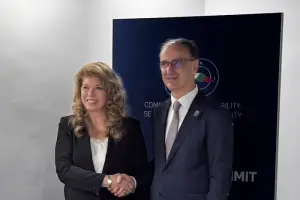 Belgrade/Sofia, 10 June 2026
Serbia, Bulgaria committed to strengthening cooperation, good neighbourly relations
-
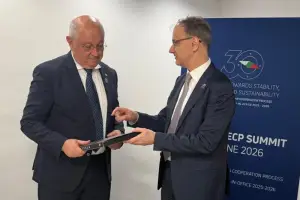 Belgrade/Sofia, 10 June 2026
Strengthening cooperation between Serbia, Moldova in several areas of common interest
-
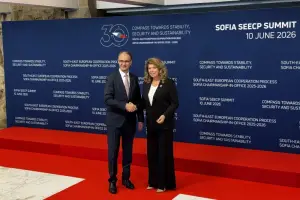 Belgrade, 10 June 2026
Prime Minister Macut at SEEPC Summit
-
 Belgrade, 10 June 2026
Improving quality of life for citizens among Serbian government priorities
-
 Aranđelovac, 9 June 2026
Prime Minister’s office in Aranđelovac for faster resolution of citizens’ problems
-
 Belgrade, 5 June 2026
Government dedicated to further improving higher education system
-
 Belgrade, 5 June 2026
Deepening economic partnership between Serbia, Republic of Korea
-
 Belgrade, 5 June 2026
Additional strengthening of bilateral relations between Serbia, Switzerland