
Q:
A:
Serbia joins OECD Fruit and Vegetable Scheme
Belgrade,
10 December 2008
The Ministry of Agriculture, Forestry and Water management today stated that at the 67th plenary session of the Organisation for Economic Cooperation and Development (OECD) Serbia was admitted to the OECD Scheme for Fruits and Vegetables.
The statement adds that the session was held on December 3 and 4 in Paris and the decision on Serbia’s admittance was made by 23 OECD member countries, following a visit of the OECD evaluation team to Serbia in June.
The team was acquainted with the production of fruit and vegetables in Serbia and the procedures for quality control of agricultural food products.
Following the team’s report it was decided to grant Serbia membership in this Scheme, thanks to which it can actively engage in trading fresh fruit and vegetables with other countries.
Apart from the obligatory OECD standards, which are almost equal to EU ones, Serbia has been given the right to issue certificates enabling it equal participation in foreign trade.
Russia also became a member of this organisation a while ago and several members of the CEFTA Agreement are also in the application process, namely Slovenia, Croatia and Bosnia-Herzegovina, all of them being important foreign trade partners with Serbia.
The Ministry will now start harmonising Serbia’s regulations with international (OECD/UNECE) fruit and vegetable quality standards, in order to make Serbian products competitive in foreign markets.
By joining the Fruit and Vegetable Scheme, Serbia has become a member of all four OECD Schemes, which prescribe standards for trade in seeds, forest reproductive material, fruit and vegetables, as well as the criteria concerning the use of machinery in agricultural production.
The statement specifies that the four OECD schemes are the Seeds Scheme (which Serbia joined in 2001), Tractor Scheme (2006), Forest Reproductive Material Scheme (2008) and the Fruit and Vegetable Scheme.
The team was acquainted with the production of fruit and vegetables in Serbia and the procedures for quality control of agricultural food products.
Following the team’s report it was decided to grant Serbia membership in this Scheme, thanks to which it can actively engage in trading fresh fruit and vegetables with other countries.
Apart from the obligatory OECD standards, which are almost equal to EU ones, Serbia has been given the right to issue certificates enabling it equal participation in foreign trade.
Russia also became a member of this organisation a while ago and several members of the CEFTA Agreement are also in the application process, namely Slovenia, Croatia and Bosnia-Herzegovina, all of them being important foreign trade partners with Serbia.
The Ministry will now start harmonising Serbia’s regulations with international (OECD/UNECE) fruit and vegetable quality standards, in order to make Serbian products competitive in foreign markets.
By joining the Fruit and Vegetable Scheme, Serbia has become a member of all four OECD Schemes, which prescribe standards for trade in seeds, forest reproductive material, fruit and vegetables, as well as the criteria concerning the use of machinery in agricultural production.
The statement specifies that the four OECD schemes are the Seeds Scheme (which Serbia joined in 2001), Tractor Scheme (2006), Forest Reproductive Material Scheme (2008) and the Fruit and Vegetable Scheme.
-
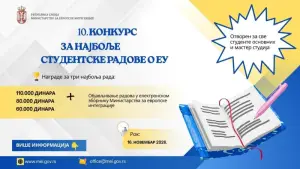 Belgrade, 15 October 2026
10th competition for best student papers on EU announced
-
 Belgrade/Moscow, 13 October 2026
Enhancing cooperation with Russia in areas of strategic importance
-
 Belgrade, 12 October 2026
Significant potential for further deepening bilateral relations with Sri Lanka
-
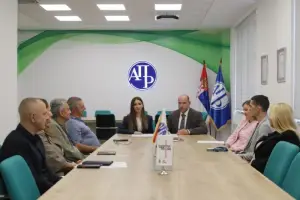 Belgrade, 9 October 2026
SBRA enables electronic submission of applications to Media Register
-
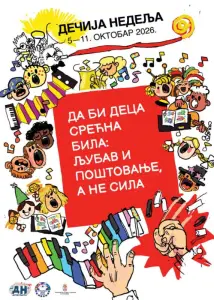 Belgrade, 3 October 2026
Children’s Week to focus on combating violence against children
-
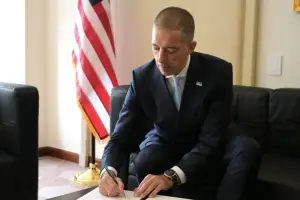 Belgrade, 1 October 2026
Serbia joins partnership for development, application of artificial intelligence
-
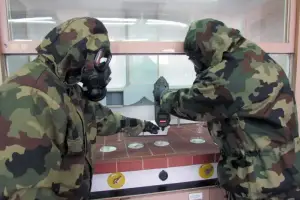 Kruševac, 28 September 2026
Training for foreign armed forces personnel at Nuclear, Biological and Chemical Defence Centre in Kruševac
-
 Belgrade, 22 September 2026
Cooperation with Justice Ministry of key importance for UNODC ROSEE
-
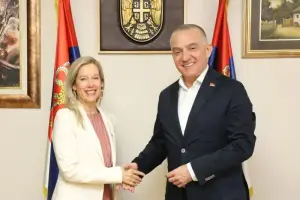 Belgrade, 21 September 2026
Stronger cooperation with UNICEF on improving care for children
-
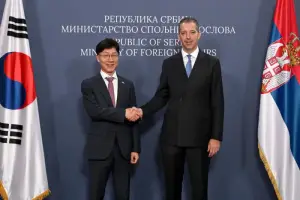 Belgrade, 16 September 2026
Serbia committed to further strengthening relations with Republic of Korea