
Q:
A:
Government aims to bring Serbia closer to EU
Belgrade,
4 November 2008
First Deputy Prime Minister and Minister of the Interior, Ivica Dacic, stated today that the government aims to bring Serbia closer to the EU as soon as possible, at the same time cherishing good relations with its traditional friends, such as Russia.
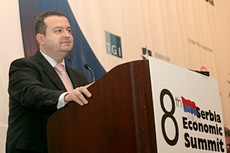
Ivica Dacic
Author:
Tanjug
At the 8th Serbian Economic Summit, themed "New Era for Serbia“, Dacic said that one of his Ministry’s basic tasks is to fulfil all the conditions of Serbia’s roadmap to the EU.
He said Serbia is trying to meet the conditions for setting up a visa free regime with EU countries and recalled that in that sense it has adopted the Law on border control, the Law on foreigners and has begun issuing biometric passports, which are a precondition for the Schengen "white list“.
Dacic said that the Serbian police had also signed agreements on cooperation with police forces from Southeast European countries and developed successful cooperation with other police departments in the region.
He announced that later in the week a ministerial forum of EU and Western Balkan countries will be held, at which the European Commission’s report on Serbia’s progress to EU Integration will be presented.
According to him, one of the Ministry’s basic tasks is to ensure legal and other safety measures necessary for foreign investments and businesses.
He noted that Serbia must be a safe place for all who want to invest in it and must not be a refuge for organised crime, money laundering and other illegal activities.
Dacic added that in future Corridor 10 will be another security challenge, which is why the Ministry is contemplating the formation of a special department tasked with the safety of the Corridor.
He voiced hope that a new era for Serbia is coming, in which all political messages from pre-election campaigns will be fulfilled, which, however, cannot happen without economic development.
According to him the current government came to life though a political and perhaps a historic compromise of different political options, which had reached agreement on five items, namely the protection of national and state interests, EU integration, economic development, social justice and fight against crime and corruption.
Deputy Prime Minister and Minister of Economy and Regional Development, Mladjan Dinkic, announced that US City Bank is to open a branch office in Serbia next year, adding that first tenders for investment in road and railway infrastructure on Corridor 10 will soon be announced.
He noted that the City Bank will most likely ask the National Bank of Serbia for a Greenfield license, for which it will have to pay €10 million, adding that City Bank is one of the most renowned international banks, with a top credit rating (AAA).
He invited investors from Greece and other countries to invest in tourism, the IT sector and the electronic and car industries.
According to him, for investment in the aforementioned sectors, the Serbian government will give incentives of between €5,000 to €10,000 per each new job, adding that tax policy is another incentive for investors.
Income tax in Serbia is 12% and tax on corporate profits is 10%, which is currently the most favourable rate in Europe, said Dinkic, adding that Serbia’s other advantage is a qualified workforce.
He explained that due to the global financial crisis, privatisation of large public companies will be temporarily postponed, until the Belgrade Stock Exchange regains stability.
However, he said that Galenika pharmaceutical company will be an exception, because next year the privatisation advisor will propose the best manner of privatisation.
Dinkic added that the energy sector will be an interesting investment target, because apart from tenders for the construction of hydro and thermal energy power plants, Serbia intends to invest in a number of smaller power plants.
As for macroeconomic movements, Dinkic said that Serbia has a stable banking system with high foreign currency reserves, which is a stabilising factor in the crisis-stricken world market.
He recalled that in the past five years Serbia has had a high GDP growth rate of 7% on average and that in 2009 the growth rate should be 4%, which is still considered satisfactory.
According to him, one of Serbia’s problems is the high deficit of the current balance of payments, resulting from the disproportion in the export-import ratio, although export has had a high growth rate in the previous years.
In a statement to the press, Dinkic said that Serbia does not need the IMF’s loans at the moment, but it needs new arrangements with this institution for its percieved psychological effect. New arrangements would improve our reputation regarding other investors and financial institutions, said Dinkic, adding that the Serbian government and the IMF delegation, which has been in Belgrade since October 28, are still discussing the 2009 budget and a new arrangement will depend on the outcome of negotiations.
According to him, the government‘s stance is to make an arrangement with the IMF for security reasons, meaning that Serbia will not draw money unless it really needs it.
Dinkic stressed that Serbia’s foreign currency reserves are three times higher than the money supply. Serbia does not need the IMF loan, but needs its expertise, particularly during this time of global financial crisis.
In his address to participants of the 8th Economic Summit, Minister of Foreign Affairs, Vuk Jeremic, said that Serbia will still make efforts to preserve stability and peace in the region, but it will also continue its diplomatic struggle against the unilaterally declared independence of Kosovo-Metohija.
Jeremic stressed that the government’s top priority is EU accession, since the EU is based on the rule of law and respects personal freedom, minority rights and differences.
He pointed out that the EU provides a permanent and sustainable peace, transforms societies and yet preserves their identity, adding that Serbia is to speed up its EU accession process.
Serbia has achieved economic growth, thus enabling a better life for its citizens, said the Minister, adding that the global financial crisis and the Kosovo issue will affect the region and slow down its development.
The Minister recalled that Serbia has decided to fight for its sovereignty and territorial integrity in accordance with international law.
Jeremic also said that the UN supported Serbia’s initiative that the International Court of Justice should give its opinion on the unilaterally declared independence of Kosovo.
In a statement to the press, Jeremic said that an agreement on the reconfiguration of UNMIK in Kosovo has not yet been achieved, therefore it is uncertain whether the UN Security Council’s session, scheduled for November 7, will be held.
Serbia has clearly specified that the reconfiguration of an international presence is possible only if it does not implement the Ahtisaari plan, if it is status-neutral and explicitly supported by the UN Security Council, stressed Jeremic.
The Minister added that an agreement on the six items regarding the special role of the UN in all parts of Kosovo inhabited by Serbs has not been achieved .
Minister of Environment and Spatial Planning Oliver Dulic said that Serbia will need nearly €4 billion to adjust to EU environmental regulations, whereas to solve the problem of sewage, €10 billion will be necessary. Dulic stated that this is a result of no investment in this area in the previous 20 years, also noting that only 5% of waste is recycled in Serbia compared to EU’s 55%.
He called on foreign investors to invest in environmental projects in Serbia and added that Serbia has no plants for waste destruction, which can be used as heating or power energy as in developed countries.
Dulic said that apart from the national strategy for environmental protection, Serbia does not have comprehensive legislation regarding this area, but nine bills are before parliament, which should make it possible to develop environmental protection.
Speaking about spatial planning in Serbia, Dulic said that the law on city building land is in front of parliament, which will make it possible for investors to buy land, instead of only being able to lease it.
He said that the government initiated the process of eliminating unnecessary regulations or the “regulatory guillotine”, and investors will soon be able to obtain business licenses and building permits according to the new and less time consuming procedure.
The Minister said that the legalization of buildings begun in 2003 will be intensified, because only 15% of illegally built buildings have been legalized until now. He added that the Serbian government will firmly fight against corruption in all spheres.
Greek Deputy Minister of Foreign Affairs Petros Doukas, Belgrade Mayor Dragan Djilas, ambassadors of the USA and European countries, as well as delegations of leading Greek companies, are taking part in the two day Economic Summit, organised by the CGI company, in the Hyatt Regency Hotel in Belgrade.
He said Serbia is trying to meet the conditions for setting up a visa free regime with EU countries and recalled that in that sense it has adopted the Law on border control, the Law on foreigners and has begun issuing biometric passports, which are a precondition for the Schengen "white list“.
Dacic said that the Serbian police had also signed agreements on cooperation with police forces from Southeast European countries and developed successful cooperation with other police departments in the region.
He announced that later in the week a ministerial forum of EU and Western Balkan countries will be held, at which the European Commission’s report on Serbia’s progress to EU Integration will be presented.
According to him, one of the Ministry’s basic tasks is to ensure legal and other safety measures necessary for foreign investments and businesses.
He noted that Serbia must be a safe place for all who want to invest in it and must not be a refuge for organised crime, money laundering and other illegal activities.
Dacic added that in future Corridor 10 will be another security challenge, which is why the Ministry is contemplating the formation of a special department tasked with the safety of the Corridor.
He voiced hope that a new era for Serbia is coming, in which all political messages from pre-election campaigns will be fulfilled, which, however, cannot happen without economic development.
According to him the current government came to life though a political and perhaps a historic compromise of different political options, which had reached agreement on five items, namely the protection of national and state interests, EU integration, economic development, social justice and fight against crime and corruption.
Deputy Prime Minister and Minister of Economy and Regional Development, Mladjan Dinkic, announced that US City Bank is to open a branch office in Serbia next year, adding that first tenders for investment in road and railway infrastructure on Corridor 10 will soon be announced.
He noted that the City Bank will most likely ask the National Bank of Serbia for a Greenfield license, for which it will have to pay €10 million, adding that City Bank is one of the most renowned international banks, with a top credit rating (AAA).
He invited investors from Greece and other countries to invest in tourism, the IT sector and the electronic and car industries.
According to him, for investment in the aforementioned sectors, the Serbian government will give incentives of between €5,000 to €10,000 per each new job, adding that tax policy is another incentive for investors.
Income tax in Serbia is 12% and tax on corporate profits is 10%, which is currently the most favourable rate in Europe, said Dinkic, adding that Serbia’s other advantage is a qualified workforce.
He explained that due to the global financial crisis, privatisation of large public companies will be temporarily postponed, until the Belgrade Stock Exchange regains stability.
However, he said that Galenika pharmaceutical company will be an exception, because next year the privatisation advisor will propose the best manner of privatisation.
Dinkic added that the energy sector will be an interesting investment target, because apart from tenders for the construction of hydro and thermal energy power plants, Serbia intends to invest in a number of smaller power plants.
As for macroeconomic movements, Dinkic said that Serbia has a stable banking system with high foreign currency reserves, which is a stabilising factor in the crisis-stricken world market.
He recalled that in the past five years Serbia has had a high GDP growth rate of 7% on average and that in 2009 the growth rate should be 4%, which is still considered satisfactory.
According to him, one of Serbia’s problems is the high deficit of the current balance of payments, resulting from the disproportion in the export-import ratio, although export has had a high growth rate in the previous years.
In a statement to the press, Dinkic said that Serbia does not need the IMF’s loans at the moment, but it needs new arrangements with this institution for its percieved psychological effect. New arrangements would improve our reputation regarding other investors and financial institutions, said Dinkic, adding that the Serbian government and the IMF delegation, which has been in Belgrade since October 28, are still discussing the 2009 budget and a new arrangement will depend on the outcome of negotiations.
According to him, the government‘s stance is to make an arrangement with the IMF for security reasons, meaning that Serbia will not draw money unless it really needs it.
Dinkic stressed that Serbia’s foreign currency reserves are three times higher than the money supply. Serbia does not need the IMF loan, but needs its expertise, particularly during this time of global financial crisis.
In his address to participants of the 8th Economic Summit, Minister of Foreign Affairs, Vuk Jeremic, said that Serbia will still make efforts to preserve stability and peace in the region, but it will also continue its diplomatic struggle against the unilaterally declared independence of Kosovo-Metohija.
Jeremic stressed that the government’s top priority is EU accession, since the EU is based on the rule of law and respects personal freedom, minority rights and differences.
He pointed out that the EU provides a permanent and sustainable peace, transforms societies and yet preserves their identity, adding that Serbia is to speed up its EU accession process.
Serbia has achieved economic growth, thus enabling a better life for its citizens, said the Minister, adding that the global financial crisis and the Kosovo issue will affect the region and slow down its development.
The Minister recalled that Serbia has decided to fight for its sovereignty and territorial integrity in accordance with international law.
Jeremic also said that the UN supported Serbia’s initiative that the International Court of Justice should give its opinion on the unilaterally declared independence of Kosovo.
In a statement to the press, Jeremic said that an agreement on the reconfiguration of UNMIK in Kosovo has not yet been achieved, therefore it is uncertain whether the UN Security Council’s session, scheduled for November 7, will be held.
Serbia has clearly specified that the reconfiguration of an international presence is possible only if it does not implement the Ahtisaari plan, if it is status-neutral and explicitly supported by the UN Security Council, stressed Jeremic.
The Minister added that an agreement on the six items regarding the special role of the UN in all parts of Kosovo inhabited by Serbs has not been achieved .
Minister of Environment and Spatial Planning Oliver Dulic said that Serbia will need nearly €4 billion to adjust to EU environmental regulations, whereas to solve the problem of sewage, €10 billion will be necessary. Dulic stated that this is a result of no investment in this area in the previous 20 years, also noting that only 5% of waste is recycled in Serbia compared to EU’s 55%.
He called on foreign investors to invest in environmental projects in Serbia and added that Serbia has no plants for waste destruction, which can be used as heating or power energy as in developed countries.
Dulic said that apart from the national strategy for environmental protection, Serbia does not have comprehensive legislation regarding this area, but nine bills are before parliament, which should make it possible to develop environmental protection.
Speaking about spatial planning in Serbia, Dulic said that the law on city building land is in front of parliament, which will make it possible for investors to buy land, instead of only being able to lease it.
He said that the government initiated the process of eliminating unnecessary regulations or the “regulatory guillotine”, and investors will soon be able to obtain business licenses and building permits according to the new and less time consuming procedure.
The Minister said that the legalization of buildings begun in 2003 will be intensified, because only 15% of illegally built buildings have been legalized until now. He added that the Serbian government will firmly fight against corruption in all spheres.
Greek Deputy Minister of Foreign Affairs Petros Doukas, Belgrade Mayor Dragan Djilas, ambassadors of the USA and European countries, as well as delegations of leading Greek companies, are taking part in the two day Economic Summit, organised by the CGI company, in the Hyatt Regency Hotel in Belgrade.
-
 Belgrade, 8 April 2026
Serbia remains firmly committed to strengthening cooperation in region
-
 Belgrade, 7 April 2026
Serbia’s infrastructure, economic development through partnership with China
-
 Belgrade, 6 April 2026
Anniversary of 1941 bombing of Belgrade marked
-
 Belgrade, 2 April 2026
Serbian Army remains committed to UNIFIL tasks
-
 Belgrade, 2 April 2026
Switzerland’s financial support for reform processes in Serbia
-
 Belgrade, 30 March 2026
Cooperation with Russia, Belarus in areas of mutual interest
-
 Belgrade, 27 March 2026
World Bank support for implementation of priority energy projects
-
 Belgrade, 27 March 2026
Continued cooperation with Germany on utility infrastructure projects
-
 Belgrade, 26 March 2026
Activities of state institutions for opening clusters 2 and 5 examined
-
 Belgrade, 26 March 2026
Exchange of experiences with Slovakia in field of ICT