
Q:
A:
Transitional trade agreement to be implemented from January 1 next year
Belgrade,
16 October 2008
The Serbian government today voted unanimously to implement the transitional trade agreement with the EU from January 1, 2009.
At the government session, which was open to the media during its first part, Serbian Prime Minister Mirko Cvetkovic recommended government members to pass the aforementioned decision in order to reduce the time period between the start of implementation and acquisition of EU candidate status.
Prior to voting, Serbian Deputy Prime Minister in charge of EU integration Bozidar Djelic said that implementation of the transitional trade agreement should begin on January 1, 2009, beginning with a 50% reduction in customs duty on new and used vehicles.
According to Djelic, Serbia will implement the agreement in 2009 to signal to the EU that it is ready and able to put its words into action.
Speaking about the customs duties, Djelic said that from January 1 next year they will be cut to 22% for goods imported from the EU, while the customs duty on new and used cars will be lowered from 20% to 10%.
The Prime Minister and Deputy Prime Minister earlier presented information about the progress made during the government’s first 100 days in office, jointly stating that the government has had a successful start in achieving its stated goals.
At the beginning of the session, Cvetkovic said that the government held 27 sessions, unanimously approved 70 laws and passed a large number of decrees and decisions during the first 100 days of its term in office
He said that the government’s goals are EU integration, defence of the country’s territorial integrity and sovereignty, strengthening the economy, social responsibility, the fight against organised crime and corruption and upholding international law.
Prior to voting, Serbian Deputy Prime Minister in charge of EU integration Bozidar Djelic said that implementation of the transitional trade agreement should begin on January 1, 2009, beginning with a 50% reduction in customs duty on new and used vehicles.
According to Djelic, Serbia will implement the agreement in 2009 to signal to the EU that it is ready and able to put its words into action.
Speaking about the customs duties, Djelic said that from January 1 next year they will be cut to 22% for goods imported from the EU, while the customs duty on new and used cars will be lowered from 20% to 10%.
The Prime Minister and Deputy Prime Minister earlier presented information about the progress made during the government’s first 100 days in office, jointly stating that the government has had a successful start in achieving its stated goals.
At the beginning of the session, Cvetkovic said that the government held 27 sessions, unanimously approved 70 laws and passed a large number of decrees and decisions during the first 100 days of its term in office
He said that the government’s goals are EU integration, defence of the country’s territorial integrity and sovereignty, strengthening the economy, social responsibility, the fight against organised crime and corruption and upholding international law.
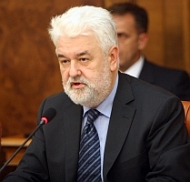
Mirko Cvetkovic
The Prime Minister said that Serbia has taken a firm step towards the EU by ratifying the Stabilisation and Association Agreement and the transitional trade agreement.
According to Cvetkovic, the government during its first 100 days passed 20 laws required for EU integration and Serbia’s inclusion in the Schengen “white list”.
Cvetkovic said that, by signing the security agreement with NATO, Serbia largely enhanced its level of security and made an important step towards the Partnership for Peace.
As for Kosovo-Metohija, the government made a big diplomatic success regarding Serbia’s resolution, asking the International Court of Justice for an opinion on the legality of the unilaterally declared independence of Kosovo-Metohija, was adopted in the UN General Assembly, stressed the Prime Minister.
He pointed out that a part of the Coordinating Body for Kosovo-Metohija, having been transferred to Gracanica, had become a real help to citizens by solving their problems in the field.
As for Serbia’s insistence on the respect of international law, one of the government’s goals, Cvetkovic recalled that the cooperation with the Hague Tribunal has been continued in the previous 100 working days and expressed conviction that it will soon be successfully concluded.
Cvetkovic informed the members of his cabinet that the agreement on the strategic partnership with Italian Fiat had been reached and added that it will ensure 5,000 new jobs. He expressed satisfaction that the government secured approximately €1.6 billion from various funds for the completion of a Corridor 10 motorway.
Speaking about the government’s economic challenges, Cvetkovic pointed out that the consequences of the global financial crisis in Serbia have been addressed and added that the situation in the bank sector is stable and its citizens have nothing to worry about.
The Prime Minister expressed satisfaction that, after a long time, the State Auditory Institution has finally received new offices. In the first 100 days of its work, the Serbian government also showed social awareness by increasing pensions, acquiring funds for the construction of social housing and distributing free textbooks, and it continued the policy of providing subsidies for farmers and scholarships for students, stressed Cvetkovic.
Deputy Ministers Ivica Dacic, Jovan Krkobabic and Bozidar Djelic also talked about the government’s achievements in its first 100 days.
After agreeing to implement the transitional trade agreement, the session was closed to the public, and the government continued its work.
According to Cvetkovic, the government during its first 100 days passed 20 laws required for EU integration and Serbia’s inclusion in the Schengen “white list”.
Cvetkovic said that, by signing the security agreement with NATO, Serbia largely enhanced its level of security and made an important step towards the Partnership for Peace.
As for Kosovo-Metohija, the government made a big diplomatic success regarding Serbia’s resolution, asking the International Court of Justice for an opinion on the legality of the unilaterally declared independence of Kosovo-Metohija, was adopted in the UN General Assembly, stressed the Prime Minister.
He pointed out that a part of the Coordinating Body for Kosovo-Metohija, having been transferred to Gracanica, had become a real help to citizens by solving their problems in the field.
As for Serbia’s insistence on the respect of international law, one of the government’s goals, Cvetkovic recalled that the cooperation with the Hague Tribunal has been continued in the previous 100 working days and expressed conviction that it will soon be successfully concluded.
Cvetkovic informed the members of his cabinet that the agreement on the strategic partnership with Italian Fiat had been reached and added that it will ensure 5,000 new jobs. He expressed satisfaction that the government secured approximately €1.6 billion from various funds for the completion of a Corridor 10 motorway.
Speaking about the government’s economic challenges, Cvetkovic pointed out that the consequences of the global financial crisis in Serbia have been addressed and added that the situation in the bank sector is stable and its citizens have nothing to worry about.
The Prime Minister expressed satisfaction that, after a long time, the State Auditory Institution has finally received new offices. In the first 100 days of its work, the Serbian government also showed social awareness by increasing pensions, acquiring funds for the construction of social housing and distributing free textbooks, and it continued the policy of providing subsidies for farmers and scholarships for students, stressed Cvetkovic.
Deputy Ministers Ivica Dacic, Jovan Krkobabic and Bozidar Djelic also talked about the government’s achievements in its first 100 days.
After agreeing to implement the transitional trade agreement, the session was closed to the public, and the government continued its work.
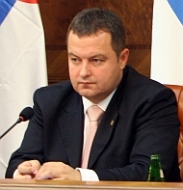
Ivica Dacic
The First Deputy Prime Minister and Minister of Interior Ivica Dacic said that, in the first 100 days of the government’s work, the Ministry of Interior held 12,075 public meetings, comprising more than five million people.
Dacic stressed that public peace and order have been preserved in the Serbian territory.
He said that the security of southern Serbia was also preserved, and added that the police worked hard on fighting the drug trade, the most common type of crime in Serbia.
The police found 11 criminal groups trading drugs and 53 criminals were arrested, said Dacic, adding that the police also carried out 2,043 seizures in which they confiscated 922 kg of drugs.
As for economic crime, 2,295 crimes were discovered, the activities of criminal financial groups were decreased and crimes committed by unknown persons reduced by 60%.
The strength of Serbia depends on the strength of its army and police, and the confidence of its citizens is also of major importance, said Dacic, adding that the Ministry expects financial and technical support from the government for police and army modernisation.
He expressed that he is satisfied with cooperation between the Ministry and the Serbian government, and pointed out that their common goal is a democratic, economically, socially and culturally developed state.
Dacic stressed that public peace and order have been preserved in the Serbian territory.
He said that the security of southern Serbia was also preserved, and added that the police worked hard on fighting the drug trade, the most common type of crime in Serbia.
The police found 11 criminal groups trading drugs and 53 criminals were arrested, said Dacic, adding that the police also carried out 2,043 seizures in which they confiscated 922 kg of drugs.
As for economic crime, 2,295 crimes were discovered, the activities of criminal financial groups were decreased and crimes committed by unknown persons reduced by 60%.
The strength of Serbia depends on the strength of its army and police, and the confidence of its citizens is also of major importance, said Dacic, adding that the Ministry expects financial and technical support from the government for police and army modernisation.
He expressed that he is satisfied with cooperation between the Ministry and the Serbian government, and pointed out that their common goal is a democratic, economically, socially and culturally developed state.
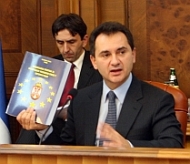
Bozidar Djelic
Deputy Prime Minister in charge of European Integration Bozidar Djelic said that the EU confidence in Serbia has increased since the new government was constituted, because 26 out of 27 countries in the EU support speeding up the process of Serbia’s EU entry.
Serbia has never had such degree of support in the EU, and that is the measure of trust in this government in Europe and beyond, Djelic said, adding that the government showed its will to cooperate with the Hague tribunal, which was also confirmed by ICTY Chief Prosecutor Serge Brammertz.
Our dedication to cooperation with The Hague is such that it is just a matter of time before we will start applying SAA, Djelic said.
He said that the government during its first 100 days not only ratified the SAA and the transitional trade agreement, it also passed a large number of laws to facilitate the liberalization of the visa process.
According to Djelic, only biometric passports will be issued from November onwards, and Serbia will be included in the Schengen “white list” during 2009.
Djelic said that recent statistics show that the average salary in Serbia is RSD 33,131 (approximately €430), the highest since October 5, 2000.
Serbia has never had such degree of support in the EU, and that is the measure of trust in this government in Europe and beyond, Djelic said, adding that the government showed its will to cooperate with the Hague tribunal, which was also confirmed by ICTY Chief Prosecutor Serge Brammertz.
Our dedication to cooperation with The Hague is such that it is just a matter of time before we will start applying SAA, Djelic said.
He said that the government during its first 100 days not only ratified the SAA and the transitional trade agreement, it also passed a large number of laws to facilitate the liberalization of the visa process.
According to Djelic, only biometric passports will be issued from November onwards, and Serbia will be included in the Schengen “white list” during 2009.
Djelic said that recent statistics show that the average salary in Serbia is RSD 33,131 (approximately €430), the highest since October 5, 2000.
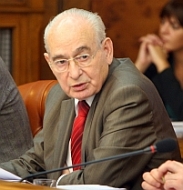
Jovan Krkobabic
Serbian Deputy Prime Minister Jovan Krkobabic said that the government improved the position of socially vulnerable groups during its first months of work.
He said that there was a special 10% pension increase and amendments to the law on the pension and disability insurance fund have been prepared, according to which pensions will be adjusted by other means, without disturbing the country’s macroeconomic stability.
According to Krkobabic, the prices of medicines have been lowered, and all citizens older than 65 who receive lower than average pensions will get free medical treatment.
The government has also prepared a project for social housing, and measures have been taken to ensure that refugees get better accommodation.
He said that there was a special 10% pension increase and amendments to the law on the pension and disability insurance fund have been prepared, according to which pensions will be adjusted by other means, without disturbing the country’s macroeconomic stability.
According to Krkobabic, the prices of medicines have been lowered, and all citizens older than 65 who receive lower than average pensions will get free medical treatment.
The government has also prepared a project for social housing, and measures have been taken to ensure that refugees get better accommodation.
-
 Belgrade, 8 April 2026
Serbia remains firmly committed to strengthening cooperation in region
-
 Belgrade, 7 April 2026
Serbia’s infrastructure, economic development through partnership with China
-
 Belgrade, 6 April 2026
Anniversary of 1941 bombing of Belgrade marked
-
 Belgrade, 2 April 2026
Serbian Army remains committed to UNIFIL tasks
-
 Belgrade, 2 April 2026
Switzerland’s financial support for reform processes in Serbia
-
 Belgrade, 30 March 2026
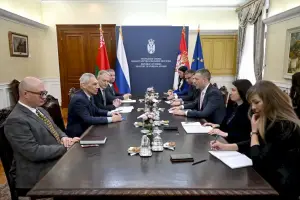
Cooperation with Russia, Belarus in areas of mutual interest
-
 Belgrade, 27 March 2026
World Bank support for implementation of priority energy projects
-
 Belgrade, 27 March 2026
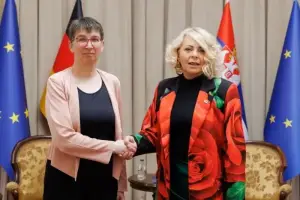
Continued cooperation with Germany on utility infrastructure projects
-
 Belgrade, 26 March 2026
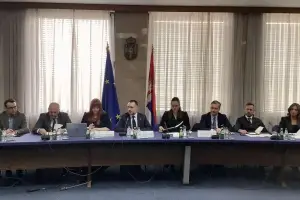
Activities of state institutions for opening clusters 2 and 5 examined
-
 Belgrade, 26 March 2026
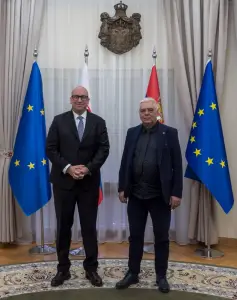
Exchange of experiences with Slovakia in field of ICT