
Q:
A:
Montenegro’s recognition of Kosovo independence would betray Serbia
Belgrade,
6 October 2008
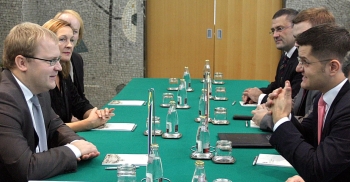
Serbian Minister of Foreign Affairs Vuk Jeremic said today that if Podgorica decides to recognise Kosovo’s independence, Serbia will see that as a betrayal, and undermining of the country’s diplomatic efforts to resolve the issue of the future status of the province.
Author:
Fonet
Speaking to the press, Jeremic said that if Podgorica decides to recognise Kosovo’s independence Serbia will see the act for what it is and not in any other light, a betrayal not just of Serbia but also the country’s diplomatic efforts to resolve the Kosovo issue peacefully and by legal means.
Following talks with Estonian Foreign Minister Urmas Paet, Jeremic said that Serbia will certainly not sit idle if Podgorica recognises Kosovo’s independence.
Podgorica’s decision to recognise Kosovo’s independence will not be without consequences, particularly not at this delicate moment. We do not wish to make threats to anyone even though all in the region, including Montenegro, are aware of what that would mean, stressed the Minister.
He said that Serbia has made it clear to top Montenegrin functionaries that there is no understanding for a possible decision by Montenegro to undermine Serbia’s territorial integrity and sovereignty.
According to Jeremic, Serbia hopes that Podgorica will not take this step which would disturb a peaceful, diplomatic process that is going through a very important phase and its most important point will be voting in the UN General Assembly on October 8.
Jeremic said that countries in the region have a special responsibility because they understand the situation very well, particularly during this extremely delicate phase of the Kosovo process.
There are only two more days before voting, and from one to two years until the International Court of Justice (ICJ) does not make a decision. During that period we simply cannot have understanding for a decision by Podgorica to recognise Kosovo’s independence, he reiterated, and added that Podgorica should postpone making a decision until ICJ gives its opinion.
The Minister voiced hope that voting in the UN General Assembly on Serbia’s initiative to seek an advisory opinion from the ICJ on the legality of Kosovo’s declaration of independence will produce the best outcome.
According to him, the Serbian delegation will do everything to get majority for its initiative.
Jeremic is leading the Serbian delegation in New York at the UN General Assembly, where our delegation will have over 20 meetings with foreign officials to confirm safe votes for Serbia’s initiative.
If our resolution is adopted, nothing can stop Serbia’s initiative, the Minister said noting that one should be optimistic.
Jeremic also said that visa abolishment is among Serbian government’s absolute priorities and one of realistic political steps it should make toward EU full membership.
He noted that Estonia well understands the problems that Serbia is facing on its EU road as it underwent the difficult process itself.
The Serbian Minister of Foreign Affairs said that in his talks with Paet he expressed deep dissatisfaction over Estonia’s decision to recognise Kosovo’s independence and presented Serbia’s initiative in the UN General Assembly to ask the ICJ for an advisory opinion on the independence of Kosovo-Metohija.
Jeremic expressed expectations that Estonia will not oppose the initiative because it will be the denial of one country’s basic right to seek for a peaceful, diplomatic and legal solution for its problems through the UN institutions.
He also recalled that Estonia advocates for the EU enlargement in the Balkans and supports Serbia’s EU future and the unfreezing of the temporary trade agreement between the Union and Serbia.
According to him, they agreed to make efforts to improve relationship between Estonia and Serbia in the future, and to hold consultations soon.
Paet pointed out that the EU should abolish visas for Serbian citizens as soon as possible and expressed hope that the EU will soon decide to implement the Stabilisation and Association Agreement with Serbia.
He said that visa regime was abolished for Estonia five years before the EU entry, and added that Serbia’s citizens can count how far from full membership they are.
Estonia understands all difficulties, uncertainties and doubts on the way toward the EU, stressed Paet and expressed hope that Serbia’s people will be patient.
According to him, the considerable progress Serbia has made in the previous five months encourages Estonia to fully support Belgrade in EU integration.
The Estonian Minister commended Serbia’s participation in the NATO Partnership for Peace and expressed hope that the cooperation between Serbia and NATO will be even greater.
He said that he hopes that Serbia and Estonia will soon sign an agreement on double tax abolition, which will be an incentive to businessmen of these countries, and added that the department of Serbian language will soon be opened in Estonia.
Following talks with Estonian Foreign Minister Urmas Paet, Jeremic said that Serbia will certainly not sit idle if Podgorica recognises Kosovo’s independence.
Podgorica’s decision to recognise Kosovo’s independence will not be without consequences, particularly not at this delicate moment. We do not wish to make threats to anyone even though all in the region, including Montenegro, are aware of what that would mean, stressed the Minister.
He said that Serbia has made it clear to top Montenegrin functionaries that there is no understanding for a possible decision by Montenegro to undermine Serbia’s territorial integrity and sovereignty.
According to Jeremic, Serbia hopes that Podgorica will not take this step which would disturb a peaceful, diplomatic process that is going through a very important phase and its most important point will be voting in the UN General Assembly on October 8.
Jeremic said that countries in the region have a special responsibility because they understand the situation very well, particularly during this extremely delicate phase of the Kosovo process.
There are only two more days before voting, and from one to two years until the International Court of Justice (ICJ) does not make a decision. During that period we simply cannot have understanding for a decision by Podgorica to recognise Kosovo’s independence, he reiterated, and added that Podgorica should postpone making a decision until ICJ gives its opinion.
The Minister voiced hope that voting in the UN General Assembly on Serbia’s initiative to seek an advisory opinion from the ICJ on the legality of Kosovo’s declaration of independence will produce the best outcome.
According to him, the Serbian delegation will do everything to get majority for its initiative.
Jeremic is leading the Serbian delegation in New York at the UN General Assembly, where our delegation will have over 20 meetings with foreign officials to confirm safe votes for Serbia’s initiative.
If our resolution is adopted, nothing can stop Serbia’s initiative, the Minister said noting that one should be optimistic.
Jeremic also said that visa abolishment is among Serbian government’s absolute priorities and one of realistic political steps it should make toward EU full membership.
He noted that Estonia well understands the problems that Serbia is facing on its EU road as it underwent the difficult process itself.
The Serbian Minister of Foreign Affairs said that in his talks with Paet he expressed deep dissatisfaction over Estonia’s decision to recognise Kosovo’s independence and presented Serbia’s initiative in the UN General Assembly to ask the ICJ for an advisory opinion on the independence of Kosovo-Metohija.
Jeremic expressed expectations that Estonia will not oppose the initiative because it will be the denial of one country’s basic right to seek for a peaceful, diplomatic and legal solution for its problems through the UN institutions.
He also recalled that Estonia advocates for the EU enlargement in the Balkans and supports Serbia’s EU future and the unfreezing of the temporary trade agreement between the Union and Serbia.
According to him, they agreed to make efforts to improve relationship between Estonia and Serbia in the future, and to hold consultations soon.
Paet pointed out that the EU should abolish visas for Serbian citizens as soon as possible and expressed hope that the EU will soon decide to implement the Stabilisation and Association Agreement with Serbia.
He said that visa regime was abolished for Estonia five years before the EU entry, and added that Serbia’s citizens can count how far from full membership they are.
Estonia understands all difficulties, uncertainties and doubts on the way toward the EU, stressed Paet and expressed hope that Serbia’s people will be patient.
According to him, the considerable progress Serbia has made in the previous five months encourages Estonia to fully support Belgrade in EU integration.
The Estonian Minister commended Serbia’s participation in the NATO Partnership for Peace and expressed hope that the cooperation between Serbia and NATO will be even greater.
He said that he hopes that Serbia and Estonia will soon sign an agreement on double tax abolition, which will be an incentive to businessmen of these countries, and added that the department of Serbian language will soon be opened in Estonia.
-
 Belgrade, 8 April 2026
Serbia remains firmly committed to strengthening cooperation in region
-
 Belgrade, 7 April 2026
Serbia’s infrastructure, economic development through partnership with China
-
 Belgrade, 6 April 2026
Anniversary of 1941 bombing of Belgrade marked
-
 Belgrade, 2 April 2026
Serbian Army remains committed to UNIFIL tasks
-
 Belgrade, 2 April 2026
Switzerland’s financial support for reform processes in Serbia
-
 Belgrade, 30 March 2026
Cooperation with Russia, Belarus in areas of mutual interest
-
 Belgrade, 27 March 2026
World Bank support for implementation of priority energy projects
-
 Belgrade, 27 March 2026
Continued cooperation with Germany on utility infrastructure projects
-
 Belgrade, 26 March 2026
Activities of state institutions for opening clusters 2 and 5 examined
-
 Belgrade, 26 March 2026
Exchange of experiences with Slovakia in field of ICT