
Q:
A:
Dangerous consequences of Kosovo’s independence
Belgrade/Vienna,
10 September 2008
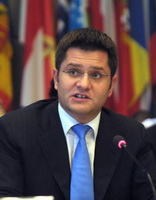
Serbian Minister of Foreign Affairs Vuk Jeremic stated today in Vienna that the consequences of Kosovo’s independence could be dangerous for peace and stability in the Western Balkans, but noted that it is still not too late to prevent things getting out of control.
Author:
Fonet
In his address to the OSCE Permanent Council, Jeremic recalled that in the last session held on February 19 he spoke about the precedent that could result from the failure of Kosovo Albanians to adopt European principles of the 21st century, above all, compromise and consensus.
I shared fear with you that unilaterally imposing solutions on ethnic conflicts could create dangerous precedents for the community of democracies such as OSCE, and even worse, he said.
He expressed deep concern over the result of an attempt to violently break up a sovereign, democratic state, such as Serbia.
Jeremic regretfully concluded that his warnings came true as the European security and cooperation system has been damaged.
Serbia intends to continue to contribute to stability in the region, but respect of sovereignty and territorial integrity of internationally recognised states must be a precondition, he noted.
According to him, Serbia rejected any use of force and did not apply economic sanctions against the province.
Instead, we opted for a peaceful and diplomatic, although energetic, approach, the result of which was the fact that a large number of UN members refrained from recognising Kosovo’s independence, Jeremic said and thanked those countries for their dedication to the principles of international law.
Jeremic explained that part of that diplomatic approach is the initiative for seeking an opinion from the International Court of Justice (ICJ) on the legality of Kosovo-Metohija’s unilateral declaration of independence.
According to Jeremic, this could improve relations in the region and prevent Kosovo’s independence from becoming a precedent for secessionist movements around the world and also provide us with a politically neutral, but legally sound stance on the issue so that countries which are still uncertain about Kosovo’s independence can decide how to proceed.
The most important reason for approaching the ICJ on this matter is that a vital international principle has been violated – the right of any UN member to put a simple, elementary question before a competent court. Voting against this resolution would be voting for depriving any country of the right to seek legal opinion through the UN system, said Jeremic.
He reiterated that Serbia opposes the EU mission in Kosovo because the mission did not get Security Council approval, and also because its aim is to implement Ahtisaari’s plan which was also not accepted by the Security Council.
Serbia believes that the prosperous future of the entire Western Balkans depends on joining the EU, said the Minister and added that Serbia has taken determined steps in this respect to demonstrate its commitment to cooperation with the ICTY.
Our commitment to fulfilling our legal obligations contributes to achieving the political aim of reconciliation with all our neighbours and shows our sense of responsibility towards the victims, ourselves, and above all, to future generations, said Jeremic.
I shared fear with you that unilaterally imposing solutions on ethnic conflicts could create dangerous precedents for the community of democracies such as OSCE, and even worse, he said.
He expressed deep concern over the result of an attempt to violently break up a sovereign, democratic state, such as Serbia.
Jeremic regretfully concluded that his warnings came true as the European security and cooperation system has been damaged.
Serbia intends to continue to contribute to stability in the region, but respect of sovereignty and territorial integrity of internationally recognised states must be a precondition, he noted.
According to him, Serbia rejected any use of force and did not apply economic sanctions against the province.
Instead, we opted for a peaceful and diplomatic, although energetic, approach, the result of which was the fact that a large number of UN members refrained from recognising Kosovo’s independence, Jeremic said and thanked those countries for their dedication to the principles of international law.
Jeremic explained that part of that diplomatic approach is the initiative for seeking an opinion from the International Court of Justice (ICJ) on the legality of Kosovo-Metohija’s unilateral declaration of independence.
According to Jeremic, this could improve relations in the region and prevent Kosovo’s independence from becoming a precedent for secessionist movements around the world and also provide us with a politically neutral, but legally sound stance on the issue so that countries which are still uncertain about Kosovo’s independence can decide how to proceed.
The most important reason for approaching the ICJ on this matter is that a vital international principle has been violated – the right of any UN member to put a simple, elementary question before a competent court. Voting against this resolution would be voting for depriving any country of the right to seek legal opinion through the UN system, said Jeremic.
He reiterated that Serbia opposes the EU mission in Kosovo because the mission did not get Security Council approval, and also because its aim is to implement Ahtisaari’s plan which was also not accepted by the Security Council.
Serbia believes that the prosperous future of the entire Western Balkans depends on joining the EU, said the Minister and added that Serbia has taken determined steps in this respect to demonstrate its commitment to cooperation with the ICTY.
Our commitment to fulfilling our legal obligations contributes to achieving the political aim of reconciliation with all our neighbours and shows our sense of responsibility towards the victims, ourselves, and above all, to future generations, said Jeremic.
-
 Belgrade, 8 April 2026
Serbia remains firmly committed to strengthening cooperation in region
-
 Belgrade, 7 April 2026
Serbia’s infrastructure, economic development through partnership with China
-
 Belgrade, 6 April 2026
Anniversary of 1941 bombing of Belgrade marked
-
 Belgrade, 2 April 2026
Serbian Army remains committed to UNIFIL tasks
-
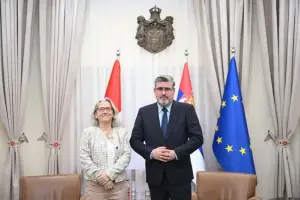 Belgrade, 2 April 2026
Switzerland’s financial support for reform processes in Serbia
-
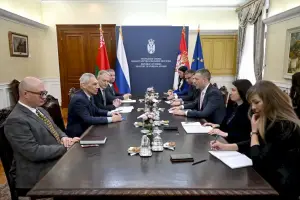 Belgrade, 30 March 2026
Cooperation with Russia, Belarus in areas of mutual interest
-
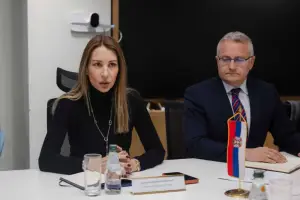 Belgrade, 27 March 2026
World Bank support for implementation of priority energy projects
-
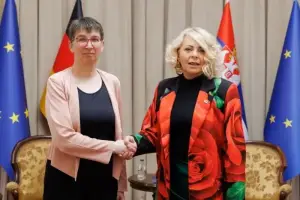 Belgrade, 27 March 2026
Continued cooperation with Germany on utility infrastructure projects
-
 Belgrade, 26 March 2026
Activities of state institutions for opening clusters 2 and 5 examined
-
 Belgrade, 26 March 2026
Exchange of experiences with Slovakia in field of ICT