Q:
A:
Serbian diplomacy prevents further spreading of Kosovo recognition
Belgrade,
4 August 2008
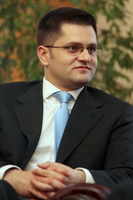
Minister of Foreign Affairs Vuk Jeremic stated today that a turning point in the Serbian diplomatic offensive will have to be the UN General Assembly in September, at which Serbia will ask for support to the initiative to demand opinion of the International Court of Justice (ICJ) on the legality of Kosovo’s proclamation of independence.
(photo archive)
Author:
Tanjug
In a statement for today’s edition of the Blic daily, Jeremic said that Serbian diplomats have been travelling around the world to talk to representatives of as many countries as possible and stressed that Serbian diplomacy was present at every international gathering in order to discuss the Kosovo issue.
Apart from being present in the UN, the OSCE and other international organisations, we travelled to places to which Serbia does not belong regionally, such as South America, the African Union Summit, the Summit of the Non-Aligned Movement, the Islamic Conference and the Arab League, recalled Jeremic.
He said that he held bilateral meetings worldwide, thanks to which Serbia managed to keep a highly controversial issue, such as that of Kosovo, at a very high level and thus prevent the spreading of the province’s recognition.
One of the largest meetings was the Tehran summit of the Non-Aligned Movement, which was an opportunity to lobby for Serbia’s idea at an organisation which gathers 118 countries. At this meeting, Jeremic addressed representatives of member countries as the sole speaker from a country with observer status.
That was quite an emotional moment because all member countries were aware of Yugoslavia’s role in the formation of the Non-Aligned Movement. While we were still Serbia-Montenegro, we applied for membership as a country with the observer status, but we hadn’t appeared at their meetings at such a high level as we did on this occasion. It was the first time that a minister from Belgrade had appeared at their ministerial conference, he pointed out.
He said the greatest success at the Tehran summit was the fact that the conclusions of the summit contain a paragraph in which the Non-Aligned Movement invites the UN General Assembly to ask the ICJ for opinion whenever a similar situation occurs.
Jeremic could not give a final estimate of how many countries will support Serbia’s initiative, for which Serbia needs 96 votes at the General Assembly. A total of 191 countries, Serbia excluded, have the right to vote, he recalled.
The Minister explained that Serbia’s resolution does not give political marks, but simply asks the question of whether Kosovo’s independence was declared in accordance with international law or not, from which it can be concluded that lobbying against the resolution does not mean lobbying against Serbia, but against the ICJ’s opinion, and that is not easy to argument.
We cannot know the outcome in advance, but I can say that we have made resistance to our initiative a very difficult one, said the Minister.
Apart from being present in the UN, the OSCE and other international organisations, we travelled to places to which Serbia does not belong regionally, such as South America, the African Union Summit, the Summit of the Non-Aligned Movement, the Islamic Conference and the Arab League, recalled Jeremic.
He said that he held bilateral meetings worldwide, thanks to which Serbia managed to keep a highly controversial issue, such as that of Kosovo, at a very high level and thus prevent the spreading of the province’s recognition.
One of the largest meetings was the Tehran summit of the Non-Aligned Movement, which was an opportunity to lobby for Serbia’s idea at an organisation which gathers 118 countries. At this meeting, Jeremic addressed representatives of member countries as the sole speaker from a country with observer status.
That was quite an emotional moment because all member countries were aware of Yugoslavia’s role in the formation of the Non-Aligned Movement. While we were still Serbia-Montenegro, we applied for membership as a country with the observer status, but we hadn’t appeared at their meetings at such a high level as we did on this occasion. It was the first time that a minister from Belgrade had appeared at their ministerial conference, he pointed out.
He said the greatest success at the Tehran summit was the fact that the conclusions of the summit contain a paragraph in which the Non-Aligned Movement invites the UN General Assembly to ask the ICJ for opinion whenever a similar situation occurs.
Jeremic could not give a final estimate of how many countries will support Serbia’s initiative, for which Serbia needs 96 votes at the General Assembly. A total of 191 countries, Serbia excluded, have the right to vote, he recalled.
The Minister explained that Serbia’s resolution does not give political marks, but simply asks the question of whether Kosovo’s independence was declared in accordance with international law or not, from which it can be concluded that lobbying against the resolution does not mean lobbying against Serbia, but against the ICJ’s opinion, and that is not easy to argument.
We cannot know the outcome in advance, but I can say that we have made resistance to our initiative a very difficult one, said the Minister.
-
 Belgrade, 5 June 2026
Cooperation with North Macedonia in field of innovation
-
 Belgrade/Baku, 5 June 2026
Serbia takes over hosting of World Environment Day 2027
-
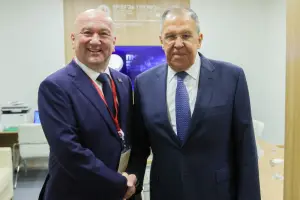 Belgrade/Saint Petersburg, 4 June 2026
Readiness to improve cooperation with Russia in areas of mutual interest
-
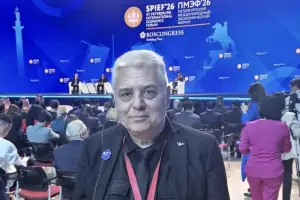 Belgrade/Saint Petersburg, 4 June 2026
Strengthening Serbia’s position in contemporary digital environment
-
 Belgrade, 4 June 2026
Serbia, US building partnership aimed at future, shared prosperity
-
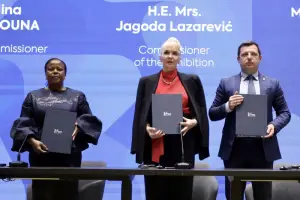 Belgrade, 3 June 2026
Contract on Gabon’s participation in Expo 2027 signed
-
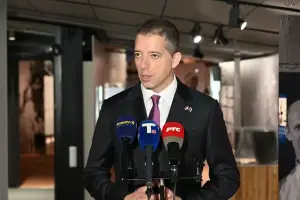 Belgrade/Helsinki, 3 June 2026
Serbia stands for peace, cooperation, respect for international law
-
 Belgrade/Helsinki, 2 June 2026
Great potential for strengthening economic ties with Finland
-
 Belgrade/Helsinki, 2 June 2026
Finland confirms strong support for Serbia’s European future
-
 Belgrade, 1 June 2026
Coordination of services to reduce risks from extreme weather events