
Q:
A:
Serbia needs balanced foreign policy, economic diplomacy
Brussels/Belgrade,
3 July 2008
Serbian Deputy Prime Minister Bozidar Djelic said today in Brussels that apart from the process of European integration, Serbia also has to turn to Russia, China and India because a balanced foreign policy and economic diplomacy will enable it to more effectively avail of the chances of the new map of capitalism in the 21st century.
Speaking at a conference “From Transition to Convergence”, attended by influential economists from the World Bank and the EU, Djelic said that it is easier to complete transition in Serbia than to attain the level of salaries, pensions and living standards that exist in the countries of Western Europe.
He said that the GDP of countries which joined the EU later is half that of “the old” EU member states, which shows that transition and EU membership are necessary, however that in itself will not guarantee that Serbia will have a standard similar to that of the West. That is why Serbia needs a new generation of reforms, Djelic said, which can be classified in thee groups. First of all, there should be more investments in science and technology, and second, establishing such regulatory institutions in the field of energy, telecommunications and the media is necessary which will allow market competition to go unhindered in the domain of free competition.
According to Djelic, the third element is that Serbia turns to Europe in the globalised world, but also to find investors from Russia, China, and India, and from the large pool of countries from the Persian Gulf and Asia.
Djelic said that Serbia has extensive cooperation with Russia, but that it has also received the first investment from India in the field of technologies and that Chinese car producers have shown an interest in doing business with Serbia. He explained that Serbia needs much more investments in education, science and technology, and underlined that our country needs to have its own knowledge and technology so that it could be much more attractive to the world’s leading companies and that it must have knowledge which it can sell abroad.
The Deputy Prime Minister said that he expects that the next report by ICTY Chief Prosecutor Serge Brammertz, to be presented in September, will be more positive, making it possible to implement the transitional agreement with the EU and for Serbia to acquire EU candidate status by the end of the year.
I have been in touch with French EU representatives and conveyed a clear message that our goal is unaltered, which is for Serbia to acquire candidate status at the meeting of EU Council of Ministers to be held from December 11 to 12, said Djelic.
He said that the fact that this issue will not be discussed at the upcoming meeting of the Council of Ministers at the end of July presents an additional challenge.
He said that the GDP of countries which joined the EU later is half that of “the old” EU member states, which shows that transition and EU membership are necessary, however that in itself will not guarantee that Serbia will have a standard similar to that of the West. That is why Serbia needs a new generation of reforms, Djelic said, which can be classified in thee groups. First of all, there should be more investments in science and technology, and second, establishing such regulatory institutions in the field of energy, telecommunications and the media is necessary which will allow market competition to go unhindered in the domain of free competition.
According to Djelic, the third element is that Serbia turns to Europe in the globalised world, but also to find investors from Russia, China, and India, and from the large pool of countries from the Persian Gulf and Asia.
Djelic said that Serbia has extensive cooperation with Russia, but that it has also received the first investment from India in the field of technologies and that Chinese car producers have shown an interest in doing business with Serbia. He explained that Serbia needs much more investments in education, science and technology, and underlined that our country needs to have its own knowledge and technology so that it could be much more attractive to the world’s leading companies and that it must have knowledge which it can sell abroad.
The Deputy Prime Minister said that he expects that the next report by ICTY Chief Prosecutor Serge Brammertz, to be presented in September, will be more positive, making it possible to implement the transitional agreement with the EU and for Serbia to acquire EU candidate status by the end of the year.
I have been in touch with French EU representatives and conveyed a clear message that our goal is unaltered, which is for Serbia to acquire candidate status at the meeting of EU Council of Ministers to be held from December 11 to 12, said Djelic.
He said that the fact that this issue will not be discussed at the upcoming meeting of the Council of Ministers at the end of July presents an additional challenge.
-
 Belgrade, 3 June 2026
Bizerba continues to develop production in Serbia
-
 Belgrade, 2 June 2026
Small entrepreneurs driving force of domestic economy
-
 Belgrade, 1 June 2026
Serbia joins Frontex Partnership Academies Network
-
 Belgrade/Shanghai, 28 May 2026
Commercial contracts signed with leading Chinese companies
-
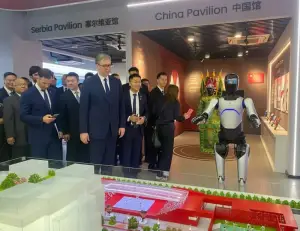 Belgrade/Jiaxing, 27 May 2026
Serbia entering new phase of technological, industrial development
-
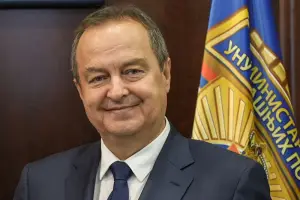 Belgrade, 27 May 2026
Dačić extends Kurban Bayram greetings
-
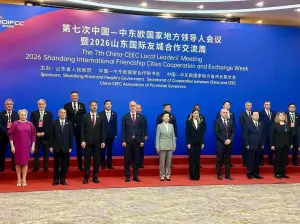 Belgrade/Jinan, 26 May 2026
Strengthening international standing, economy through cooperation with China
-
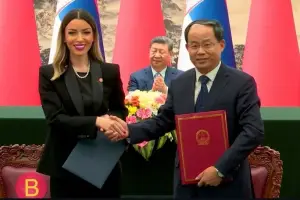 Belgrade/Beijing, 25 May 2026
Opening new opportunities to strengthen economic cooperation with China
-
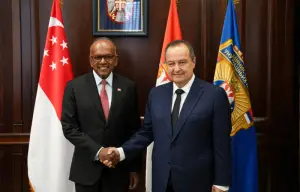 Belgrade, 25 May 2026
Serbia committed to developing cooperation with Singapore in field of security
-
 Belgrade, 23 May 2026
Dačić sends telegram of condolences over tragedy in mine in China