Q:
A:
Imposed independence of Kosovo – dangerous precedent
Strasbourg,
4 October 2007
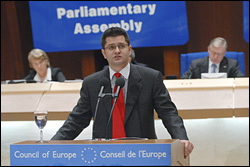
Serbian Foreign Minister Vuk Jeremic warned today in Strasbourg that it would be dangerous to accept exaggerated requests for the future status of Kosovo-Metohija.
Author:
www.coe.int
Speaking at the Parliamentary Assembly of the Council of Europe, in the capacity of chairman of the Council of Europe Committee of Ministers, Jeremic said that some representatives of the international community told Belgrade and Pristina that if an agreement on the future status of Kosovo is not reached by December 10, they will impose independence of Kosovo to Serbia and the region.
However, Serbia is very much encouraged by the determination of the Contact Group, and especially of the negotiating troika, to find a compromise solution for the future Kosovo status which would be confirmed by the UN Security Council, but he warned that by setting time limits on negotiations, Kosovo Albanians are not encouraged to take active part in the talks.
Not setting deadlines will help Belgrade and Pristina focus on finding a compromised and mutually acceptable solution, Jeremic said.
Imposed independence of Kosovo would represent a dangerous precedent which gives legitimacy to violent partition of democratic states in Europe, because imposed independence of Kosovo is nothing else but forced partition of Serbia.
Such a solution would incur a heavy blow to democracy in Serbia, which would necessarily have a negative influence on the peaceful and dynamic development of the entire Western Balkans, said the Serbian Foreign Minister.
This timely warning aims to underline Serbia's commitment to democracy and its wish to remain the regional source of stability and safety in the times of political transformation, Jeremic said, reiterating that Serbia is willing to show great flexibility concerning the level of Kosovo's autonomy.
Jeremic voiced pleasure at the pace with which Serbia is fulfilling its priorities as the country presiding over the Council of Europe Committee of Ministers and reiterated that these priorities are stronger regional cooperation and good relations with neighbouring countries, EU Integration, respect of human rights and stronger democracy.
He emphasised that democracy is interlinked with individual freedom, the rule of law and human rights.
Serbia’s presidency has highlighted the importance of activities of the European Commission for Democracy through Law or the Venetian Committee through its valuable contribution to the stable democratic legal framework which sustains this mutual dependence in Europe, said Minister Jeremic.
He also spoke about Serbia’s activities within the Council of Europe’s campaign for fighting violence over women, human trafficking, fate and position of the Roma community as an endangered group in various societies around Europe.
Jeremic informed MPs that the work on the Council of Europe’s White Book on intercultural dialogue is in the final stage, which will primarily rely on the discussion to be held on an informal regional conference of culture ministers scheduled for November 8 and 9 in Belgrade.
Minister Jeremic stressed that Serbia supports the Council of Europe’s campaign “Everyone Different – Everyone Equal” and recalled that the campaign’s supervisory group of European committees held a meeting in Belgrade in July.
Speaking about political issues, Minister Jeremic discussed the situation in the southern Caucasus and south-eastern Europe.
However, Serbia is very much encouraged by the determination of the Contact Group, and especially of the negotiating troika, to find a compromise solution for the future Kosovo status which would be confirmed by the UN Security Council, but he warned that by setting time limits on negotiations, Kosovo Albanians are not encouraged to take active part in the talks.
Not setting deadlines will help Belgrade and Pristina focus on finding a compromised and mutually acceptable solution, Jeremic said.
Imposed independence of Kosovo would represent a dangerous precedent which gives legitimacy to violent partition of democratic states in Europe, because imposed independence of Kosovo is nothing else but forced partition of Serbia.
Such a solution would incur a heavy blow to democracy in Serbia, which would necessarily have a negative influence on the peaceful and dynamic development of the entire Western Balkans, said the Serbian Foreign Minister.
This timely warning aims to underline Serbia's commitment to democracy and its wish to remain the regional source of stability and safety in the times of political transformation, Jeremic said, reiterating that Serbia is willing to show great flexibility concerning the level of Kosovo's autonomy.
Jeremic voiced pleasure at the pace with which Serbia is fulfilling its priorities as the country presiding over the Council of Europe Committee of Ministers and reiterated that these priorities are stronger regional cooperation and good relations with neighbouring countries, EU Integration, respect of human rights and stronger democracy.
He emphasised that democracy is interlinked with individual freedom, the rule of law and human rights.
Serbia’s presidency has highlighted the importance of activities of the European Commission for Democracy through Law or the Venetian Committee through its valuable contribution to the stable democratic legal framework which sustains this mutual dependence in Europe, said Minister Jeremic.
He also spoke about Serbia’s activities within the Council of Europe’s campaign for fighting violence over women, human trafficking, fate and position of the Roma community as an endangered group in various societies around Europe.
Jeremic informed MPs that the work on the Council of Europe’s White Book on intercultural dialogue is in the final stage, which will primarily rely on the discussion to be held on an informal regional conference of culture ministers scheduled for November 8 and 9 in Belgrade.
Minister Jeremic stressed that Serbia supports the Council of Europe’s campaign “Everyone Different – Everyone Equal” and recalled that the campaign’s supervisory group of European committees held a meeting in Belgrade in July.
Speaking about political issues, Minister Jeremic discussed the situation in the southern Caucasus and south-eastern Europe.
-
 Belgrade, 17 June 2026
Serbia continues reforms in line with European standards
-
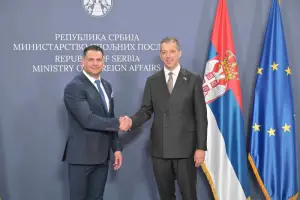 Belgrade, 17 June 2026
Serbia appreciates Slovenia's continued support in European integration process
-
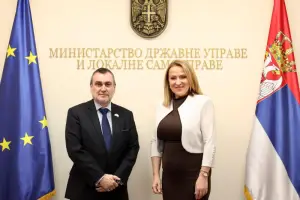 Belgrade, 17 June 2026
Deepening cooperation with Spain in field of modernising public administration
-
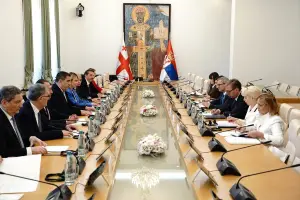 Belgrade/Tbilisi, 16 June 2026
Boosting Serbia-Georgia links in field of agriculture
-
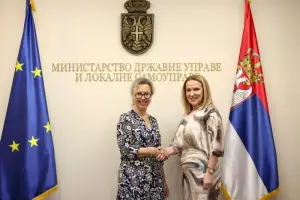 Belgrade, 16 June 2026
Enhancing partnership between Serbia, France in modernising public administration
-
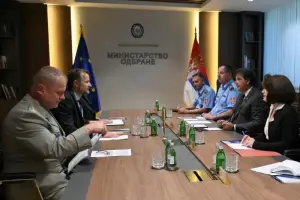 Belgrade, 16 June 2026
Strengthening regional, global security Serbia’s strategic commitment
-
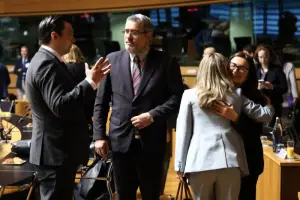 Belgrade/Luxembourg, 16 June 2026
Serbia’s evident momentum in reform processes on road to EU
-
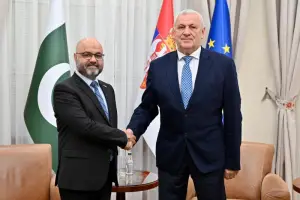 Belgrade, 16 June 2026
Great room for deepening cooperation with Pakistan in field of science
-
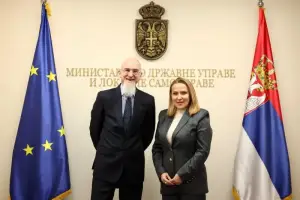 Belgrade, 15 June 2026
Exchange of experiences with Italy to further improve public administration