Q:
A:
Serbian government’s successful first 100 days of work
Belgrade,
30 August 2007
Serbian Prime Minister Vojislav Kostunica and Deputy Prime Minister Bozidar Djelic presented a report on first 100 days of the government’s work in a session today which was open for the media.
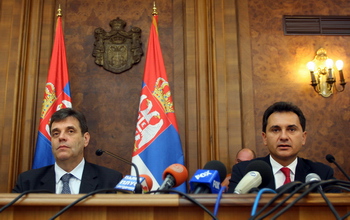
Vojislav Kostunica and Bozidar Djelic
Kostunica greeted the continuation of negotiations on Kosovo-Metohija’s status, but warned that there is still danger from a unilateral proclamation of independence of the Serbian southern province by Albanian separatists by the end of the year.
By eliminating Ahtisaari’s plan, the possibility that the UN Security Council passes a decision on “seizure” of part of the Serbian territory has been removed for good.
We prevented adoption of a new resolution that would be the ground for proclamation of independence of the Serbian southern province, Kostunica said and stressed that permanent removal of that danger is result of the joint policy of Serbia and the Russian Federation. He also marked the launch of new negotiating process on the southern province as a government’s success.
Instead of one, we got three mediators – the United States, the EU and the Russian Federation, the Serbian Prime Minister said and accented that preservation of Kosovo-Metohija within Serbia is the most important state and national interest.
He announced that Serbia will use the opportunity it has in the continuation of Kosovo-Metohija status negotiations to try to find a compromise solution in accordance with the UN Charter and the Serbian Constitution.
According to him, the real theme of Vienna talks is the province’s status, whereas other issues should be the subject of talks but only within the framework of the status issue.
Kostunica recalled that positions of the Serbian and Albanian sides are irreconcilable as the former insists that the law must be respected and the latter insists it should not be respected.
During the next period, the government must constantly warn the international community about the readiness of Kosovo Albanians to unilaterally declare independence and if they do that, the government will find a way to respond to attempts of seizing its territory.
The Prime Minister emphasised that apart from Kosovo-Metohija, government priorities are also cooperation with The Hague, upgrading citizens’ living standards and fight against crime.
Speaking on European integration, Kostunica recalled that upon the establishment of the new government, the Stabilisation and Association Agreement (SAA) talks resumed and noted that the last technical round of talks with the European Commission is to take place on September 10.
He said that two action plans were also adopted, one of which is connected with harmonisation of domestic regulations with European ones, while the other concerns implementation of European partnership.
Kostunica stressed that within the framework of the process of European integration it is important that the agreement on visa relaxations was initalled and the bill on travel documents was adopted.
Regarding cooperation with the Hague tribunal, Kostunica said that executive authorities are taking all measures to make sure that cooperation with the tribunal is completed.
Serbia is determined to fulfill that part of its obligations, he stressed and recalled that the National Council for Cooperation with The Hague Tribunal was formed, and army and police services are being increasingly engaged in cooperation with the tribunal, which is proved by the arrest and handing over of Zdravko Tolimir and Vlastimir Djordjevic.
Kostunica said that during the first 100 days of its work the Serbian government took several measures to secure viable economic growth, macroeconomic stability, a larger influx of investments, increase of exports and creation of new jobs.
The success of the government is shown by the statistics; the GDP growth rate was 8.7% in the first half of the year, and foreign trade in the same period stood at €9.1 billion.
The value of exports was €6.1 billion and exports stood at €3 billion, which is 32% more than it was in the same period last year, said Kostunica.
According to Kostunica, foreign currency reserves stand at more than $13 billion, inflation rate was 4.2% in the first half of the year, industrial production rate was 5.2%, and average net income grew by 24.4% against the same period last year.
Kostunica recalled that the minimum wage was increased from RSD 55 to RSD 63.5 per working hour.
Kostunica stressed that the government also took a number of measures to encourage economic activity, such as support for small and medium-sized enterprises in the most underdeveloped municipalities, and a sum worth RSD 5.3 billion was provided for active measures in employment.
The Prime Minister outlined that 27,000 people were employed through the National Employment Service, which shows a growth of 12.6% compared to the previous year.
He said that funds were secured in cooperation with the World Bank for projects for resolving ecological and social problems in the municipality of Bor, and special attention is being paid to development of agriculture.
Speaking on the fight against corruption and organised crime, Kostunica stressed that during the first 100 days of work procedures were initiated against the “tobacco mafia” which is charged with defrauding the state of €40 million and the “oil mafia” was exposed which defrauded the state of €10 million.
The Prime Minister stressed that the fight against the drug mafia is one of the most important and most difficult priorities of the Serbian government and the Ministry of Interior. He said that during the first 100 days, police cracked down on nine smuggling chains and confiscated more than 200 kilograms of narcotics.
Serbian Deputy Prime Minister Bozidar Djelic said that after the first 100 days of the government, the macroeconomic stability of the country has been preserved, and the results of the government’s efforts in resolving the issue of the status of Kosovo-Metohija and the process of European integration are evident.
He expressed conviction that Serbia will initial the Stabilisation and Association Agreement with the EU by October 1.
Djelic said that there is one more round of technical negotiations to be completed before the initalling of the agreement, and it will be held on September 10.
He recalled that on June 13, just 28 days after its formation, the Serbian government succeeded in resuming negotiations with the EU, following a blockade of 13 months.
Djelic said that the government succeeded in initalling the agreement on visa relaxations and the single agreement on readmission, which should be signed by September 18 in Brussels, and come in force on January 1, 2008.
He voiced hope that by the end of 2008 Serbia will be put on the White Schengen List, and have a visa free travel regime with the EU.
Djelic recalled that the European Charter of Local-Government was adopted and added that by the end of the year Serbian parliament should adopt 44 laws, which will be in harmony with EU legislation.
Djelic said that the government is unified in resolving the issue of Kosovo-Metohija and stressed that this unity, this defence of Serbia’s integrity and the fact that Serbia will never accept independence for Kosovo-Metohija, is not a political trick, rather a deep founded policy of all parties forming the government.
Djelic added that no one among the international community doubts any more that Serbia is determined to complete cooperation with The Hague.
Speaking of human rights and the fight against corruption, Djelic said that parliament adopted the Police Cooperation Convention for South East Europe, the budget for judiciary was increased by 35%, and measures were taken for making the courts safe.
Djelic said that in economy the government succeeded in removing tax on purchase of the first house and the VAT on buying a newly constructed house, as well as reduction of VAT on buying IT equipment from 18% to 8%.
Incentives were provided in agricultural production, and funds were allocated for issuing loans without security for starting business, and a sum of RSD 44 billion was allocated for infrastructure development, said Djelic.
He recalled that privatisation was begun for Jat Airways, Jat Tehnik and shopping centre Beograd and Geneks. He announced that on August 31, a new tender will be announced for RTB Bor.
Djelic said that good results were achieved also in education and health, while in the area of ecology for the first time arrest of polluters was begun.
Djelic said that after the first 100 days of the government, the macroeconomic stability of the country was preserved, while in the first half of the year public finances realised a surplus of RSD 48 billion.
He said that he expects that by the end of the year inflation will be within the planned figure of 6.5%, and recalled that income in Serbia during the first seven months rose by 11.5%, and the average net salary in July was RSD 27,752.
Comparing salaries in Serbia with surrounding countries, he said that the average salary in Serbia is not large, but it is larger than in Bulgaria, Bosnia and Herzegovina and Macedonia, and it is Serbia’s goal to reach the level of countries with bigger average salaries.
By eliminating Ahtisaari’s plan, the possibility that the UN Security Council passes a decision on “seizure” of part of the Serbian territory has been removed for good.
We prevented adoption of a new resolution that would be the ground for proclamation of independence of the Serbian southern province, Kostunica said and stressed that permanent removal of that danger is result of the joint policy of Serbia and the Russian Federation. He also marked the launch of new negotiating process on the southern province as a government’s success.
Instead of one, we got three mediators – the United States, the EU and the Russian Federation, the Serbian Prime Minister said and accented that preservation of Kosovo-Metohija within Serbia is the most important state and national interest.
He announced that Serbia will use the opportunity it has in the continuation of Kosovo-Metohija status negotiations to try to find a compromise solution in accordance with the UN Charter and the Serbian Constitution.
According to him, the real theme of Vienna talks is the province’s status, whereas other issues should be the subject of talks but only within the framework of the status issue.
Kostunica recalled that positions of the Serbian and Albanian sides are irreconcilable as the former insists that the law must be respected and the latter insists it should not be respected.
During the next period, the government must constantly warn the international community about the readiness of Kosovo Albanians to unilaterally declare independence and if they do that, the government will find a way to respond to attempts of seizing its territory.
The Prime Minister emphasised that apart from Kosovo-Metohija, government priorities are also cooperation with The Hague, upgrading citizens’ living standards and fight against crime.
Speaking on European integration, Kostunica recalled that upon the establishment of the new government, the Stabilisation and Association Agreement (SAA) talks resumed and noted that the last technical round of talks with the European Commission is to take place on September 10.
He said that two action plans were also adopted, one of which is connected with harmonisation of domestic regulations with European ones, while the other concerns implementation of European partnership.
Kostunica stressed that within the framework of the process of European integration it is important that the agreement on visa relaxations was initalled and the bill on travel documents was adopted.
Regarding cooperation with the Hague tribunal, Kostunica said that executive authorities are taking all measures to make sure that cooperation with the tribunal is completed.
Serbia is determined to fulfill that part of its obligations, he stressed and recalled that the National Council for Cooperation with The Hague Tribunal was formed, and army and police services are being increasingly engaged in cooperation with the tribunal, which is proved by the arrest and handing over of Zdravko Tolimir and Vlastimir Djordjevic.
Kostunica said that during the first 100 days of its work the Serbian government took several measures to secure viable economic growth, macroeconomic stability, a larger influx of investments, increase of exports and creation of new jobs.
The success of the government is shown by the statistics; the GDP growth rate was 8.7% in the first half of the year, and foreign trade in the same period stood at €9.1 billion.
The value of exports was €6.1 billion and exports stood at €3 billion, which is 32% more than it was in the same period last year, said Kostunica.
According to Kostunica, foreign currency reserves stand at more than $13 billion, inflation rate was 4.2% in the first half of the year, industrial production rate was 5.2%, and average net income grew by 24.4% against the same period last year.
Kostunica recalled that the minimum wage was increased from RSD 55 to RSD 63.5 per working hour.
Kostunica stressed that the government also took a number of measures to encourage economic activity, such as support for small and medium-sized enterprises in the most underdeveloped municipalities, and a sum worth RSD 5.3 billion was provided for active measures in employment.
The Prime Minister outlined that 27,000 people were employed through the National Employment Service, which shows a growth of 12.6% compared to the previous year.
He said that funds were secured in cooperation with the World Bank for projects for resolving ecological and social problems in the municipality of Bor, and special attention is being paid to development of agriculture.
Speaking on the fight against corruption and organised crime, Kostunica stressed that during the first 100 days of work procedures were initiated against the “tobacco mafia” which is charged with defrauding the state of €40 million and the “oil mafia” was exposed which defrauded the state of €10 million.
The Prime Minister stressed that the fight against the drug mafia is one of the most important and most difficult priorities of the Serbian government and the Ministry of Interior. He said that during the first 100 days, police cracked down on nine smuggling chains and confiscated more than 200 kilograms of narcotics.
Serbian Deputy Prime Minister Bozidar Djelic said that after the first 100 days of the government, the macroeconomic stability of the country has been preserved, and the results of the government’s efforts in resolving the issue of the status of Kosovo-Metohija and the process of European integration are evident.
He expressed conviction that Serbia will initial the Stabilisation and Association Agreement with the EU by October 1.
Djelic said that there is one more round of technical negotiations to be completed before the initalling of the agreement, and it will be held on September 10.
He recalled that on June 13, just 28 days after its formation, the Serbian government succeeded in resuming negotiations with the EU, following a blockade of 13 months.
Djelic said that the government succeeded in initalling the agreement on visa relaxations and the single agreement on readmission, which should be signed by September 18 in Brussels, and come in force on January 1, 2008.
He voiced hope that by the end of 2008 Serbia will be put on the White Schengen List, and have a visa free travel regime with the EU.
Djelic recalled that the European Charter of Local-Government was adopted and added that by the end of the year Serbian parliament should adopt 44 laws, which will be in harmony with EU legislation.
Djelic said that the government is unified in resolving the issue of Kosovo-Metohija and stressed that this unity, this defence of Serbia’s integrity and the fact that Serbia will never accept independence for Kosovo-Metohija, is not a political trick, rather a deep founded policy of all parties forming the government.
Djelic added that no one among the international community doubts any more that Serbia is determined to complete cooperation with The Hague.
Speaking of human rights and the fight against corruption, Djelic said that parliament adopted the Police Cooperation Convention for South East Europe, the budget for judiciary was increased by 35%, and measures were taken for making the courts safe.
Djelic said that in economy the government succeeded in removing tax on purchase of the first house and the VAT on buying a newly constructed house, as well as reduction of VAT on buying IT equipment from 18% to 8%.
Incentives were provided in agricultural production, and funds were allocated for issuing loans without security for starting business, and a sum of RSD 44 billion was allocated for infrastructure development, said Djelic.
He recalled that privatisation was begun for Jat Airways, Jat Tehnik and shopping centre Beograd and Geneks. He announced that on August 31, a new tender will be announced for RTB Bor.
Djelic said that good results were achieved also in education and health, while in the area of ecology for the first time arrest of polluters was begun.
Djelic said that after the first 100 days of the government, the macroeconomic stability of the country was preserved, while in the first half of the year public finances realised a surplus of RSD 48 billion.
He said that he expects that by the end of the year inflation will be within the planned figure of 6.5%, and recalled that income in Serbia during the first seven months rose by 11.5%, and the average net salary in July was RSD 27,752.
Comparing salaries in Serbia with surrounding countries, he said that the average salary in Serbia is not large, but it is larger than in Bulgaria, Bosnia and Herzegovina and Macedonia, and it is Serbia’s goal to reach the level of countries with bigger average salaries.
-
 Belgrade, 20 June 2026
Serbia, JICA agree on key issues for implementation of Bistrica plant project
-
 Subotica, 19 June 2026
Open dialogue key to resolving bilateral issues with Croatia
-
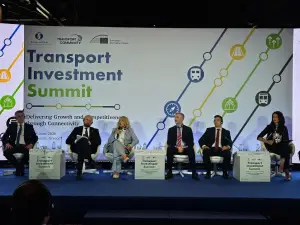 Belgrade/Thessaloniki, 18 June 2026
Regional cooperation key to development of transport infrastructure
-
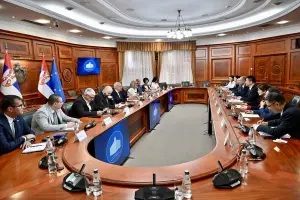 Belgrade, 18 June 2026
Establishing cooperation with Chinese technology giant CETC
-
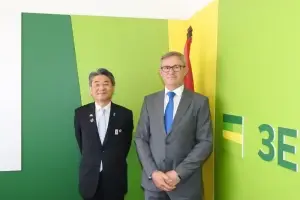 Belgrade, 18 June 2026
New opportunities for strengthening economic cooperation with Japan
-
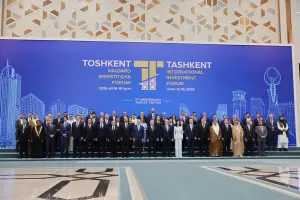 Belgrade/Tashkent, 18 June 2026
Serbia reliable partner in joint infrastructure projects
-
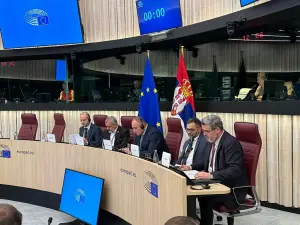 Belgrade/Strasbourg, 17 June 2026
Serbia continues reforms in line with European standards
-
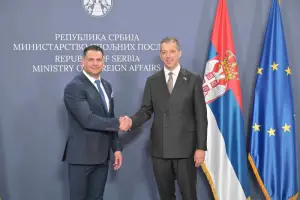 Belgrade, 17 June 2026
Serbia appreciates Slovenia's continued support in European integration process
-
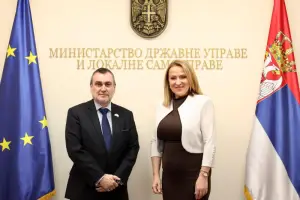 Belgrade, 17 June 2026
Deepening cooperation with Spain in field of modernising public administration