
Q:
A:
Strengthening legal framework essential in fight against organised crime
Belgrade,
27 August 2007
Serbian Assistant Minister of Justice Snezana Malovic said today that one of the key factors in the fight against organised crime is building of an independent, objective and responsible judiciary.
Opening a five day training session for judges and prosecutors who deal with organised crime, Malovic said that the legal framework and laws will be strengthened to make this possible. She stressed that efficient fight against organised crime, money laundering and terrorism is not possible without adequate legal mechanisms.
According to Malovic, such legal mechanisms will allow strict control over suspicious monetary transactions, easier establishment of the source of assets and efficient confiscation of assets obtained illegally.
She said that it is important to confiscate assets acquired through criminal activities, and added that prison sentences are more of a risk for criminals rather than a measure to eliminate crime, if they are not accompanied with confiscation of assets.
The obligation of institutions is to fight against all forms of crime, and a country which aspires to establish the rule of law must reduce all ogranised criminal activity to a minimum.
Serbia will continue to improve instruments for fight against organised crime because success in this area is a condition for European integration, stressed Malovic adding that Serbian people see organised crime as the third biggest problem, following poverty and unemployment.
International cooperation in this field, she said, is necessary since groups of organised criminals from different areas of the former Yugoslavia have established close cooperation and their activities are a threat to the entire region.
Special prosecutor for organised crime Miljko Radisavljevic said that he will make efforts to extend the term of service for assistants to special prosecutors to make this institution financially independent and widen its authority.
He recalled that the existing law envisages that the mandate of special prosecutors lasts two years, while their assistants work for nine months.
The gathering of prosecutors and judges which is being held in the Hotel Palace was also attended by Italian Ambassador to Italy Alessandro Merola and Director of the United Nations Interregional Crime and Justice Research Institute (UNICRI) Sandro Calvani.
Calvani explained that the UN Convention against Transnational Organised Crime (Palermo Convention), which was signed by 135 countries including Serbia, envisages measures for the fight against organised crime, while respecting victims and human rights.
He said that much remains to be done in Serbia in the fight against organised crime and added that the UNICRI will help in that fight.
Merola said that Italy wishes to help in fighting against organised crime in Serbia since this is a joint interest. He stressed that the phenomenon of organised crime can be of such proportions as to destablise an entire country.
According to Malovic, such legal mechanisms will allow strict control over suspicious monetary transactions, easier establishment of the source of assets and efficient confiscation of assets obtained illegally.
She said that it is important to confiscate assets acquired through criminal activities, and added that prison sentences are more of a risk for criminals rather than a measure to eliminate crime, if they are not accompanied with confiscation of assets.
The obligation of institutions is to fight against all forms of crime, and a country which aspires to establish the rule of law must reduce all ogranised criminal activity to a minimum.
Serbia will continue to improve instruments for fight against organised crime because success in this area is a condition for European integration, stressed Malovic adding that Serbian people see organised crime as the third biggest problem, following poverty and unemployment.
International cooperation in this field, she said, is necessary since groups of organised criminals from different areas of the former Yugoslavia have established close cooperation and their activities are a threat to the entire region.
Special prosecutor for organised crime Miljko Radisavljevic said that he will make efforts to extend the term of service for assistants to special prosecutors to make this institution financially independent and widen its authority.
He recalled that the existing law envisages that the mandate of special prosecutors lasts two years, while their assistants work for nine months.
The gathering of prosecutors and judges which is being held in the Hotel Palace was also attended by Italian Ambassador to Italy Alessandro Merola and Director of the United Nations Interregional Crime and Justice Research Institute (UNICRI) Sandro Calvani.
Calvani explained that the UN Convention against Transnational Organised Crime (Palermo Convention), which was signed by 135 countries including Serbia, envisages measures for the fight against organised crime, while respecting victims and human rights.
He said that much remains to be done in Serbia in the fight against organised crime and added that the UNICRI will help in that fight.
Merola said that Italy wishes to help in fighting against organised crime in Serbia since this is a joint interest. He stressed that the phenomenon of organised crime can be of such proportions as to destablise an entire country.
-
 Belgrade, 20 June 2026
Serbia, JICA agree on key issues for implementation of Bistrica plant project
-
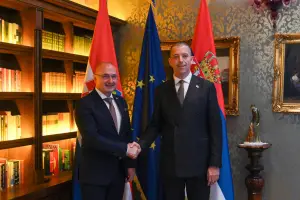 Subotica, 19 June 2026
Open dialogue key to resolving bilateral issues with Croatia
-
 Belgrade/Thessaloniki, 18 June 2026
Regional cooperation key to development of transport infrastructure
-
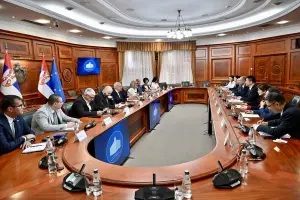 Belgrade, 18 June 2026
Establishing cooperation with Chinese technology giant CETC
-
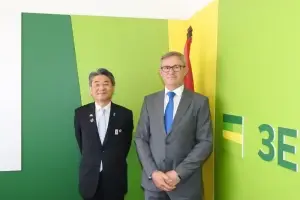 Belgrade, 18 June 2026
New opportunities for strengthening economic cooperation with Japan
-
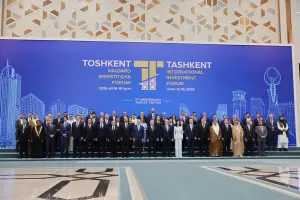 Belgrade/Tashkent, 18 June 2026
Serbia reliable partner in joint infrastructure projects
-
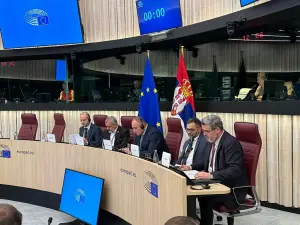 Belgrade/Strasbourg, 17 June 2026
Serbia continues reforms in line with European standards
-
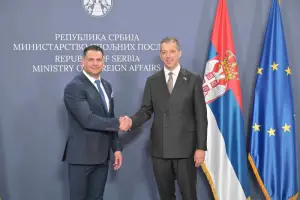 Belgrade, 17 June 2026
Serbia appreciates Slovenia's continued support in European integration process
-
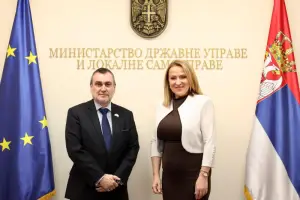 Belgrade, 17 June 2026
Deepening cooperation with Spain in field of modernising public administration