
Q:
A:
Shelter for homeless children opens in Belgrade
Belgrade,
3 August 2007
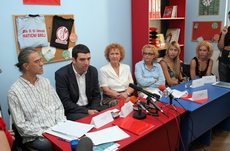
The Centre for Youth Integration, with the financial support of the Fund for Social Innovations and the Serbian Ministry of Labour and Social Policy, opened today a shelter in Belgrade for homeless children.
Author:
Fonet
The shelter was opened in the framework of the project “Children of the Street – Damage Reduction Programme”, and it will provide homeless children a place to sleep in crisis, receive medical and other help, information on social welfare and an opportunity to participate in creative and educational workshops.
The aim of the project is to form an integrative model of protection for this group of the population and develop a positive attitude towards social welfare and health institutes.
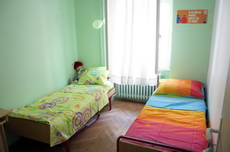
The shelter in 24 Drincicevoj Street in Dorcol is the first of its kind in Belgrade and Serbia, and it is different from other shelters since children will attend voluntarily, without force and police accompaniment. They will be allowed to leave when they wish to do so. They will be provided food, allowed to wash their clothes, take a bath and stay the night.
Children will also be able to take part in entertaining activities, watch movies and listen to music.
The shelter covers 95 square meters, and currently there are three beds in it. The capacity will be increased if needed.
During the past two years, volunteers of the Centre for Youth Integration in Belgrade registered some 180 abandoned children who mainly live in parks and empty houses.
Serbian Assistant Minister of Labour and Social Policy Dragica Vlaovic stressed that the ministry will try to maintain the shelter.
We will make efforts to institutionalise this form of social protection and make certain that it is a lasting solution, said Vlaovic.
The aim of the project is to form an integrative model of protection for this group of the population and develop a positive attitude towards social welfare and health institutes.
The shelter in 24 Drincicevoj Street in Dorcol is the first of its kind in Belgrade and Serbia, and it is different from other shelters since children will attend voluntarily, without force and police accompaniment. They will be allowed to leave when they wish to do so. They will be provided food, allowed to wash their clothes, take a bath and stay the night.
Children will also be able to take part in entertaining activities, watch movies and listen to music.
The shelter covers 95 square meters, and currently there are three beds in it. The capacity will be increased if needed.
During the past two years, volunteers of the Centre for Youth Integration in Belgrade registered some 180 abandoned children who mainly live in parks and empty houses.
Serbian Assistant Minister of Labour and Social Policy Dragica Vlaovic stressed that the ministry will try to maintain the shelter.
We will make efforts to institutionalise this form of social protection and make certain that it is a lasting solution, said Vlaovic.
Author:
Fonet
Representative of the Centre for Youth Integration Milica Djordjevic said that the shelter was designed in cooperation and through communication with street children and due to that it will be completely in accordance with their needs and wishes.
Djordjevic warned that the duration of the project in which the shelter will function is nine months and stressed that it is necessary to find a way to continue the work after that period expires.
We cannot allow children to be left without this refuge, where they can get any kind of help and protection, after nine months, said Djordjevic.
The opening of the shelter was also supported by the European Agency for Reconstruction, the UNDP, the organisations Save the Children and Reconstruction Women’s Fund, UNESCO and the City of Belgrade.
Djordjevic warned that the duration of the project in which the shelter will function is nine months and stressed that it is necessary to find a way to continue the work after that period expires.
We cannot allow children to be left without this refuge, where they can get any kind of help and protection, after nine months, said Djordjevic.
The opening of the shelter was also supported by the European Agency for Reconstruction, the UNDP, the organisations Save the Children and Reconstruction Women’s Fund, UNESCO and the City of Belgrade.

-
 Belgrade, 20 June 2026
Serbia, JICA agree on key issues for implementation of Bistrica plant project
-
 Subotica, 19 June 2026
Open dialogue key to resolving bilateral issues with Croatia
-
 Belgrade/Thessaloniki, 18 June 2026
Regional cooperation key to development of transport infrastructure
-
 Belgrade, 18 June 2026
Establishing cooperation with Chinese technology giant CETC
-
 Belgrade, 18 June 2026
New opportunities for strengthening economic cooperation with Japan
-
 Belgrade/Tashkent, 18 June 2026
Serbia reliable partner in joint infrastructure projects
-
 Belgrade/Strasbourg, 17 June 2026
Serbia continues reforms in line with European standards
-
 Belgrade, 17 June 2026
Serbia appreciates Slovenia's continued support in European integration process
-
 Belgrade, 17 June 2026
Deepening cooperation with Spain in field of modernising public administration