Q:
A:
Serbia completely dedicated to finding peaceful solution for Kosovo
Belgrade/Vienna,
17 July 2007
Serbian Foreign Minister Vuk Jeremic requested support today from the Organisation for Security and Cooperation in Europe (OSCE) in finding a compromise solution for the future status of Kosovo-Metohija through true negotiations and earnest dialogue between the Serbian and Albanian sides.
Addressing the OSCE Permanent Council, Jeremic said that concerning the future status of Kosovo there is no real alternative to a mutually acceptable solution and that progress can be made only by acting together, in an atmosphere of true European partnership, reconciliation, flexibility and compromise.
He affirmed that the OSCE should play a role in the new Kosovo talks in securing return for more than 200,000 displaced persons, mostly Serbs and Roma, in strengthening of cooperation in the fight against organised crime and terrorism.
Jeremic recalled that at the OSCE ministerial conference held in November 2000, the request of the then president of the Federal Republic of Yugoslavia Vojislav Kostunica to start an open Serbian-Albanian dialogue was not encouraged. Jeremic called on the international community not to repeat mistakes from the past.
He said that imposing the independence of Kosovo against the will of the democratic leadership of Serbia, and without being sanctioned by the United Nations, cannot be allowed to stand. The imposed independence of Kosovo is nothing other than the forced partition of Serbia and it would directly affect a fundamental tenet of the OSCE and open the Pandora's box of ethnic problems around the world.
The minister said that Serbia will do its level best to find a solution that will respect its territorial integrity and sovereignty and enable Kosovo Albanians to satisfy their legitimate request for substantial self-government.
Jeremic pointed out that Serbia wants to be part of a European solution and not part of a Balkan problem and is absolutely committed to searching for a peaceful solution to that issue.
Speaking on Serbia’s efforts to respect the values of OSCE including reconciliation and strengthening cooperation in the region, he explained that the government of Serbia has clear political will to end cooperation with the Hague tribunal and stressed that all those who have been accused must be located, arrested and transferred to the court.
He said that rapid EU accession is the government of Serbia's fundamental priority and expressed expectation that Stabilisation and Association Agreement (SAA) will be signed by the end of the year.
After the session of the OSCE Permanent Council, Jeremic told journalists that the return of internally displaced persons from the province is an absolute priority for solving the future status of Kosovo.
OSCE should play an important role in return of those persons, as this is the field of OSCE’s work, he said.
The minister conveyed to journalists that during today's session the permanent Romanian OSCE representative stated that the whole region is interested in peace and stability, as well as in the solution for the future status of Kosovo that would be in line with internationally recognised borders.
The Russian representative reiterated Moscow’s well-known position that is very close to the Serbian position regarding Kosovo, Jeremic said and added that Portugal's representative presented the EU's position.
According to him, the US OSCE representative also presented Washington’s position which is contrary to position of Belgrade.
Jeremic will end his visit to Vienna with a meeting with ambassadors from countries in the region in OSCE.
Before addressing the OSCE Permanent Council, Jeremic had a lunch with ambassadors of OSCE ambassadors as well as a separate meeting with US Ambassador to OSCE Julie Finley.
The Serbian Interior Minister will travel from Vienna to Spain to meet with Spanish Minister of Foreign Affairs and Cooperation Miguel Angel Moratinos and Spanish Minister of Defence José Antonio Alonso.
He affirmed that the OSCE should play a role in the new Kosovo talks in securing return for more than 200,000 displaced persons, mostly Serbs and Roma, in strengthening of cooperation in the fight against organised crime and terrorism.
Jeremic recalled that at the OSCE ministerial conference held in November 2000, the request of the then president of the Federal Republic of Yugoslavia Vojislav Kostunica to start an open Serbian-Albanian dialogue was not encouraged. Jeremic called on the international community not to repeat mistakes from the past.
He said that imposing the independence of Kosovo against the will of the democratic leadership of Serbia, and without being sanctioned by the United Nations, cannot be allowed to stand. The imposed independence of Kosovo is nothing other than the forced partition of Serbia and it would directly affect a fundamental tenet of the OSCE and open the Pandora's box of ethnic problems around the world.
The minister said that Serbia will do its level best to find a solution that will respect its territorial integrity and sovereignty and enable Kosovo Albanians to satisfy their legitimate request for substantial self-government.
Jeremic pointed out that Serbia wants to be part of a European solution and not part of a Balkan problem and is absolutely committed to searching for a peaceful solution to that issue.
Speaking on Serbia’s efforts to respect the values of OSCE including reconciliation and strengthening cooperation in the region, he explained that the government of Serbia has clear political will to end cooperation with the Hague tribunal and stressed that all those who have been accused must be located, arrested and transferred to the court.
He said that rapid EU accession is the government of Serbia's fundamental priority and expressed expectation that Stabilisation and Association Agreement (SAA) will be signed by the end of the year.
After the session of the OSCE Permanent Council, Jeremic told journalists that the return of internally displaced persons from the province is an absolute priority for solving the future status of Kosovo.
OSCE should play an important role in return of those persons, as this is the field of OSCE’s work, he said.
The minister conveyed to journalists that during today's session the permanent Romanian OSCE representative stated that the whole region is interested in peace and stability, as well as in the solution for the future status of Kosovo that would be in line with internationally recognised borders.
The Russian representative reiterated Moscow’s well-known position that is very close to the Serbian position regarding Kosovo, Jeremic said and added that Portugal's representative presented the EU's position.
According to him, the US OSCE representative also presented Washington’s position which is contrary to position of Belgrade.
Jeremic will end his visit to Vienna with a meeting with ambassadors from countries in the region in OSCE.
Before addressing the OSCE Permanent Council, Jeremic had a lunch with ambassadors of OSCE ambassadors as well as a separate meeting with US Ambassador to OSCE Julie Finley.
The Serbian Interior Minister will travel from Vienna to Spain to meet with Spanish Minister of Foreign Affairs and Cooperation Miguel Angel Moratinos and Spanish Minister of Defence José Antonio Alonso.
-
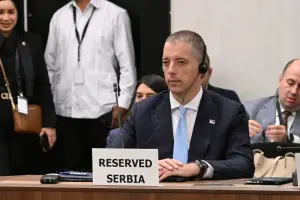 Belgrade/Panama City, 21 June 2026
Serbia remains firmly committed to principles of multilateralism
-
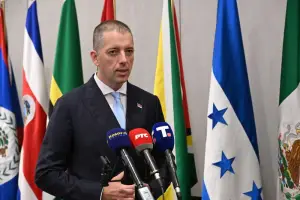 Belgrade/Panama City, 21 June 2026
New opportunities for Serbia's cooperation with Latin American, Caribbean countries
-
 Belgrade, 20 June 2026
Serbia, JICA agree on key issues for implementation of Bistrica plant project
-
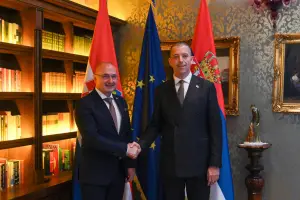 Subotica, 19 June 2026
Open dialogue key to resolving bilateral issues with Croatia
-
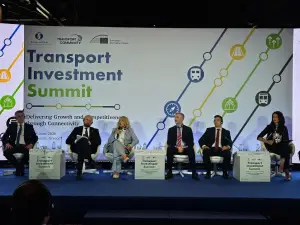 Belgrade/Thessaloniki, 18 June 2026
Regional cooperation key to development of transport infrastructure
-
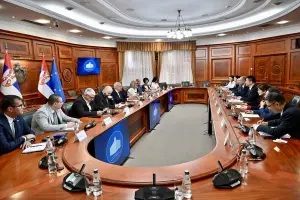 Belgrade, 18 June 2026
Establishing cooperation with Chinese technology giant CETC
-
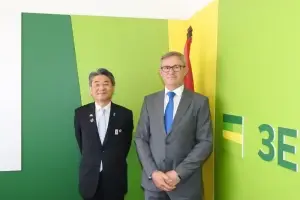 Belgrade, 18 June 2026
New opportunities for strengthening economic cooperation with Japan
-
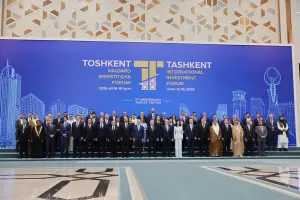 Belgrade/Tashkent, 18 June 2026
Serbia reliable partner in joint infrastructure projects
-
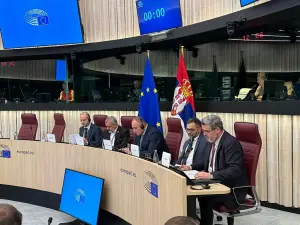 Belgrade/Strasbourg, 17 June 2026
Serbia continues reforms in line with European standards