
Q:
A:
Joint centre of EU countries for issuing visa from 2008
Belgrade,
16 July 2007
Serbian Assistant Minister of Foreign Affairs Milica Delevic-Djilas said yesterday that the joint centre of EU member countries for issuing Schengen visas could open as early as next year.
In a statement to the news agency Tanjug, Delevic-Djilas stressed that the opening of a joint centre for issuing visas is as yet only an initiative which could be realised by the next year, when the visa relaxations come into force.
She explained that visas would be issued according to the procedure specified in the agreement on visa relaxations with the EU which Serbia initialled in May, and applications for visa, could be submitted in one centre, instead of embassies which would simplify the procedure.
According to Delevic-Djilas such a pilot project exists in Kishinev, Moldova, where countries signatory to the Schengen Agreement had a stronger interest in opening such a centre. She added that not all Schengen signatory countries had diplomatic representation in Moldova, but a joint centre allowed them to be linked.
Delevic-Djilas recalled that countries signatory to the Schengen Agreement include France, Italy, Germany, Austria, Spain, Greece, Portugal, Belgium, the Netherlands, Luxembourg, Denmark, Sweden and Finland, as well as Norway and Iceland which are not members of the EU.
Special visas are required for Great Britain and Ireland, as well as countries of the EU which entered the “European family” in 2004.
According to the agreement on visa relaxations, which should come into force on January 1, 2008, experts, businesspeople, journalists, students, sportspeople, artists and civil servants will get visas for travelling to EU member countries more easily.
She explained that visas would be issued according to the procedure specified in the agreement on visa relaxations with the EU which Serbia initialled in May, and applications for visa, could be submitted in one centre, instead of embassies which would simplify the procedure.
According to Delevic-Djilas such a pilot project exists in Kishinev, Moldova, where countries signatory to the Schengen Agreement had a stronger interest in opening such a centre. She added that not all Schengen signatory countries had diplomatic representation in Moldova, but a joint centre allowed them to be linked.
Delevic-Djilas recalled that countries signatory to the Schengen Agreement include France, Italy, Germany, Austria, Spain, Greece, Portugal, Belgium, the Netherlands, Luxembourg, Denmark, Sweden and Finland, as well as Norway and Iceland which are not members of the EU.
Special visas are required for Great Britain and Ireland, as well as countries of the EU which entered the “European family” in 2004.
According to the agreement on visa relaxations, which should come into force on January 1, 2008, experts, businesspeople, journalists, students, sportspeople, artists and civil servants will get visas for travelling to EU member countries more easily.
-
 Belgrade/Panama City, 21 June 2026
Serbia remains firmly committed to principles of multilateralism
-
 Belgrade/Panama City, 21 June 2026
New opportunities for Serbia's cooperation with Latin American, Caribbean countries
-
 Belgrade, 20 June 2026
Serbia, JICA agree on key issues for implementation of Bistrica plant project
-
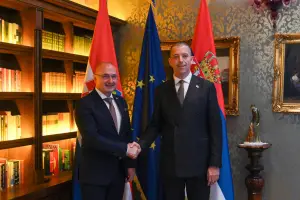 Subotica, 19 June 2026
Open dialogue key to resolving bilateral issues with Croatia
-
 Belgrade/Thessaloniki, 18 June 2026
Regional cooperation key to development of transport infrastructure
-
 Belgrade, 18 June 2026
Establishing cooperation with Chinese technology giant CETC
-
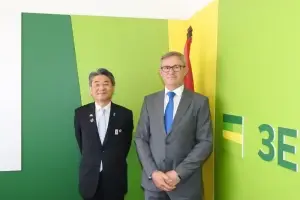 Belgrade, 18 June 2026
New opportunities for strengthening economic cooperation with Japan
-
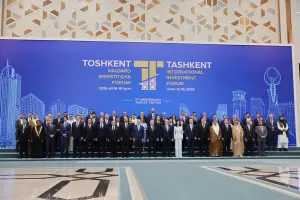 Belgrade/Tashkent, 18 June 2026
Serbia reliable partner in joint infrastructure projects
-
 Belgrade/Strasbourg, 17 June 2026
Serbia continues reforms in line with European standards