
Q:
A:
Implementation of CEFTA good foundation for EU membership
Belgrade,
10 July 2007
State Secretary of the Serbian Ministry of Foreign Affairs Radojko Bogojevic said today that the establishment of the Central European Free Trade Agreement (CEFTA) will help Serbia and countries in the region to establish closer ties.
At the opening of the international conference “CEFTA and Serbia’s Interests”, Bogojevic said that strengthening regional cooperation in the Western Balkans is necessary.
The Implementation of CEFTA is a good foundation for EU membership, he noted and added that Serbia’s priority is accelerated EU accession and that the government is ready to do everything necessary to speed up that process.
It would be of utmost importance that Serbia signs the Stabilisation and Association Agreement (SAA) by the end of the year, Bogojevic said.
He stressed that if the current pace of negotiations continues, Serbia could start EU membership talks and end the greatest part by 2011.
Speaking on Kosovo, Bogojevic said that Serbia will direct all its diplomatic and political efforts to persuade the international community that there is space for negotiations on the future status of Serbia’s southern province.
Speaking about obtaining Schengen visas, Bogojevic said that there is a will in Brussels to open in Belgrade a single centre of signatory countries of the Schengen agreement for issuing visas to Serbian citizens.
Representative of the Serbian Ministry of Economy and Regional Development and member of the Serbian negotiating team for CEFTA Jadranka Zenic explained that advantages of this agreement are easier placement of services and goods and an increase in foreign investment and employment.
Zenic said that countries of south east Europe are Serbia's second largest trade partner and that 50% of the total export of Serbia's food products goes to the countries of the region.
Out of all signatory countries of CEFTA, Serbia has a surplus in trade with Albania, Bosnia-Herzegovina and Macedonia, and a deficit in trade with Croatia and Moldova.
As part of this agreement, Serbia has so far liberalised more than 90% of trade in industrial products with signatory countries and full liberalisation is expected by next year, Zenic said.
She recalled that there used to be 32 bilateral agreements among the countries of the region that were later substituted by CEFTA, and which includes trade in services, the rule on diagonal accumulation of origin and improved mechanism for solving agreements.
The Implementation of CEFTA is a good foundation for EU membership, he noted and added that Serbia’s priority is accelerated EU accession and that the government is ready to do everything necessary to speed up that process.
It would be of utmost importance that Serbia signs the Stabilisation and Association Agreement (SAA) by the end of the year, Bogojevic said.
He stressed that if the current pace of negotiations continues, Serbia could start EU membership talks and end the greatest part by 2011.
Speaking on Kosovo, Bogojevic said that Serbia will direct all its diplomatic and political efforts to persuade the international community that there is space for negotiations on the future status of Serbia’s southern province.
Speaking about obtaining Schengen visas, Bogojevic said that there is a will in Brussels to open in Belgrade a single centre of signatory countries of the Schengen agreement for issuing visas to Serbian citizens.
Representative of the Serbian Ministry of Economy and Regional Development and member of the Serbian negotiating team for CEFTA Jadranka Zenic explained that advantages of this agreement are easier placement of services and goods and an increase in foreign investment and employment.
Zenic said that countries of south east Europe are Serbia's second largest trade partner and that 50% of the total export of Serbia's food products goes to the countries of the region.
Out of all signatory countries of CEFTA, Serbia has a surplus in trade with Albania, Bosnia-Herzegovina and Macedonia, and a deficit in trade with Croatia and Moldova.
As part of this agreement, Serbia has so far liberalised more than 90% of trade in industrial products with signatory countries and full liberalisation is expected by next year, Zenic said.
She recalled that there used to be 32 bilateral agreements among the countries of the region that were later substituted by CEFTA, and which includes trade in services, the rule on diagonal accumulation of origin and improved mechanism for solving agreements.
-
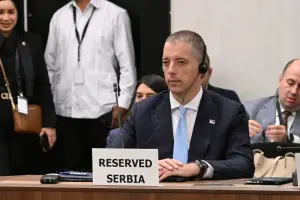 Belgrade/Panama City, 21 June 2026
Serbia remains firmly committed to principles of multilateralism
-
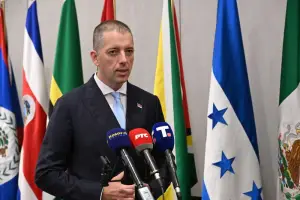 Belgrade/Panama City, 21 June 2026
New opportunities for Serbia's cooperation with Latin American, Caribbean countries
-
 Belgrade, 20 June 2026
Serbia, JICA agree on key issues for implementation of Bistrica plant project
-
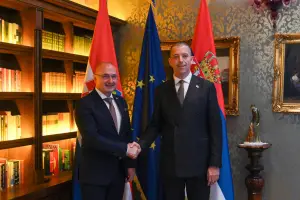 Subotica, 19 June 2026
Open dialogue key to resolving bilateral issues with Croatia
-
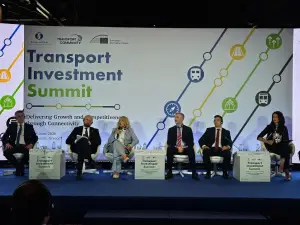 Belgrade/Thessaloniki, 18 June 2026
Regional cooperation key to development of transport infrastructure
-
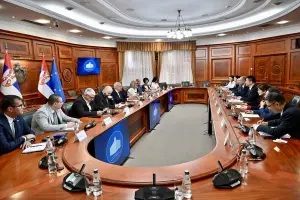 Belgrade, 18 June 2026
Establishing cooperation with Chinese technology giant CETC
-
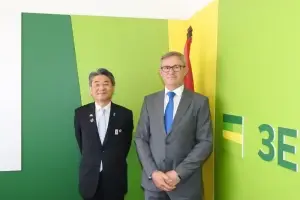 Belgrade, 18 June 2026
New opportunities for strengthening economic cooperation with Japan
-
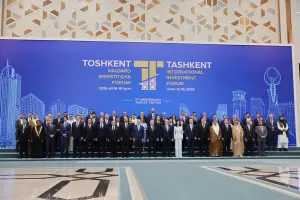 Belgrade/Tashkent, 18 June 2026
Serbia reliable partner in joint infrastructure projects
-
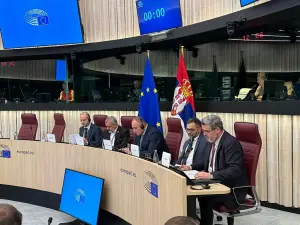 Belgrade/Strasbourg, 17 June 2026
Serbia continues reforms in line with European standards