
Q:
A:
Government ready to provide conditions for Serbia’s EU membership candidature by 2008
Belgrade,
3 July 2007
Serbian Deputy Prime Minister Bozidar Djelic said today that the government can and is ready to provide conditions for Serbia to become candidate for EU membership by 2008.
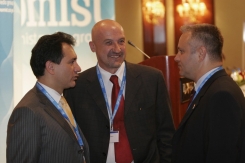
From left: Bozidar Djelic, Predrag Bubalo and Mladjan Dinkic
Author:
Fonet
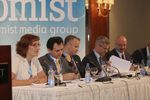
In a round table organised by Ekonomist magazine, Djelic pointed out that the Serbian economy is seemingly perfect because of high economic growth and low inflation, but there is still the problem of a large foreign deficit and large public expenditure.
An increase in exports and low inflation are the most positive trends this year, he said adding that the adopted budget is good as it will provide regular settlement of obligations.
Djelic said that the government will support Ministry of Finance in its efforts to reduce public expenditure which increased by 3% this year.
Poverty is still a big problem with 18% of the population living below the poverty line, Djelic said.
Minister of Economy and Regional Development Mladjan Dinkic said that Serbia can expect an influx of foreign investments of $3 billion to $5 billion this year.
He noted that Serbia has a chance to double its tourism income from the present $0.5 billion to $1 billion and recalled that a master plan for the development of Serbian tourism on Stara Planina Mt. has been completed. The plan envisions investment of €600 million for this mountain in the next three years, €450 million of which is to be financed from private sector.
He announced measures for boosting employment that will include loans without mortgage for those who start their businesses and micro-loans for employment.
Speaking on privatisation, he announced that a tender for Kragujevac car maker Zastava will be published in December whereas department stores Beograd, Yugoexport and sugar plant Dimitrije Tucovic should be sold by the end of the year. Dinkic also announced the auction sale of Genex hotels.
As of this month, after three unsuccessful tender sales, the sale of paper factory Matroz is also expected, Dinkic said and voiced hope that in that way this factory will find a strategic partner.
Dinkic said that privatisation of socially-owned companies is expected to be completed by the end of 2008, which will be limited by time by amendments to the Law on privatisation and by organising 55 auction sales per month.
State Secretary at the Ministry of Finance Janko Guzijan explained that the goals of Serbia's economic and fiscal policy in the next few years are the reduction of deficit of current payments from 14% to 10% and an annul growth of GDP of 6%.
Serbian Minister of Trade and Services Predrag Bubalo said that the share of trade in the economic growth in the first three months of the year was 24% and added that the government will work to strengthen the service sector, which has been neglected so far and that it will work a lot to cut public spending.
He said that he will propose cutting the number of employees in the public administration by 10%, and then to employ 5% of highly qualified stuff.
An increase in exports and low inflation are the most positive trends this year, he said adding that the adopted budget is good as it will provide regular settlement of obligations.
Djelic said that the government will support Ministry of Finance in its efforts to reduce public expenditure which increased by 3% this year.
Poverty is still a big problem with 18% of the population living below the poverty line, Djelic said.
Minister of Economy and Regional Development Mladjan Dinkic said that Serbia can expect an influx of foreign investments of $3 billion to $5 billion this year.
He noted that Serbia has a chance to double its tourism income from the present $0.5 billion to $1 billion and recalled that a master plan for the development of Serbian tourism on Stara Planina Mt. has been completed. The plan envisions investment of €600 million for this mountain in the next three years, €450 million of which is to be financed from private sector.
He announced measures for boosting employment that will include loans without mortgage for those who start their businesses and micro-loans for employment.
Speaking on privatisation, he announced that a tender for Kragujevac car maker Zastava will be published in December whereas department stores Beograd, Yugoexport and sugar plant Dimitrije Tucovic should be sold by the end of the year. Dinkic also announced the auction sale of Genex hotels.
As of this month, after three unsuccessful tender sales, the sale of paper factory Matroz is also expected, Dinkic said and voiced hope that in that way this factory will find a strategic partner.
Dinkic said that privatisation of socially-owned companies is expected to be completed by the end of 2008, which will be limited by time by amendments to the Law on privatisation and by organising 55 auction sales per month.
State Secretary at the Ministry of Finance Janko Guzijan explained that the goals of Serbia's economic and fiscal policy in the next few years are the reduction of deficit of current payments from 14% to 10% and an annul growth of GDP of 6%.
Serbian Minister of Trade and Services Predrag Bubalo said that the share of trade in the economic growth in the first three months of the year was 24% and added that the government will work to strengthen the service sector, which has been neglected so far and that it will work a lot to cut public spending.
He said that he will propose cutting the number of employees in the public administration by 10%, and then to employ 5% of highly qualified stuff.
-
 Belgrade/Minsk, 22 June 2026
Considerable room for further strengthening economic cooperation with Belarus
-
 Belgrade/Panama City, 21 June 2026
Serbia remains firmly committed to principles of multilateralism
-
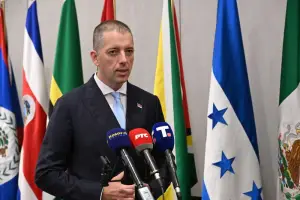 Belgrade/Panama City, 21 June 2026
New opportunities for Serbia's cooperation with Latin American, Caribbean countries
-
 Belgrade, 20 June 2026
Serbia, JICA agree on key issues for implementation of Bistrica plant project
-
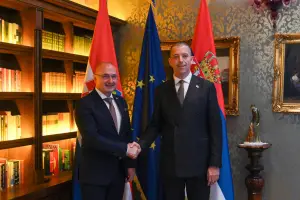 Subotica, 19 June 2026
Open dialogue key to resolving bilateral issues with Croatia
-
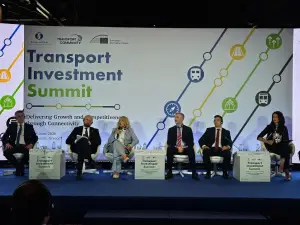 Belgrade/Thessaloniki, 18 June 2026
Regional cooperation key to development of transport infrastructure
-
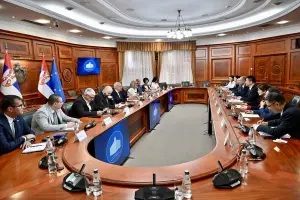 Belgrade, 18 June 2026
Establishing cooperation with Chinese technology giant CETC
-
 Belgrade, 18 June 2026
New opportunities for strengthening economic cooperation with Japan
-
 Belgrade/Tashkent, 18 June 2026
Serbia reliable partner in joint infrastructure projects
-
 Belgrade/Strasbourg, 17 June 2026
Serbia continues reforms in line with European standards