
Q:
A:
Draft law on restitution to be presented next week
Belgrade,
19 April 2007
Serbian Minister of International Economic Relations Milan Parivodic said that the draft law on restitution will be presented to the domestic public within the next week. This law will enable consolidation of ownership over land and any facility on it in 70% of the cases in Serbia.
Opening a forum called "Financing the construction of building land - compensation for land improvement as an instrument of support to economic development", Parivodic explained that this law establishes natural restitution as the basic principle, which means that if the old owner of a facility is also the owner of the building land, that land will be given back to him.
He said that if the old land owner disowned the facility built on it, or that facility was expropriated and he was given a compensation, and if that building land was nationalised but remained in the possession of the old owner, the current owner of the facility will also become the owner of the land the facility is on, because the original owner got some kind of compensation of the land.
The Minister said that the important element of the restitution process is the speed of implementation and added that if the law comes into force, the owner of a facility on unregistered land cannot use it or lease it until he includes it in the land register.
The Minister voiced hope that the return of property and privatisation of city building land will reduce the construction price in Serbia and increase the interest of investors, adding that the price of state monopoly over land is unacceptable for Serbian society.
The result is that one square metre of residential space in Sofia is twice as cheap as Belgrade, and investors pay sums ranging from €400,000 to €600,000 in payment for land for a building covering an area of 1,000 square metres, and in Vienna an area of the same size costs some €200,000, said Parivodic.
He appealed to local self-governments that the payment for using city building land should be a stimulant, at least in cases where construction is for production facilities, and added that foreign investors who come to Serbia to build should be given land free of cost.
He said that if the old land owner disowned the facility built on it, or that facility was expropriated and he was given a compensation, and if that building land was nationalised but remained in the possession of the old owner, the current owner of the facility will also become the owner of the land the facility is on, because the original owner got some kind of compensation of the land.
The Minister said that the important element of the restitution process is the speed of implementation and added that if the law comes into force, the owner of a facility on unregistered land cannot use it or lease it until he includes it in the land register.
The Minister voiced hope that the return of property and privatisation of city building land will reduce the construction price in Serbia and increase the interest of investors, adding that the price of state monopoly over land is unacceptable for Serbian society.
The result is that one square metre of residential space in Sofia is twice as cheap as Belgrade, and investors pay sums ranging from €400,000 to €600,000 in payment for land for a building covering an area of 1,000 square metres, and in Vienna an area of the same size costs some €200,000, said Parivodic.
He appealed to local self-governments that the payment for using city building land should be a stimulant, at least in cases where construction is for production facilities, and added that foreign investors who come to Serbia to build should be given land free of cost.
-
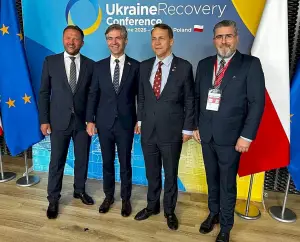 Belgrade/Gdańsk, 25 June 2026
Serbia’s contribution to mitigating consequences of conflict in Ukraine
-
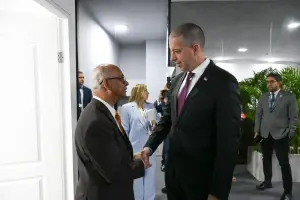 Belgrade/Panama City, 24 June 2026
Serbia builds bridges of cooperation with OAS member states
-
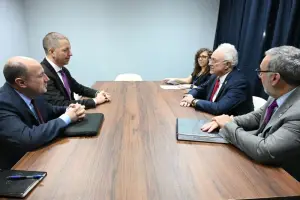 Belgrade/Panama City, 24 June 2026
Strengthening cooperation with Uruguay in areas of mutual interest
-
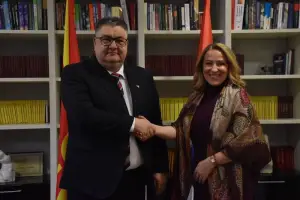 Belgrade/Skopje, 24 June 2026
Exchange of experiences with North Macedonia in field of modernising public administration
-
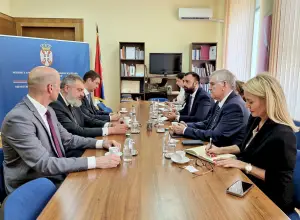 Belgrade, 24 June 2026
Support for preserving national identity of Ukrainian community in Serbia
-
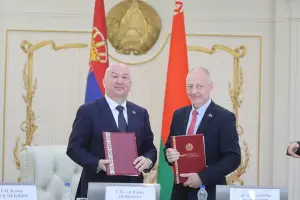 Belgrade/Minsk, 23 June 2026
Incentive to further strengthen cooperation with Belarus
-
 Belgrade, 23 June 2026
Great importance of political dialogue, strategic partnership with France
-
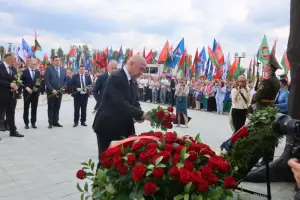 Belgrade/Minsk, 22 June 2026
Considerable room for further strengthening economic cooperation with Belarus
-
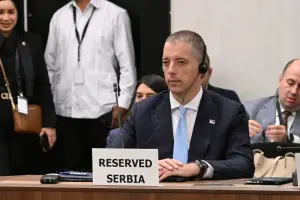 Belgrade/Panama City, 21 June 2026
Serbia remains firmly committed to principles of multilateralism
-
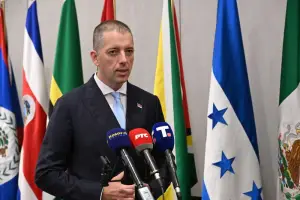 Belgrade/Panama City, 21 June 2026
New opportunities for Serbia's cooperation with Latin American, Caribbean countries