
Q:
A:
Laws allowing transfer of ownership over public property to local authorities being prepared
Belgrade,
13 February 2007
Serbian Minister of International Economic Relations and coordinator of the Ministry of Finance Milan Parivodic said today that three draft laws allowing efficient transfer of ownership over public property to local authorities are being finalised.
Parivodic pointed out that the Serbian new Constitution clearly defines the term of public property and noted that for an efficient proprietary transformation it is necessary to enact the laws on public property, ownership rights and other legal matters as well as laws on restitution and remuneration.
He noted that these laws should be adopted simultaneously so as to avoid counter-effects.
Ownership reform and consolidation are the ground for guaranteed right of ownership, the Minister said and added that the state will manage property for general use, such as parks, streets and squares, whereas the facilities used by administration, courts, police and customs will be managed by the Republic or municipalities.
At the same time the Minister explained that property over city land will be returned to the owner by having local self-government determine a lease in line with the assessed value of the object that may be built there.
Parivodic stressed that the new law on property and actual rights will definitely bring order into the issue of ownership over all kinds of property, including property over land. The Minister also announced that in ten years' time the citizen law sector in Serbia will be entirely harmonised and consolidated in the citizens' code as in Germany and France.
Representative of the Council of Europe's Directorate for Local and Regional Democracy Roberto Fasino emphasised that Serbia is in need of a fast transfer of ownership over property from the state to municipalities due to the consolidation of local self-governments' financial bases and rationalisation of the need for administration of public property.
Fasino stressed that property transfer is not only Serbia's obligation towards the European Charter on local self-government, but also a basic step towards better public administration and more efficient economic development.
President of the Standing Conference of Towns and Municipalities Zeljko Ozegovic recalled that Serbia is the only country in Europe where local self-government does not have its own property, adding that the change of this status is a basic precondition for decentralisation.
According to Ozegovic, the process requires adoption of laws in accordance with EU norms and at the same time this is one of the Standing Conference's priorities for 2007.
EAR representative in Serbia Vasilis Petridis recalled that from 2001 onwards the agency donated €200 million for the purpose of developing local self-government in Serbia. He also added that the EAR helps the exchange of experiences between local self-government in Serbia and local self-governments in EU countries.
The roundtable discussion was organised by the EAR, the Council of Europe, the Serbian Ministry of Finance and the Standing Conference of Cities and Municipalities.
He noted that these laws should be adopted simultaneously so as to avoid counter-effects.
Ownership reform and consolidation are the ground for guaranteed right of ownership, the Minister said and added that the state will manage property for general use, such as parks, streets and squares, whereas the facilities used by administration, courts, police and customs will be managed by the Republic or municipalities.
At the same time the Minister explained that property over city land will be returned to the owner by having local self-government determine a lease in line with the assessed value of the object that may be built there.
Parivodic stressed that the new law on property and actual rights will definitely bring order into the issue of ownership over all kinds of property, including property over land. The Minister also announced that in ten years' time the citizen law sector in Serbia will be entirely harmonised and consolidated in the citizens' code as in Germany and France.
Representative of the Council of Europe's Directorate for Local and Regional Democracy Roberto Fasino emphasised that Serbia is in need of a fast transfer of ownership over property from the state to municipalities due to the consolidation of local self-governments' financial bases and rationalisation of the need for administration of public property.
Fasino stressed that property transfer is not only Serbia's obligation towards the European Charter on local self-government, but also a basic step towards better public administration and more efficient economic development.
President of the Standing Conference of Towns and Municipalities Zeljko Ozegovic recalled that Serbia is the only country in Europe where local self-government does not have its own property, adding that the change of this status is a basic precondition for decentralisation.
According to Ozegovic, the process requires adoption of laws in accordance with EU norms and at the same time this is one of the Standing Conference's priorities for 2007.
EAR representative in Serbia Vasilis Petridis recalled that from 2001 onwards the agency donated €200 million for the purpose of developing local self-government in Serbia. He also added that the EAR helps the exchange of experiences between local self-government in Serbia and local self-governments in EU countries.
The roundtable discussion was organised by the EAR, the Council of Europe, the Serbian Ministry of Finance and the Standing Conference of Cities and Municipalities.
-
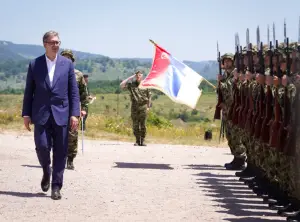 Pasuljanske Livade, 28 June 2026
Successful live-fire exercise conducted using SAF combat equipment, weapons systems
-
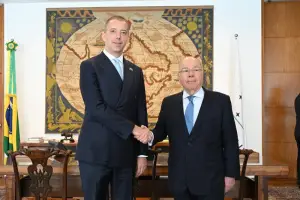 Belgrade/Brasília, 26 June 2026
Serbia, Brazil committed to strengthening cooperation across numerous fields
-
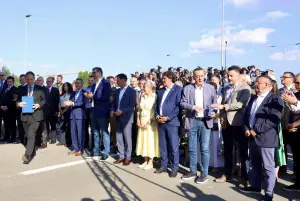 Kraljevo/Čačak, 26 June 2026
Section of Adrani-Preljina motorway ceremonially opened
-
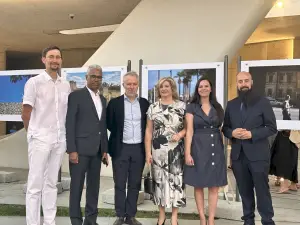 Belgrade/Nicosia, 26 June 2026
Exhibition "Applied Nostalgia: Belgrade-Nicosia" opens in Cyprus
-
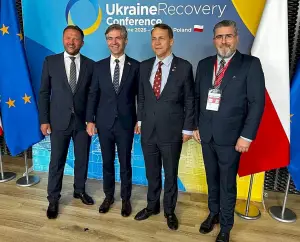 Belgrade/Gdańsk, 25 June 2026
Serbia’s contribution to mitigating consequences of conflict in Ukraine
-
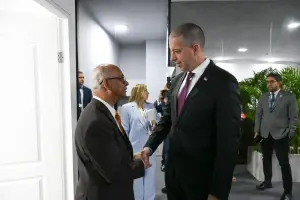 Belgrade/Panama City, 24 June 2026
Serbia builds bridges of cooperation with OAS member states
-
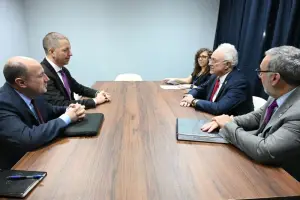 Belgrade/Panama City, 24 June 2026
Strengthening cooperation with Uruguay in areas of mutual interest
-
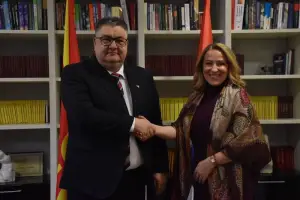 Belgrade/Skopje, 24 June 2026
Exchange of experiences with North Macedonia in field of modernising public administration
-
 Belgrade, 24 June 2026
Support for preserving national identity of Ukrainian community in Serbia
-
 Belgrade/Minsk, 23 June 2026
Incentive to further strengthen cooperation with Belarus