Deputy Prime Minister in a caretaker capacity and Minister of the Interior Ivica Dačić stated today that members of the Serbian Ministry of the Interior participated in the 19th meeting of the Victim Identification Task Force (VIDTF), during which 147 child victims were geographically located across the globe.

Q:
A:
Active participation of Interior Ministry in operations against child sexual exploitation
Belgrade,
18 September 2026
Dačić said that the operation, which involved members of the High-Tech Crime Service of the Ministry’s Technical Directorate, took place from 7 September to 18 September of this year at Europol headquarters in The Hague.
According to him, the operation brought together experts from 28 countries, as well as representatives from Europol and Interpol and over the course of two weeks, 377 datasets, photographs, video recordings, and other available information were analysed.
The Deputy Prime Minister emphasised that the identification of child victims ranks among the most complex and psychologically demanding tasks in the fight against high-tech crime.
He stated that this work requires a high level of expertise, sustained concentration, emotional resilience and close international cooperation, as any single lead can be crucial for locating and protecting a child.
The Deputy Prime Minister noted that Europol has been organising these working groups since 2014 and specified that the work conducted so far has led to the identification of 1,260 victims and the arrest of 348 perpetrators, with 8,642 sets of materials analysed and 2,608 operational leads forwarded to the competent authorities.
-
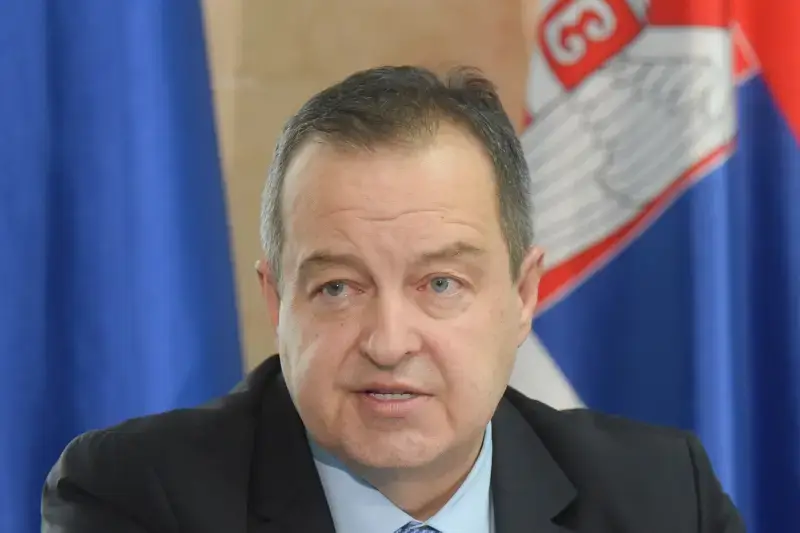 Author: Tanjug
-
 Belgrade, 18 September 2026
Joint work by Interior Ministry, IPA to enhance citizen safety
-
 Belgrade, 16 September 2026
Joint police patrols with China result of good, friendly cooperation
-
 Belgrade, 14 September 2026
Continued cooperation with Japan in areas of mutual interest
-
 Belgrade, 9 September 2026
Traditional friendship foundation for further strengthening cooperation with Mexico
-
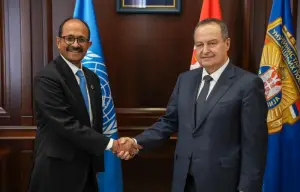 Belgrade, 7 September 2026
Serbia’s approach to disaster risk reduction sets example for region
-
 Belgrade, 6 September 2026
Dačić congratulates Serbian women's volleyball team on winning bronze medal
-
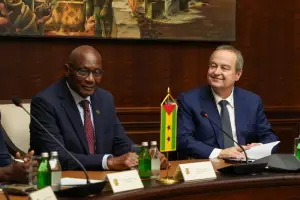 Belgrade, 31 August 2026
Readiness to improve cooperation, friendly ties with African countries
-
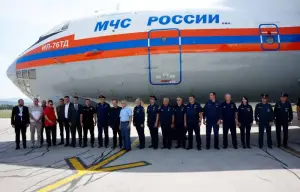 Niš, 25 August 2026
Serbian-Russian cooperation in firefighting efforts
-
 Belgrade, 24 August 2026
Care for people, country’s further development pillars of budget revision
-
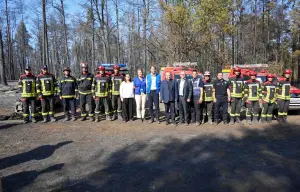 Grebenac, 24 August 2026
International teams assisting in firefighting efforts in Deliblato Sands