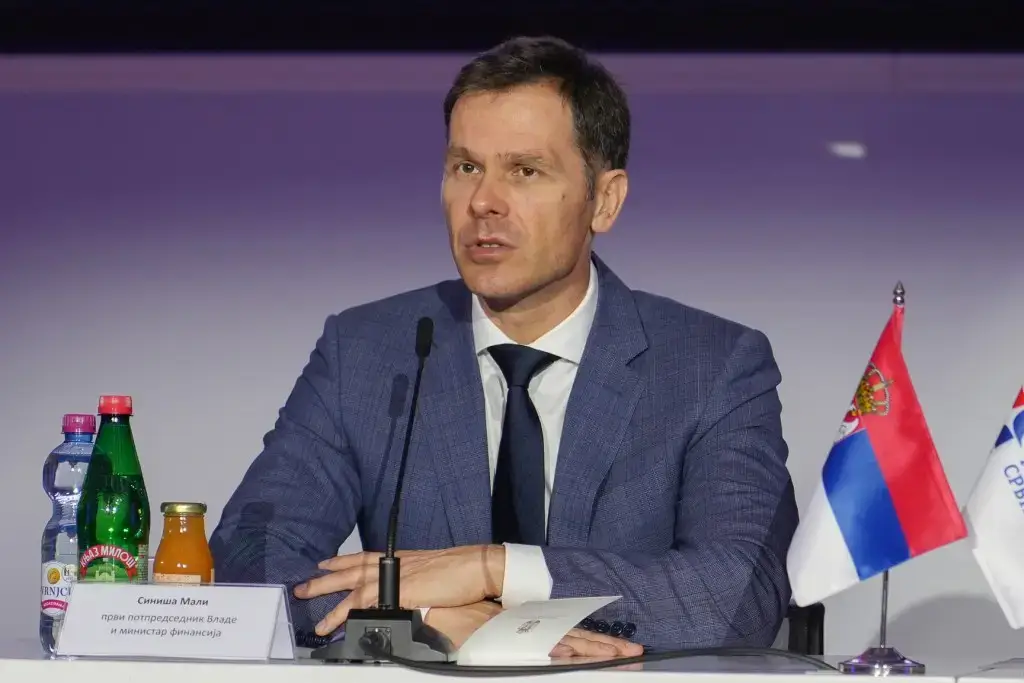
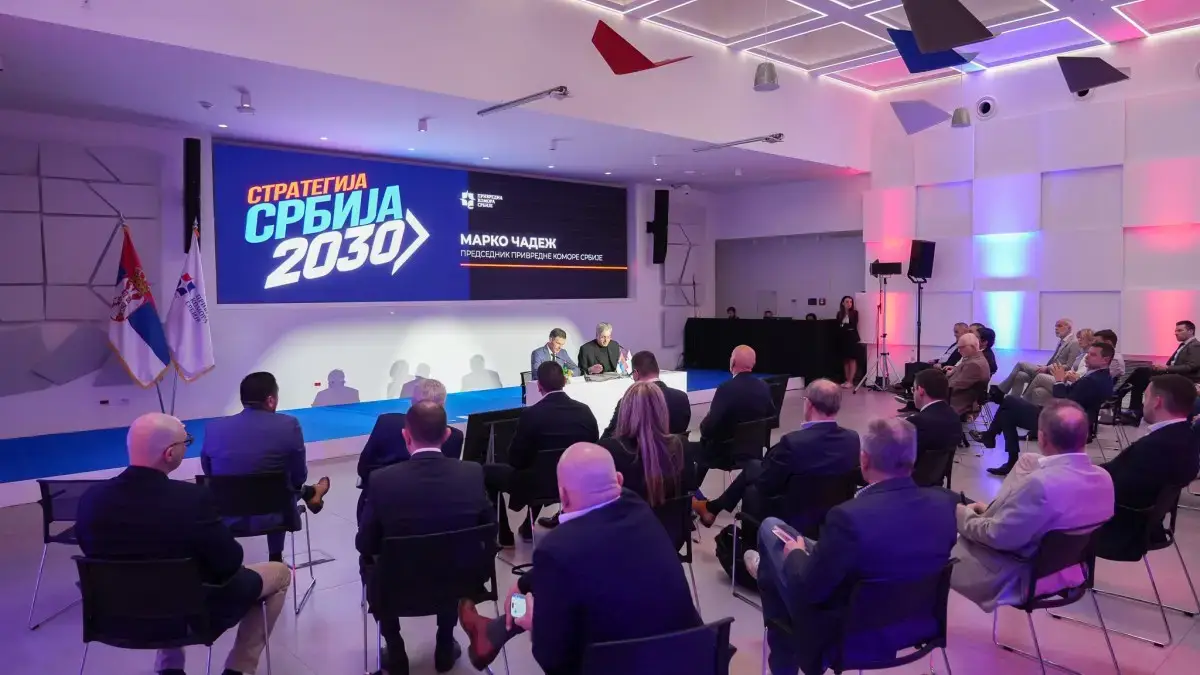
First Deputy Prime Minister and Minister of Finance Siniša Mali presented the national strategy for Serbia’s development until 2035 to businesspeople today, noting that it is the most significant and largest programme aimed at accelerating the growth and development of Serbia and its economy.

Q:
A:
Key goal to accelerate growth, development of Serbia’s economy
Belgrade,
12 March 2026
The Development Programme of Serbia until 2030 is worth €17 billion, while the plan for the period 2030-2035 is worth another €31 billion, bringing the total planned new investments to €48 billion.
At a meeting held at the Serbian Chamber of Commerce, Mali emphasised that nearly 75 projects in the field of education will be implemented in the coming years, with a total value of approximately €220 million, including the construction and reconstruction of schools and kindergartens.
The First Deputy Prime Minister pointed to the particular importance of developing dual education, as well as to the fact that Serbia is rapidly positioning itself as a country developing new technologies, especially in the fields of artificial intelligence, robotics and digitalisation.
Mali also spoke about the development of artificial intelligence and the changes it brings, recalling that the construction of new data centres is planned in Niš and Novi Sad, along with the expansion of existing capacities in Belgrade and Kragujevac.
The First Deputy Prime Minister noted that, according to projections, by 2030 the average salary should reach €1,700, the average pension €750 and the minimum wage €760.
He also announced that investments in healthcare will continue, as it represents one of the most important segments of social development, with particular attention to be devoted to support for families and pronatalist policy.
He pointed out that significant investments are also planned in transport, road and railway infrastructure, as well as the improvement of utility infrastructure.
According to his assessment, the country’s GDP is expected to exceed €100 billion in 2027, while by 2030 it is expected to reach €133 billion.
The goal is a modern, stable and economically strong Serbia, in which citizens see their future, concluded the First Deputy Prime Minister.
-
 Author: Ministry of Finance
 -
 Author: Ministry of Finance
-
 Belgrade, 22 June 2026
Serbia reliable, credible investment partner
-
 Belgrade, 19 June 2026
Serbia committed to protecting refugees, improving asylum system
-
 Belgrade, 19 June 2026
Visit of BYD representatives confirms strengthening of economic cooperation with China
-
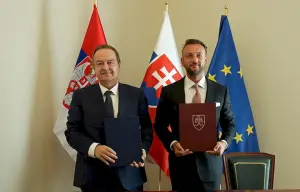 Belgrade/Bratislava, 9 June 2026
Agreement signed with Slovakia on joint surveillance of Serbia’s state border
-
 Belgrade, 3 June 2026
Bizerba continues to develop production in Serbia
-
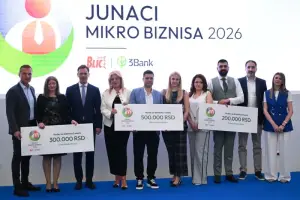 Belgrade, 2 June 2026
Small entrepreneurs driving force of domestic economy
-
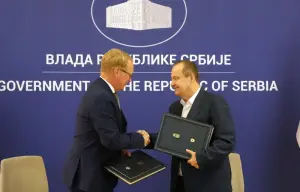 Belgrade, 1 June 2026
Serbia joins Frontex Partnership Academies Network
-
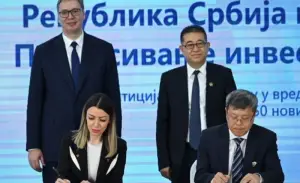 Belgrade/Shanghai, 28 May 2026
Commercial contracts signed with leading Chinese companies
-
 Belgrade/Jiaxing, 27 May 2026
Serbia entering new phase of technological, industrial development
-
 Belgrade, 27 May 2026
Dačić extends Kurban Bayram greetings