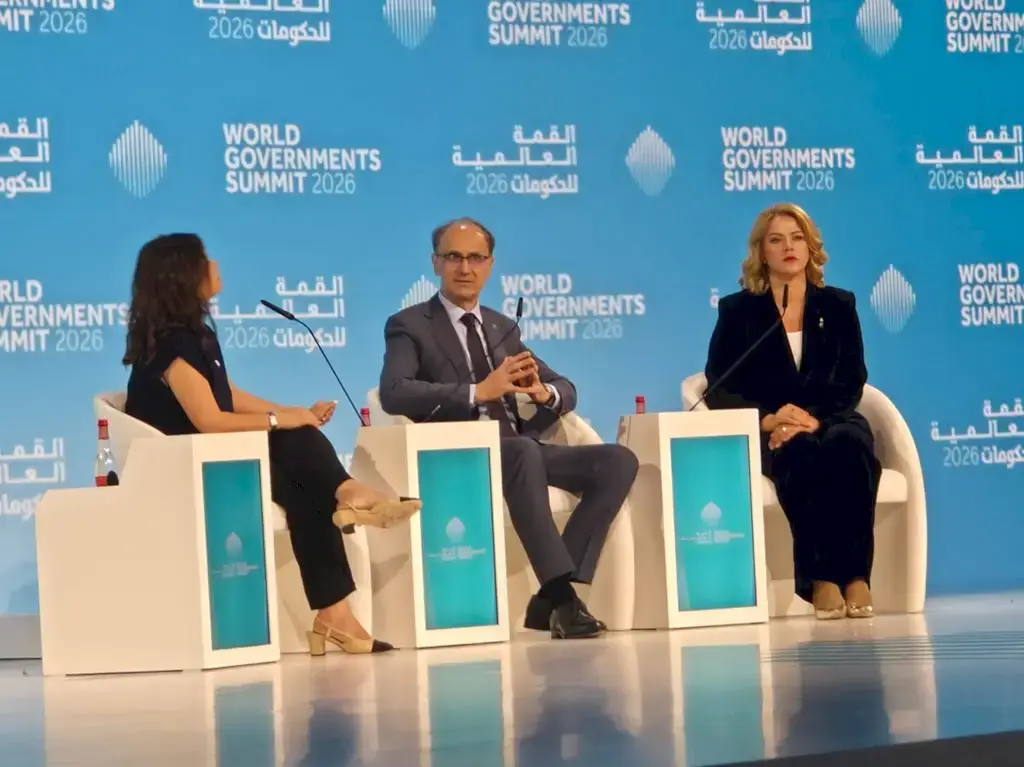
Prime Minister Professor Đuro Macut, MD, DSc, who led the Government delegation at the World Governments Summit (WGS), concluded his visit to Dubai by participating in the plenary session “From Reform to Results: How Nations Rise”.

Q:
A:
Results of reforms in Serbia visible to citizens, international partners
Belgrade/Dubai,
5 February 2026
Speaking at the session together with Prime Minister of Latvia Evika Siliņa, Macut stressed that reforms in Serbia were never a mere formality, but a clear political decision aimed at building a more stable state, a more modern economy and a knowledge-based society, with results that are visible to citizens and international partners today.
The Prime Minister stated that Serbia has maintained macroeconomic stability and created a predictable business environment, with almost €70 billion in total trade with the world and a strong inflow of foreign direct investment, and that the IT sector, with exports of almost €4 billion, is one of the key drivers of further development.
He emphasised that Serbia is paying special attention to the development of artificial intelligence within a clear strategic and ethical framework, as well as to the modernisation of education and the regulatory environment, with the aim that the country actively participates in shaping the technologies of the future.
The Prime Minister underlined that Serbia is today a country with concrete results, open to partnerships and ready to contribute to a more stable, connected and prosperous international environment.
This year's World Governments Summit brought together more than 6,000 participants from around the world, more than 150 government delegations, including more than 60 heads of state and government, as well as more than 500 ministers.
-
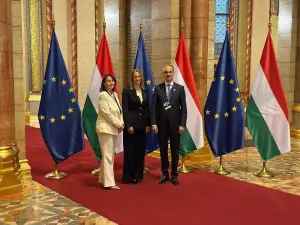 Belgrade/Budapest, 23 October 2026
Good relations with Hungary help Serbia on its European path
-
 Belgrade, 23 October 2026
Prime Minister Macut at commemoration of 70th anniversary of Hungarian Revolution
-
 Belgrade/Budva, 22 October 2026
Serbia one of key factors in regional integration
-
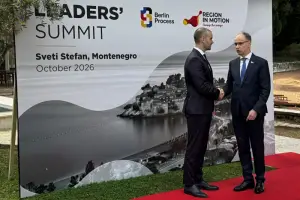 Belgrade/Sveti Stefan, 22 October 2026
Serbia committed to continuing reforms on path to full EU membership
-
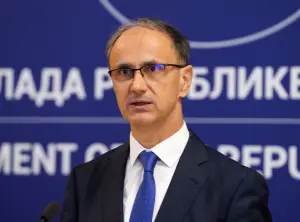 Belgrade, 21 October 2026
Prime Minister Macut to attend Berlin Process Leaders’ Summit in Sveti Stefan
-
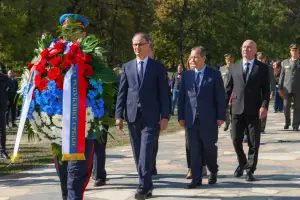 Kragujevac, 21 October 2026
Macut pays tribute to civilians executed during World War II
-
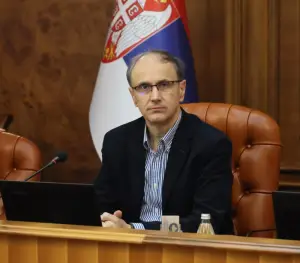 Belgrade, 21 October 2026
Importance of maintaining public order, peace on election day
-
 Belgrade, 20 October 2026
Macut congratulates Luca Niculescu on his election as new Prime Minister of Romania
-
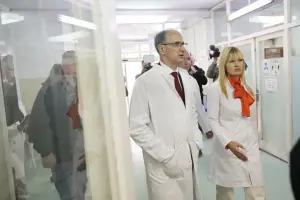 Petrovac na Mlavi/Žagubica, 19 October 2026
Strengthening healthcare institutions among government priorities
-
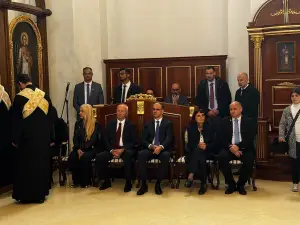 Belgrade/Dalj, 17 October 2026
Serbia to continue supporting its people, Serbian Orthodox Church in Croatia