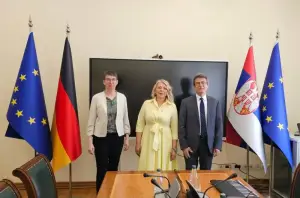
Q:
A:
Serbian delegation satisfied with negotiations on establishing free trade zone
Brussels,
27 July 2006
Serbian Assistant Minister of International Economic Relations Dusko Lopandic said today that Serbia is satisfied with the course of negotiations between southeastern European countries on establishing a free trade zone, and added that the aim is to conclude the agreement by the end of the year.
Lopandic, who leads the Serbian delegation for these negotiations, said in a statement to the press that experts on customs and experts of the Serbian government’s ministries have been engaged for negotiations, which are being mediated by the European Commission and the Stability Pact for South Eastern Europe.
He recalled that negotiations on creating a single free trade zone started at the beginning of April in Bucharest, in the presence of regional leaders, including Serbian Prime Minister Vojislav Kostunica.
It is envisaged that with the signing of the agreement, the entire region will be connected through the Central European Free Trade Agreement (CEFTA), which previously included only countries of central Europe, current members of the EU, stressed Lopandic.
He emphasized that agreement was reached at the negotiations that a CEFTA committee should be formed which would function as an arbitrator, and said that a novelty is the introduction of the so-called “diagonal accumulation rule of origin” for products.
He pointed out that that concept provides member countries of the regional free trade zone the possibility of mutual joint production or with any EU member country in order to freely export the joint product on the EU market.
The CEFTA will include all countries in the region: Serbia, Montenegro, Romania, Bulgaria, Croatia, Macedonia, Bosnia-Herzegovina and Albania, said Lopandic, adding that this agreement will replace the previous complicated system of 31 bilateral agreements on free trade.
He explained that the aim of the agreement is to facilitate trade and investment in the region, as well as protection of intellectual property rights, competition and public purchase.
According to Lopandic, this document will remove many obstacles and establish new forms of trade, such as the sector of services, and rules will be introduced regarding competition and public support for firms.
He recalled that negotiations on creating a single free trade zone started at the beginning of April in Bucharest, in the presence of regional leaders, including Serbian Prime Minister Vojislav Kostunica.
It is envisaged that with the signing of the agreement, the entire region will be connected through the Central European Free Trade Agreement (CEFTA), which previously included only countries of central Europe, current members of the EU, stressed Lopandic.
He emphasized that agreement was reached at the negotiations that a CEFTA committee should be formed which would function as an arbitrator, and said that a novelty is the introduction of the so-called “diagonal accumulation rule of origin” for products.
He pointed out that that concept provides member countries of the regional free trade zone the possibility of mutual joint production or with any EU member country in order to freely export the joint product on the EU market.
The CEFTA will include all countries in the region: Serbia, Montenegro, Romania, Bulgaria, Croatia, Macedonia, Bosnia-Herzegovina and Albania, said Lopandic, adding that this agreement will replace the previous complicated system of 31 bilateral agreements on free trade.
He explained that the aim of the agreement is to facilitate trade and investment in the region, as well as protection of intellectual property rights, competition and public purchase.
According to Lopandic, this document will remove many obstacles and establish new forms of trade, such as the sector of services, and rules will be introduced regarding competition and public support for firms.
-
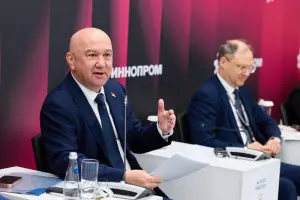 Belgrade, 7 July 2026
Possibilities for improving cooperation with Russia in several areas
-
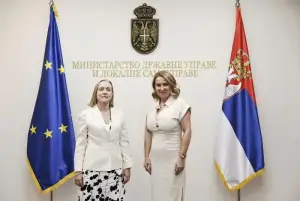 Belgrade, 7 July 2026
UN support for building equal opportunities society continues
-
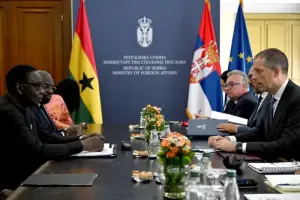 Belgrade, 6 July 2026
Serbia committed to strengthening economic, political ties with Ghana
-
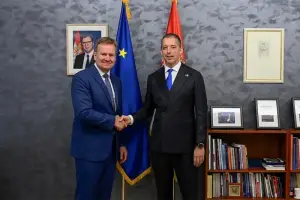 Belgrade/Brussels, 3 July 2026
Belgrade committed to continuing constructive dialogue with Priština
-
 Belgrade/Brussels, 3 July 2026
Serbia’s European integration guarantees regional stability
-
.webp) Belgrade, 3 July 2026
Belgrade, 3 July 2026Continued strengthening of Serbia-Spain defence cooperation
-
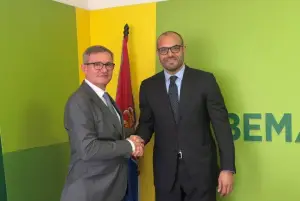 Belgrade, 2 July 2026
Great potential for strengthening cooperation with Slovenia in agriculture
-
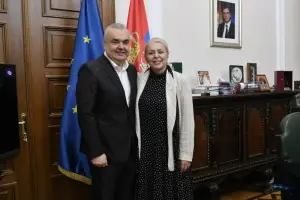 Belgrade, 1 July 2026
Joint infrastructure projects of strategic importance for Serbia, Republika Srpska
-
 Belgrade, 30 June 2026
Scientific diplomacy one of strategic instruments of Serbian foreign policy