
Q:
A:
Project to develop Serbia's waterways, ports presented
Belgrade,
27 June 2006
Serbian Minister of Capital Investment Velimir Ilic presented today a general plan and feasibility study for a network of interior waterways and ports before 2025, whose drafting was financed by the European Agency for Reconstruction.
Ilic said that river traffic in Serbia will benefit from the project, but that it will be of even greater importance for the development of the European inland water transport sector.
The financial side will not pose a problem since each project will be financed through individual tenders and the government will also participate financially, he said.
According to Ilic, the European Investment Bank and the European Bank for Reconstruction and Development will assist in financing the project, as will other institutions that finance projects aimed at improving the traffic in Southeast Europe.
Ilic announced that ship wrecks from World War II are to be retrieved from the Danube and the river bed cleared up at its point of entry into Serbia. Moreover, the Sava River will also be cleared up to make it navigable all the way to Brcko and its banks and ports put in order, he added.
Head of the European Commission's delegation to Belgrade Josep Lloveras said that the project to develop Serbia's waterways and ports is important both for Serbia and the EU since river traffic is a clean and low-cost way to transport goods, it is also beneficial for tourism development and improves political and economic cooperation among countries.
Lloveras said that the project will add to Serbia's economic development due to the country's unexploited river potential.
The feasibility study sets out that the project aims to re-establish navigation, rehabilitate Serbia's interior navigable waterways and develop river ports. The priority in this will be granted to the Danube, Sava and Tisa, as well as the Danube-Tisa-Danube canal.
According to the project, it is expected that the internal water transport of goods will increase between 7% and 20% before 2025, whereas the total investment in the waterway network comprising three rivers and one canal could exceed €300 million. Investments into infrastructure and equipment for ports could stand at €214 million.
The financial side will not pose a problem since each project will be financed through individual tenders and the government will also participate financially, he said.
According to Ilic, the European Investment Bank and the European Bank for Reconstruction and Development will assist in financing the project, as will other institutions that finance projects aimed at improving the traffic in Southeast Europe.
Ilic announced that ship wrecks from World War II are to be retrieved from the Danube and the river bed cleared up at its point of entry into Serbia. Moreover, the Sava River will also be cleared up to make it navigable all the way to Brcko and its banks and ports put in order, he added.
Head of the European Commission's delegation to Belgrade Josep Lloveras said that the project to develop Serbia's waterways and ports is important both for Serbia and the EU since river traffic is a clean and low-cost way to transport goods, it is also beneficial for tourism development and improves political and economic cooperation among countries.
Lloveras said that the project will add to Serbia's economic development due to the country's unexploited river potential.
The feasibility study sets out that the project aims to re-establish navigation, rehabilitate Serbia's interior navigable waterways and develop river ports. The priority in this will be granted to the Danube, Sava and Tisa, as well as the Danube-Tisa-Danube canal.
According to the project, it is expected that the internal water transport of goods will increase between 7% and 20% before 2025, whereas the total investment in the waterway network comprising three rivers and one canal could exceed €300 million. Investments into infrastructure and equipment for ports could stand at €214 million.
-
 Belgrade, 8 July 2026
Continued cooperation with GIZ on improving position of women in Serbia
-
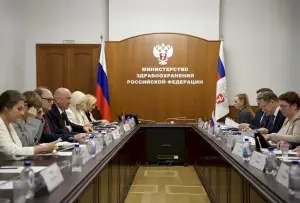 Belgrade/Moscow, 8 July 2026
Cooperation between Serbia, Russia in field of modern oncology therapies
-
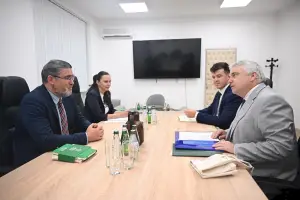 Belgrade, 8 July 2026
Ireland’s support for reform processes in Serbia on path to EU
-
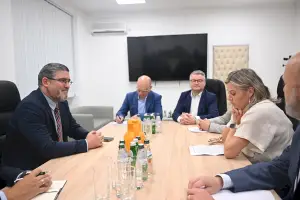 Belgrade, 8 July 2026
Continued strengthening of cooperation with Belgium in European integration process
-
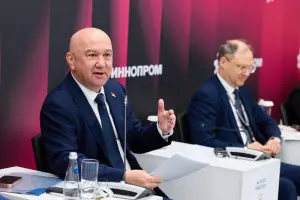 Belgrade, 7 July 2026
Possibilities for improving cooperation with Russia in several areas
-
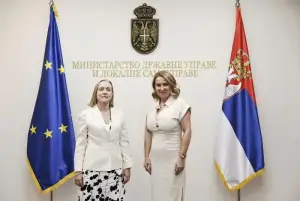 Belgrade, 7 July 2026
UN support for building equal opportunities society continues
-
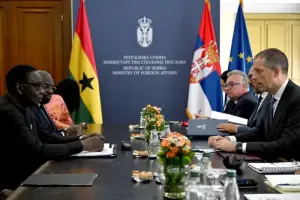 Belgrade, 6 July 2026
Serbia committed to strengthening economic, political ties with Ghana
-
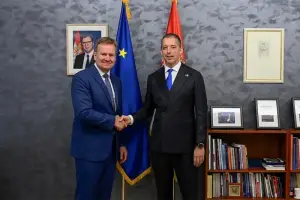 Belgrade/Brussels, 3 July 2026
Belgrade committed to continuing constructive dialogue with Priština
-
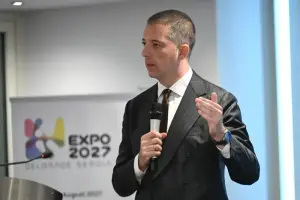 Belgrade/Brussels, 3 July 2026
Serbia’s European integration guarantees regional stability
-
.webp) Belgrade, 3 July 2026
Belgrade, 3 July 2026Continued strengthening of Serbia-Spain defence cooperation